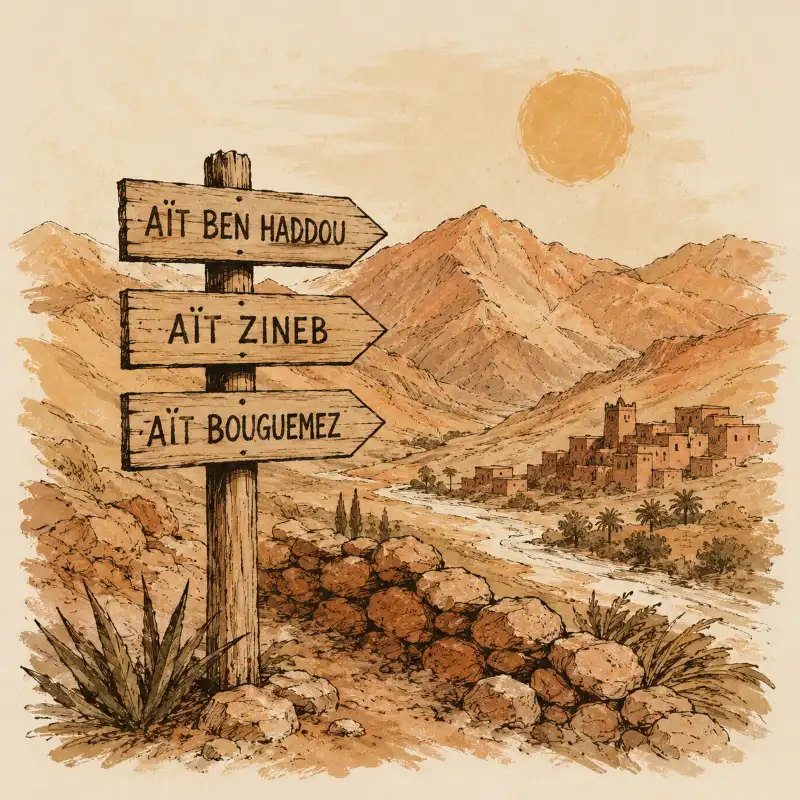
Across Morocco, thousands of place names begin with the word Aït. From famous destinations to remote mountain villages, this small Amazigh expression appears on maps, signs, and family names throughout the country. Although it may look like a simple geographic marker, Aït carries a deeper meaning connected to ancestry, belonging, and community organization.
The Meaning of Aït in Amazigh Language
In Amazigh languages, Aït generally means “the children of” or “the descendants of.” It refers to a group of people connected through a shared ancestor, lineage, or community identity.
The word reflects the importance of collective belonging in traditional Amazigh societies. Communities were often organized around extended family networks, clans, and groups that maintained relationships with specific territories.
Similar ideas exist in other naming traditions across North Africa and the wider region. Arabic expressions such as Beni, Banu, and Ouled also appear in many names and carry related meanings connected with descendants or groups of people.
From Family Lineage to Territorial Identity

Although Aït originally relates to descent, its meaning expanded over time. It became a way to describe not only biological descendants but also communities connected by shared history, location, and social relationships.
This explains why many Moroccan valleys, villages, and tribal territories carry names beginning with Aït. The name often identifies a community that historically lived in a particular area and developed a collective identity there.
In this way, geography became connected with social memory. A place name beginning with Aït often preserves a story about the people who shaped that landscape.
Examples of Aït Names Across Morocco
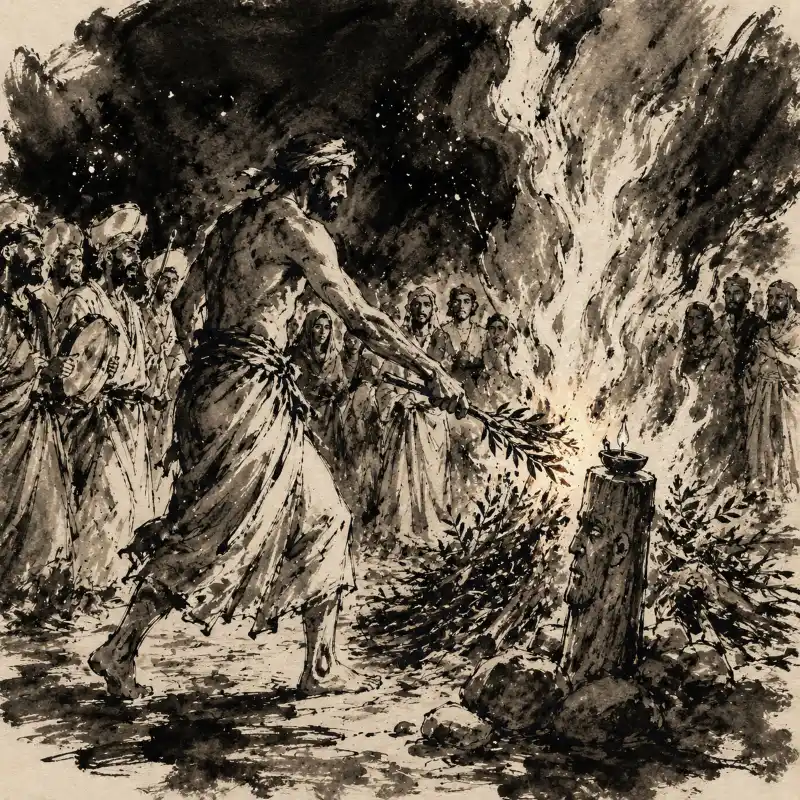
Many well-known Moroccan locations demonstrate the importance of this Amazigh naming tradition.
- Aït Ben Haddou: A historic fortified village near Ouarzazate, known for its traditional earthen architecture.
- Aït Atta: A major Amazigh tribal confederation historically associated with southeastern Morocco.
- Aït Bouguemez: A High Atlas valley known for its villages, agricultural traditions, and mountain landscapes.
- Aït Zineb: A community name reflecting the same connection between people and belonging.
These names show how Amazigh identity has been written directly into Morocco’s cultural geography.
Aït, Ayt, and At: Different Forms of the Same Word
Visitors may encounter different spellings of the same Amazigh term. Aït is the most familiar form in many Moroccan place names, especially those written through French-influenced transcription.
Ayt is another spelling that more closely reflects Amazigh linguistic conventions. In some Amazigh-speaking regions, including parts of Algeria, related forms such as At may also appear.
These variations do not represent different concepts. They show the diversity of Amazigh languages and the different ways the sounds have been represented in writing.
Amazigh Social Organization and Community Bonds
The importance of Aït reveals how Amazigh societies historically emphasized collective identity. Communities were not defined only by individual families but also by wider networks of cooperation and mutual responsibility.
Traditional village life often depended on collaboration in agriculture, water management, protection of resources, and seasonal activities. Belonging to a group meant sharing responsibilities as well as cultural memories.
This social structure helped communities adapt to diverse environments, from mountain valleys to desert regions.
A Word That Connects Morocco’s Past and Present
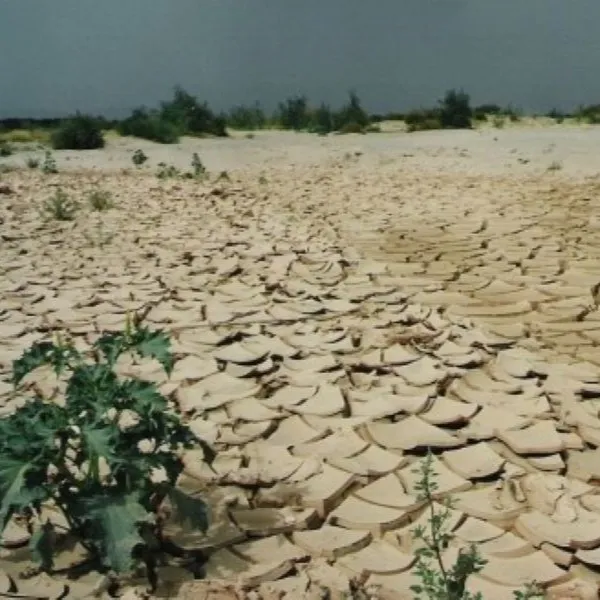
Today, Aït continues to appear throughout Morocco’s landscapes, reminding visitors that place names often contain layers of history. A village name is not simply a location; it can preserve memories of ancestors, migration, alliances, and community identity.
Understanding words like Aït allows travelers to read Morocco’s geography differently. Behind each name is a relationship between people and land, showing how language can preserve cultural heritage across generations.
The Importance of Amazigh Language Preservation
The continued recognition of Amazigh vocabulary in public life contributes to the preservation of Morocco’s cultural diversity. Place names, traditional expressions, and local languages provide valuable connections between contemporary communities and their historical roots.
As Tamazight gains greater visibility in education, media, and cultural institutions, words such as Aït remain important reminders of the deep linguistic heritage of North Africa.
How Aït Reflects Traditional Amazigh Communities
The presence of Aït in Moroccan place names offers a glimpse into how many Amazigh communities historically organized themselves. Before modern administrative systems shaped regions and provinces, social identity was often closely connected to extended families, clans, and alliances between groups.
These communities were not only defined by ancestry but also by shared responsibilities. Members of an Aït group could cooperate in farming, defending settlements, managing natural resources, and supporting one another during important moments such as weddings, seasonal work, or community decisions.
This collective approach helped people adapt to different environments, whether living in mountain valleys, agricultural plains, or areas near desert routes.
Aït and the Geography of Southern Morocco
Villages, Valleys, and Tribal Territories
In southern Morocco especially, Aït names are strongly connected with landscapes shaped by centuries of settlement. Many communities developed around valleys, oases, and trade routes where agriculture and movement between regions influenced daily life.
The name of a valley or village often preserved the memory of the people who established or inhabited it. In this way, language became a form of historical record, allowing later generations to recognize connections between communities and territories.
For travelers exploring regions such as the High Atlas, Anti-Atlas, or southeastern Morocco, understanding the meaning of Aït adds another layer to the experience. A place name becomes more than a destination; it becomes a clue about the human history behind the landscape.
The Relationship Between Names and Amazigh Memory
Amazigh oral traditions have long played an important role in preserving family histories and community memories. Place names often function alongside stories, songs, and genealogies that connect present generations with earlier ancestors.
While written records may not always exist for every village or group, names can preserve important cultural information. The continued use of Aït demonstrates how language carries historical knowledge through everyday speech.
This connection between words and memory is common in many cultures, but within Amazigh societies it remains especially visible because geography and identity are often closely linked.
Aït in Contemporary Morocco
Today, Aït remains an active part of Moroccan identity. It appears not only in historical discussions but also in modern maps, official documents, tourism information, and the names of communities where people continue to live.
Modern Amazigh communities combine inherited traditions with contemporary lifestyles. People from Aït-named villages may work in agriculture, education, business, technology, and many other fields while maintaining connections with their cultural origins.
The continued presence of these names shows that heritage is not limited to the past. It remains part of everyday life and continues to evolve with new generations.
Understanding Aït When Exploring Morocco
Visitors who recognize the meaning of Aït can gain a deeper appreciation of Morocco’s cultural landscape. Instead of seeing names as simple labels, they can understand them as expressions of belonging and historical relationships.
- Observe place names: Many villages and regions reveal cultural information through their names.
- Learn local expressions: Understanding basic Amazigh vocabulary helps create stronger connections with communities.
- Respect regional diversity: Different Amazigh groups have their own histories, languages, and traditions.
- Explore beyond famous sites: Smaller villages often preserve important examples of living heritage.
The Wider Amazigh Naming Tradition
The concept represented by Aït is part of a broader Amazigh approach to naming people and communities. Across North Africa, different Amazigh groups developed various expressions to describe belonging, ancestry, and collective identity.
Although words and pronunciations differ between regions, the underlying idea remains similar: people are connected to something larger than themselves, whether a family line, a community, or a homeland.
Studying these words helps reveal how languages preserve social structures and how communities understand their place in history.
Conclusion
The Amazigh word Aït represents far more than a simple prefix. It expresses ideas of ancestry, community, and belonging that have shaped Morocco’s landscapes for centuries. Every village or region carrying this name preserves a small piece of Amazigh history and the relationship between people and place.



 No products in the cart.
Comments (27)