
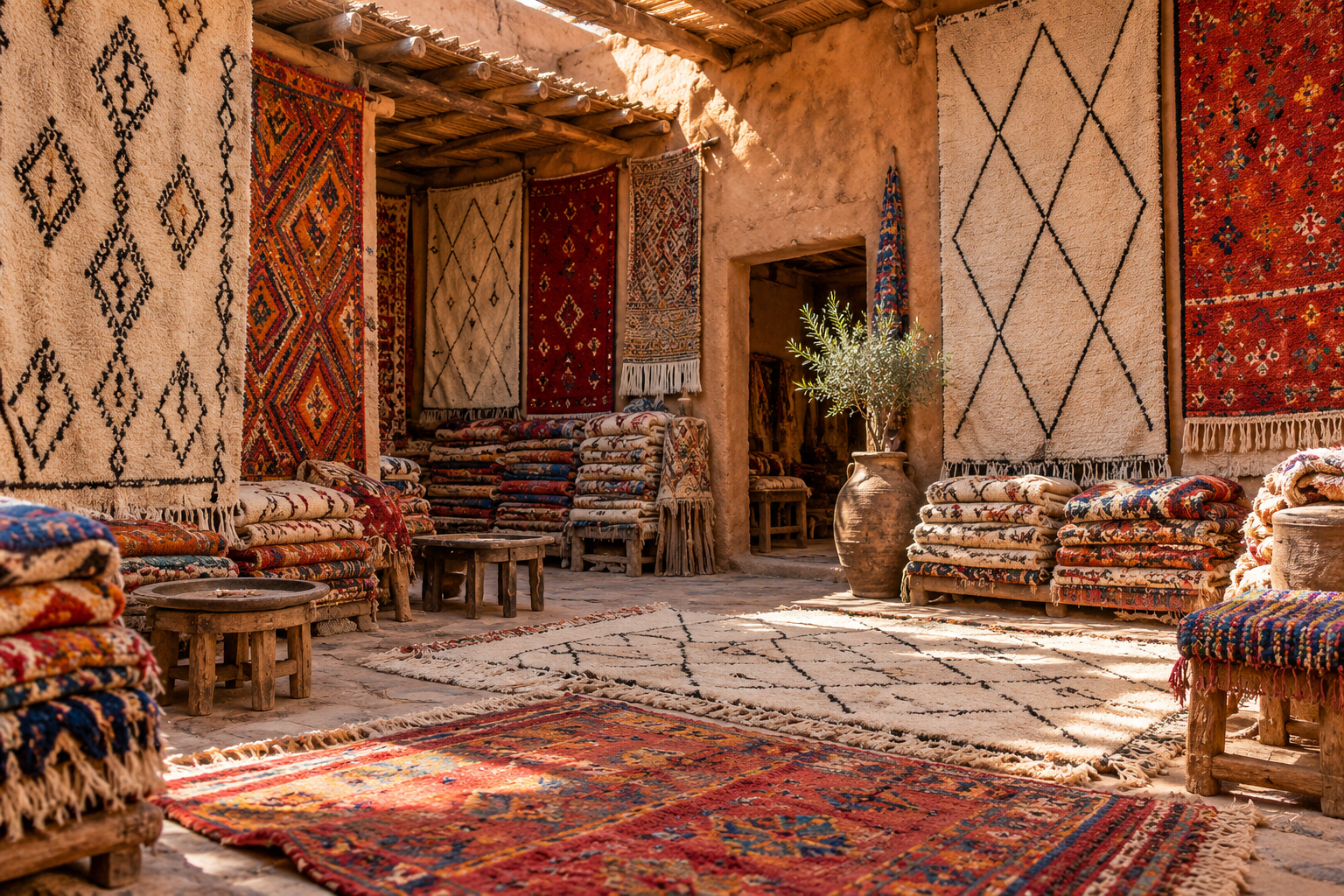
Amazigh rugs are among the most recognized forms of North African textile art. Woven by skilled artisans across different Amazigh regions, these carpets reflect local materials, techniques, landscapes, and creative traditions. Styles such as Beni Ourain, Azilal, and Boujaad have gained international attention, but each name represents a complex regional tradition rather than a simple design category.
Understanding Amazigh Rugs and Regional Weaving Traditions
Amazigh weaving traditions developed across many areas of North Africa, especially in Morocco. Communities adapted their techniques to local environments, available wool, climate conditions, and cultural preferences.
When discussing Berber rugs or types of Berber rugs, it is important to understand that commercial labels are sometimes used broadly. A rug described as Beni Ourain or Azilal should ideally have supporting information about its origin, maker, weaving style, or materials.
A visual resemblance alone does not always prove a rug’s regional identity. A white rug with diamonds is not automatically Beni Ourain, and a colorful geometric rug is not automatically Azilal. Careful evaluation considers multiple characteristics together.
Beni Ourain Rugs: Wool, Texture, and Minimalist Designs
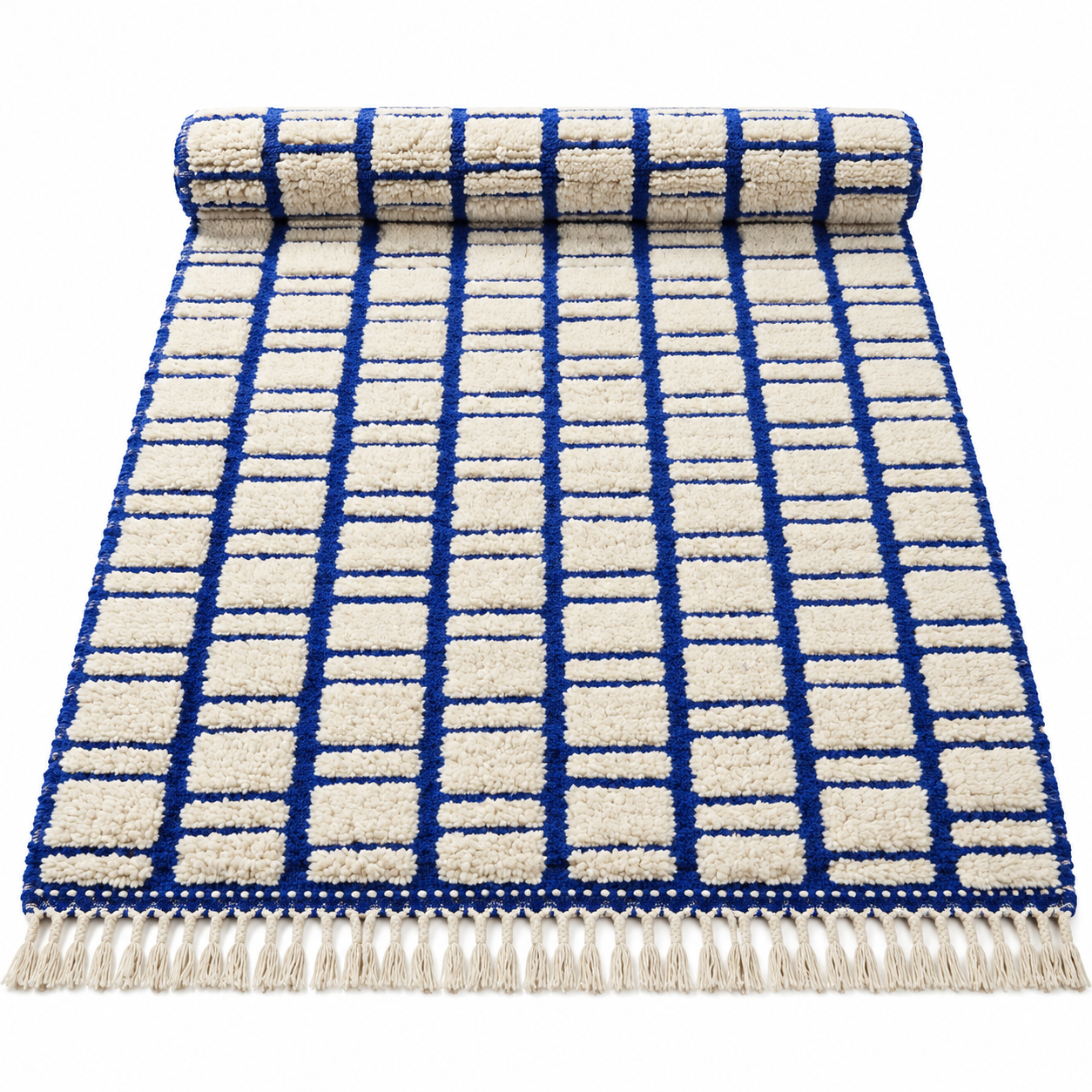
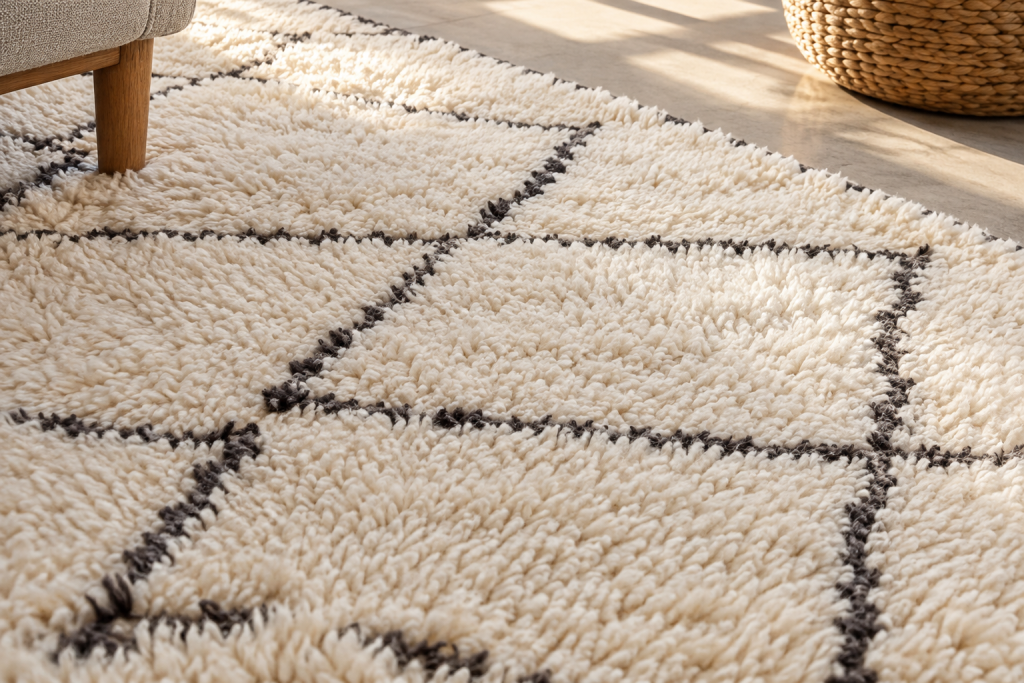
Beni Ourain rugs are associated with Amazigh communities from the Middle Atlas region of Morocco. They are often recognized for soft wool textures, neutral backgrounds, and geometric patterns created through contrasting lines.
Traditional examples were made from wool and valued for warmth and comfort in mountain environments. Their thick pile and natural materials contributed to their practical use in homes.
Common Characteristics of Beni Ourain Style
- Materials: commonly associated with wool construction.
- Texture: often known for a soft, thick pile.
- Colors: frequently natural wool tones with darker geometric details.
- Design: geometric compositions with significant variation between makers.
Modern interior design has increased the popularity of Beni Ourain-inspired rugs worldwide. However, contemporary reproductions may differ significantly from traditional handmade pieces.
Azilal Rugs: Color, Creativity, and Individual Expression
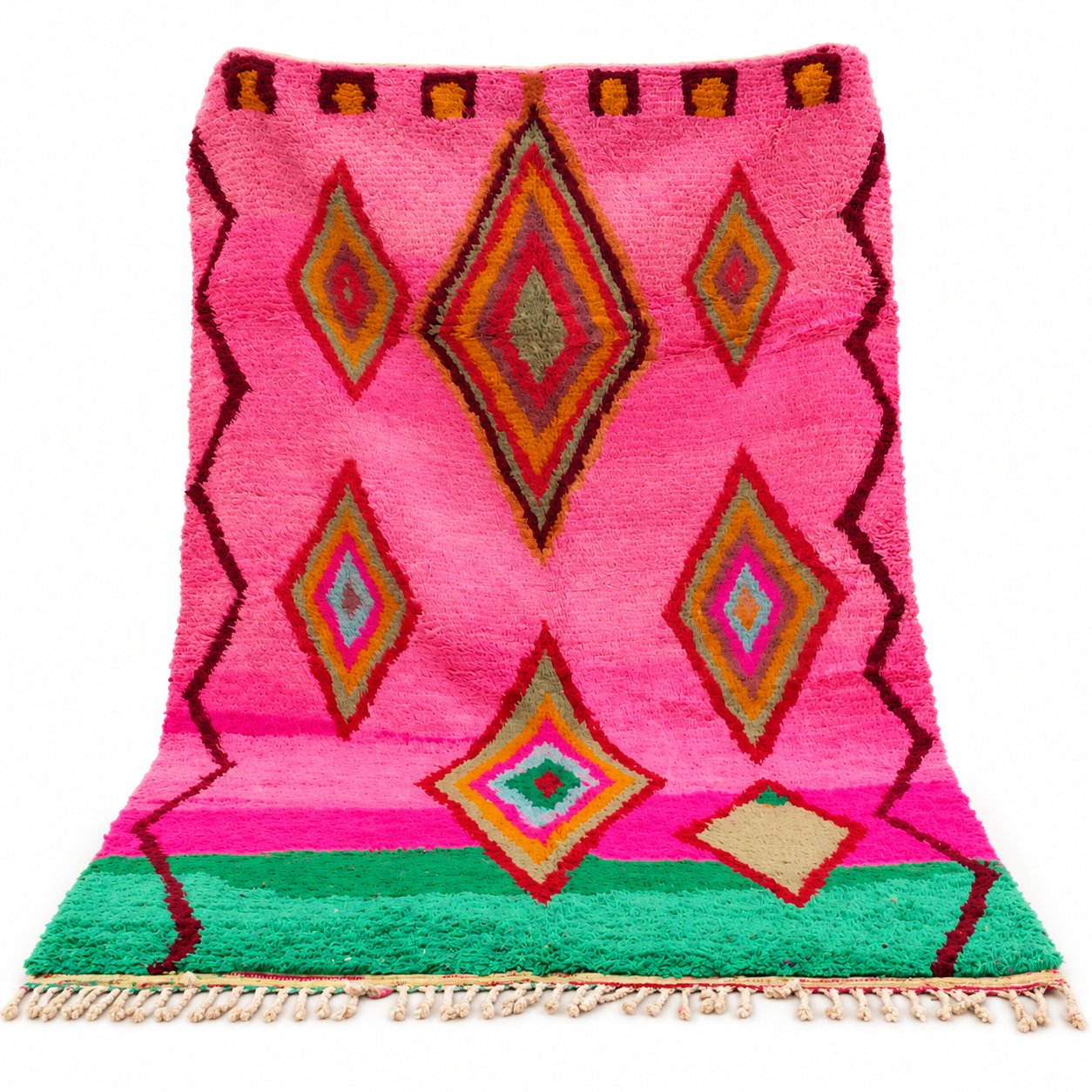
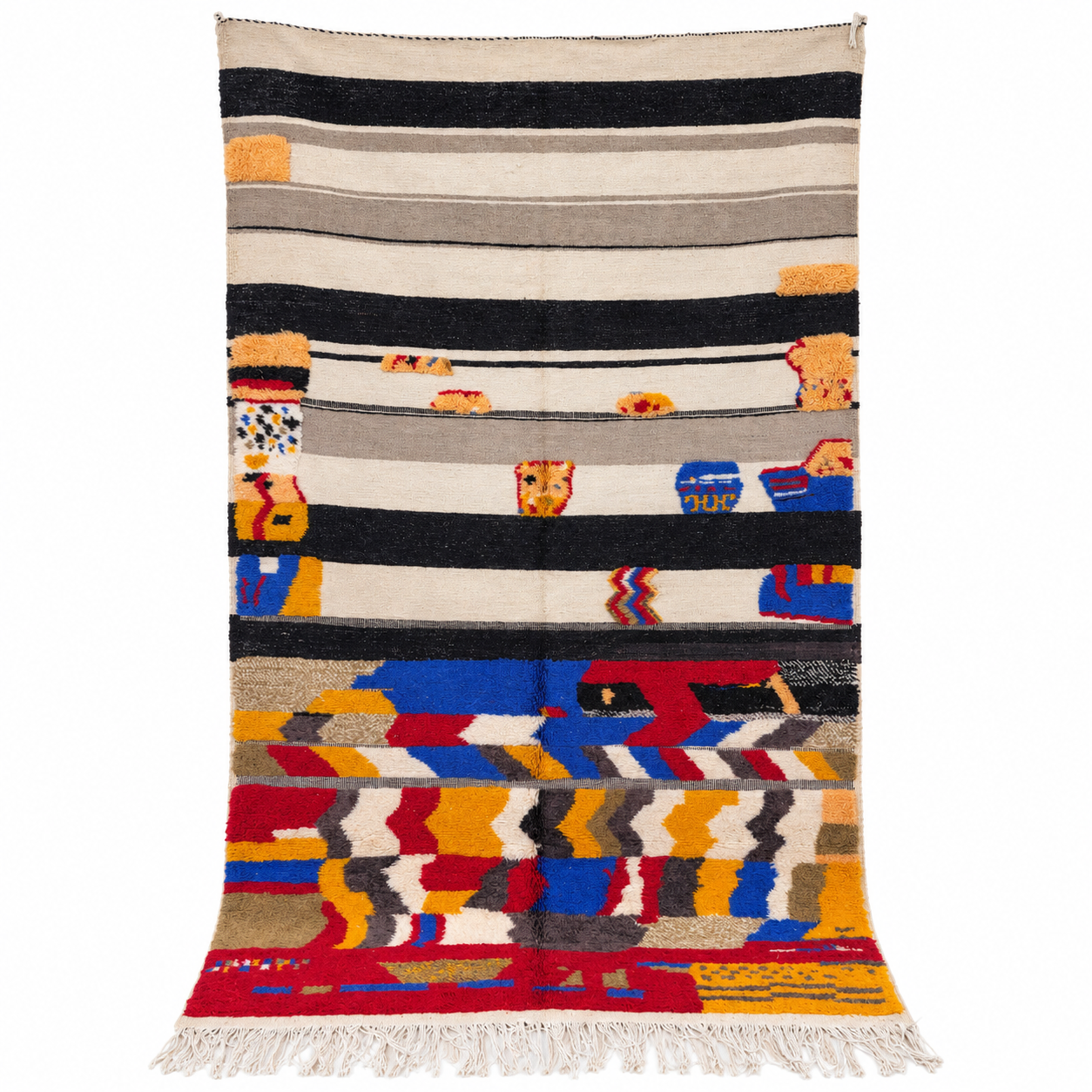
Azilal rugs are associated with the Azilal province in the High Atlas region. They are often recognized for colorful compositions, expressive patterns, and combinations of different shades.
Many Azilal-style textiles demonstrate strong individuality because makers may use creative arrangements of colors and motifs. The result can be highly artistic, with each rug reflecting choices made during the weaving process.
Characteristics Often Found in Azilal Rugs
- Rich combinations of colors.
- Abstract or geometric visual arrangements.
- Wool-based handmade construction in traditional examples.
- Variation between individual pieces.
Not every colorful Amazigh rug is Azilal. Origin information and craftsmanship details remain important when identifying a textile.
Boujaad Rugs: Patterns, Warm Colors, and Regional Identity
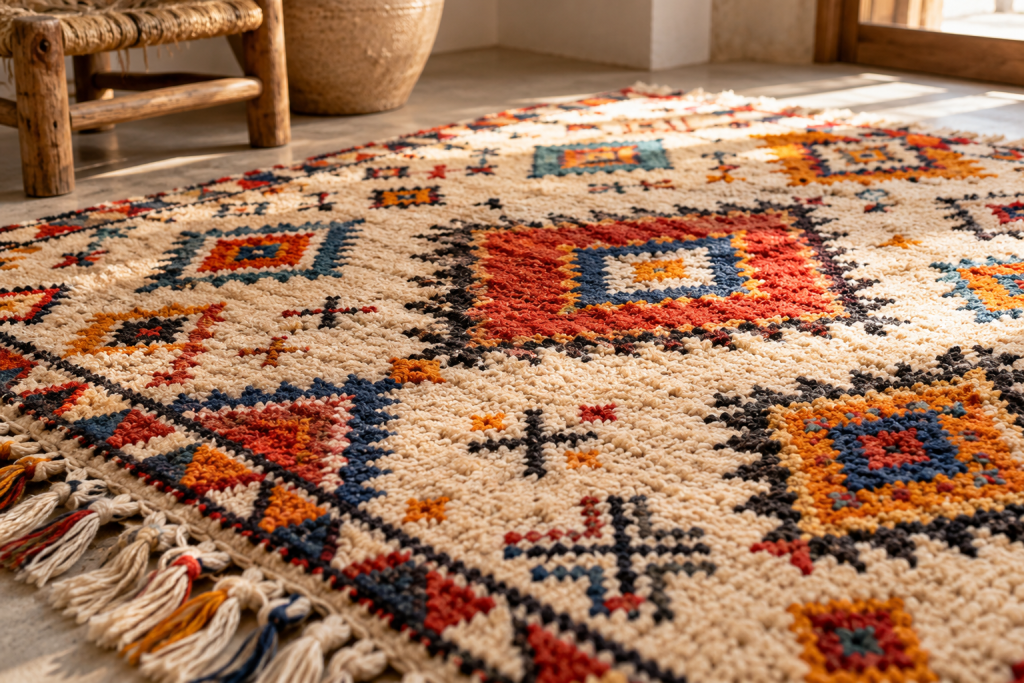
Boujaad rugs are linked with the Boujaad region of Morocco and are often appreciated for warm colors, decorative patterns, and distinctive compositions.
Like other Amazigh rug traditions, Boujaad weaving includes variation. Different artisans may use different combinations of colors, motifs, and techniques depending on personal style and local practices.
Boujaad rugs demonstrate why regional names should be understood as connections to weaving traditions rather than strict rules about appearance.
Comparing Selected Amazigh Rug Traditions
| Style | Region Association | Typical Features | Important Consideration |
|---|---|---|---|
| Beni Ourain | Middle Atlas | Natural wool tones, thick texture, geometric designs | Appearance alone does not confirm origin. |
| Azilal | High Atlas, Azilal area | Colorful compositions and expressive patterns | Colorful rugs can have different origins. |
| Boujaad | Boujaad region | Warm tones and regional decorative styles | Individual maker choices create variation. |
Materials and Construction: What to Look For
The materials and construction methods of a rug provide important information about quality and use. Traditional Amazigh rugs are often associated with wool because it has been widely available in pastoral communities.
Buyers can examine:
- Fiber content and whether materials are natural or synthetic.
- Whether the rug is handmade or machine-produced.
- The density and consistency of weaving.
- The condition of the pile, edges, and backing.
A Practical Buyer’s Checklist for Amazigh Rugs
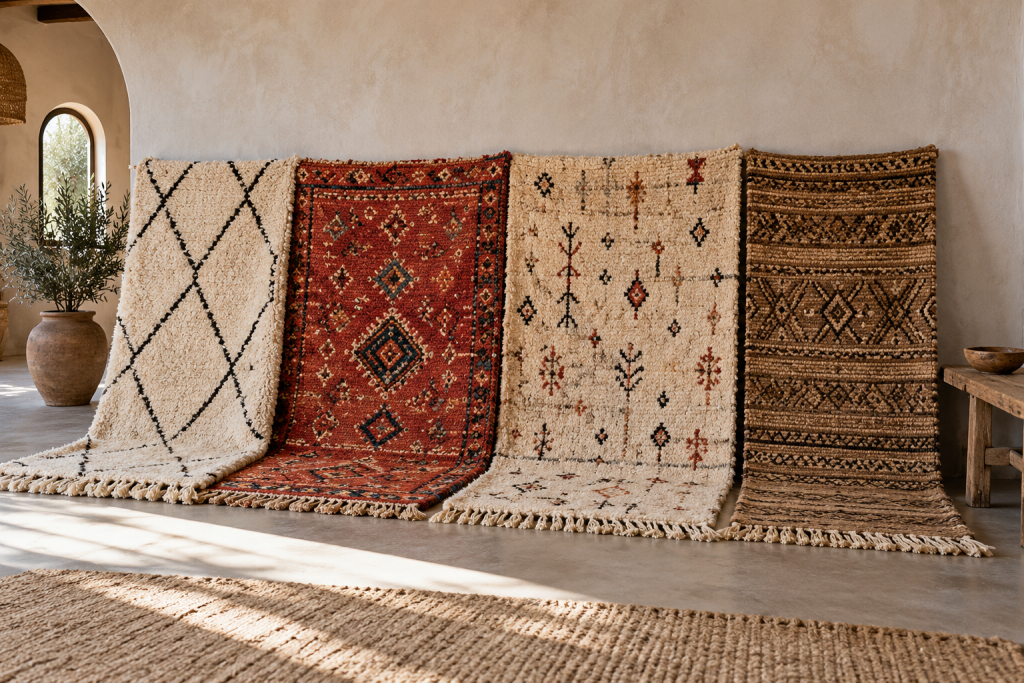
Buying an Amazigh rug requires looking beyond appearance. A careful buyer considers both artistic qualities and factual information about the object.
- Dimensions: confirm the exact size before purchase.
- Fiber content: check whether the rug is wool, mixed fiber, or synthetic.
- Provenance: ask what information is available about region and maker.
- Condition: inspect wear, repairs, stains, and structural quality.
- Maker information: value transparency about craftsmanship.
Close-Up Analysis: Looking at Rug Details
Close-up photographs can reveal important details, but they should be interpreted carefully. Texture, knots, colors, and pattern arrangement may provide clues about craftsmanship.
However, photographs alone cannot always verify origin. A responsible description focuses on visible characteristics unless additional provenance information is available.
Caring for Amazigh Rugs
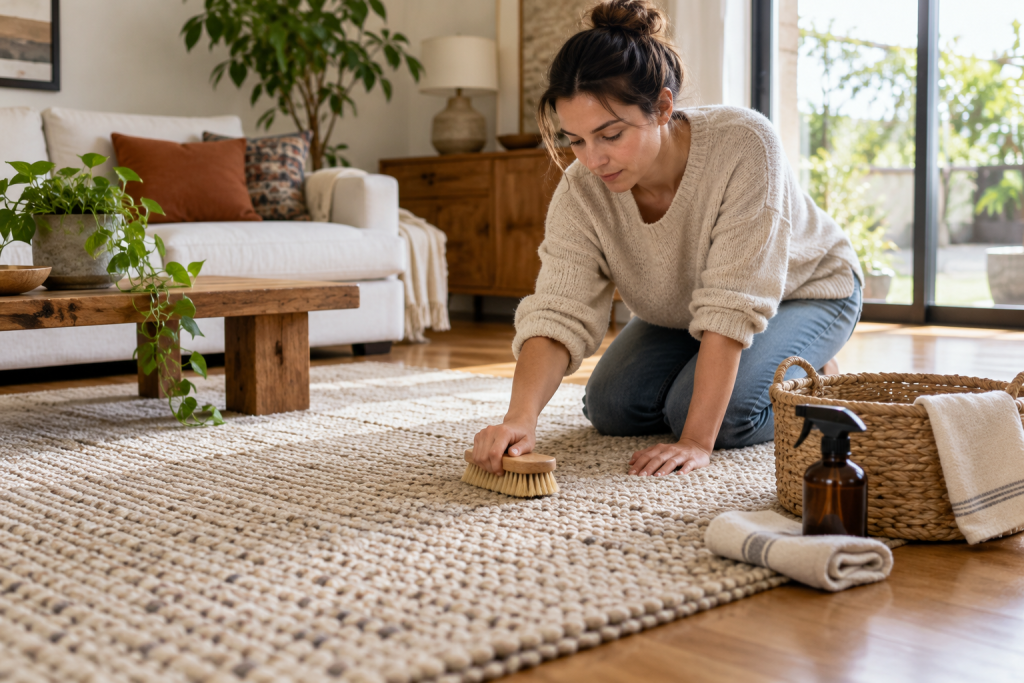
Proper care helps preserve handmade textiles. Regular gentle cleaning, protection from excessive moisture, and careful handling can extend the life of a rug.
- Vacuum gently according to the rug’s construction.
- Avoid harsh cleaning products unless recommended for the material.
- Protect wool rugs from prolonged damp conditions.
- Store textiles in clean, dry environments.
Amazigh Rugs in Contemporary Homes
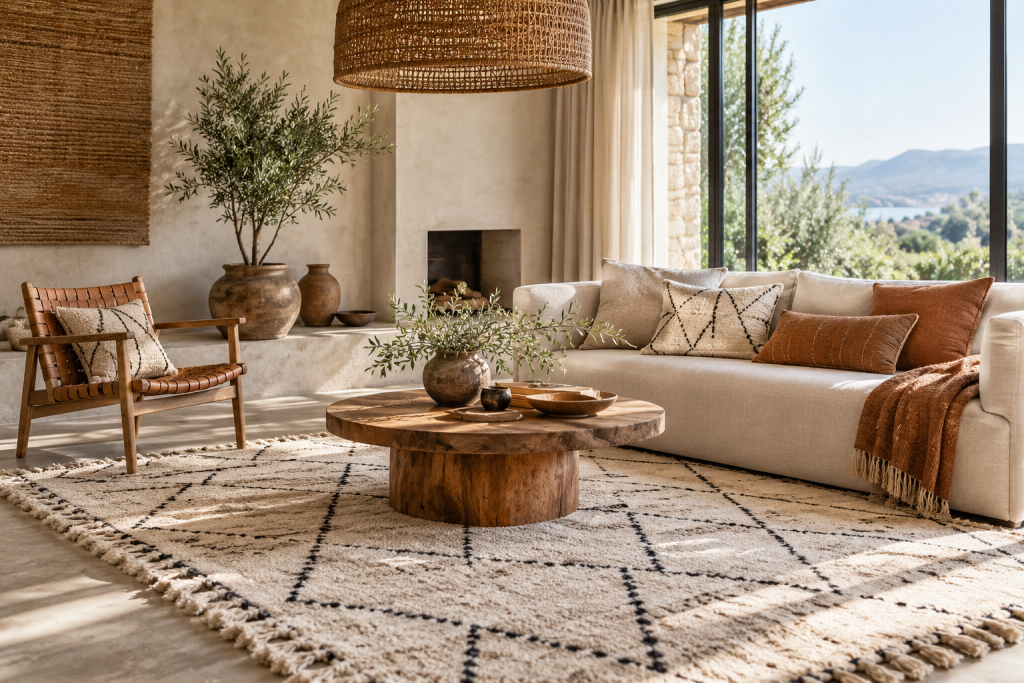
Today, Amazigh rugs appear in many interior styles because of their textures, patterns, and handcrafted character. Their popularity has introduced these traditions to new audiences around the world.
Appreciating Amazigh rugs respectfully means recognizing both their artistic value and their connection to the communities and artisans who create them.
Beyond Beni Ourain, Azilal, and Boujaad
Amazigh weaving includes many other regional traditions beyond the most internationally recognized names. Each area contributes different approaches to color, technique, and design.
Exploring these traditions reveals that Amazigh rugs are not one style but a diverse collection of textile practices shaped by geography and creativity.
The History Behind Amazigh Weaving Traditions
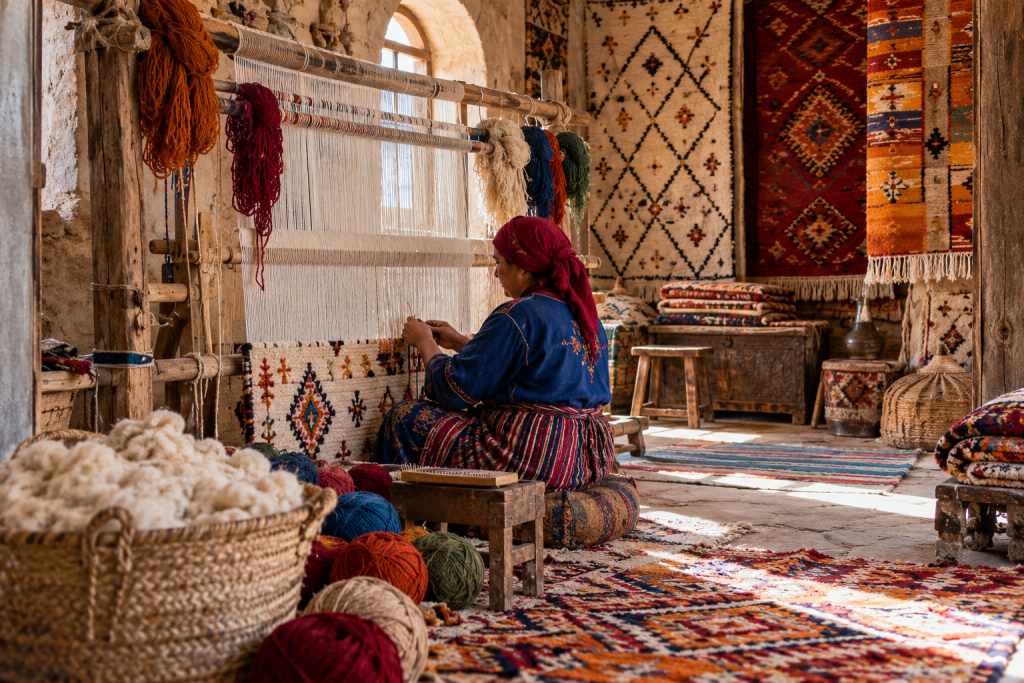
Amazigh weaving traditions developed through generations of practical knowledge and artistic experimentation. Rugs were historically connected with everyday life, providing warmth, comfort, and decoration in homes while also reflecting local skills and resources.
The creation of a rug involves many stages, including preparing wool, spinning fibers, choosing colors, and building patterns through weaving. These processes require patience and technical knowledge that are often learned through family and community experience.
Natural Materials and Traditional Techniques
Wool has been an important material in many Amazigh textile traditions because of its availability and useful properties. It provides insulation, durability, and a distinctive texture that contributes to the character of handmade rugs.
Traditional dyeing methods and local materials have also influenced the appearance of textiles. Colors may come from natural sources or modern materials depending on the period, region, and artisan practice.
Handmade Variation: Why Every Rug Can Be Different
One of the defining features of handmade Amazigh rugs is individuality. Unlike factory-produced carpets, handmade pieces often contain small variations created during the weaving process.
These differences are not necessarily imperfections. Slight changes in pattern, texture, or color can reflect the human process behind the object and the personal decisions of the maker.
- Pattern variation: designs may change during weaving rather than following a fixed template.
- Color differences: handmade dyeing and material variation can create unique tones.
- Texture differences: weaving methods influence softness, thickness, and surface appearance.
Vintage, Antique, and New Amazigh Rugs
Buyers often encounter descriptions such as vintage, antique, or new when searching for Amazigh rugs. These terms can refer to age, condition, or marketing categories, so additional information is useful.
A vintage rug may show signs of previous use, repairs, fading, or changes caused by time. A newer handmade rug may use traditional techniques while being recently produced. Understanding these differences helps buyers choose a piece that matches their expectations.
Questions to Ask Before Buying an Amazigh Rug
A careful purchase begins with asking clear questions about the textile. Sellers who provide detailed information about their products make it easier to understand the relationship between the rug and its makers.
- Where was the rug made, and is the regional information verified?
- What materials were used in the construction?
- Was the rug handmade, hand-finished, or machine-produced?
- Are there details about the artisan, workshop, or weaving tradition?
- How should the rug be cleaned and maintained?
Balancing Design Appreciation and Cultural Context
Amazigh rugs have become popular in global interior design because of their textures and visual appeal. While enjoying their beauty, it is also important to remember that these textiles are connected to real communities, skills, and histories.
A rug is not only a decorative object. It represents choices made by craftspeople, knowledge developed over generations, and relationships between materials, environment, and artistic expression.
Supporting Responsible Craft Appreciation
Interest in Amazigh rugs can help increase appreciation for traditional craftsmanship, but responsible buying involves looking beyond simple labels. Transparent information about production, materials, and origin creates a stronger connection between customers and artisans.
Supporting cultural heritage means recognizing makers as skilled professionals and valuing the knowledge involved in producing handmade textiles.
Conclusion: Appreciating Amazigh Rug Heritage
Amazigh rugs represent craftsmanship, regional identity, and generations of textile knowledge. Understanding the differences between Beni Ourain, Azilal, Boujaad, and other traditions allows buyers and enthusiasts to appreciate these works with greater accuracy and respect.
 No products in the cart.
Comments (21)