










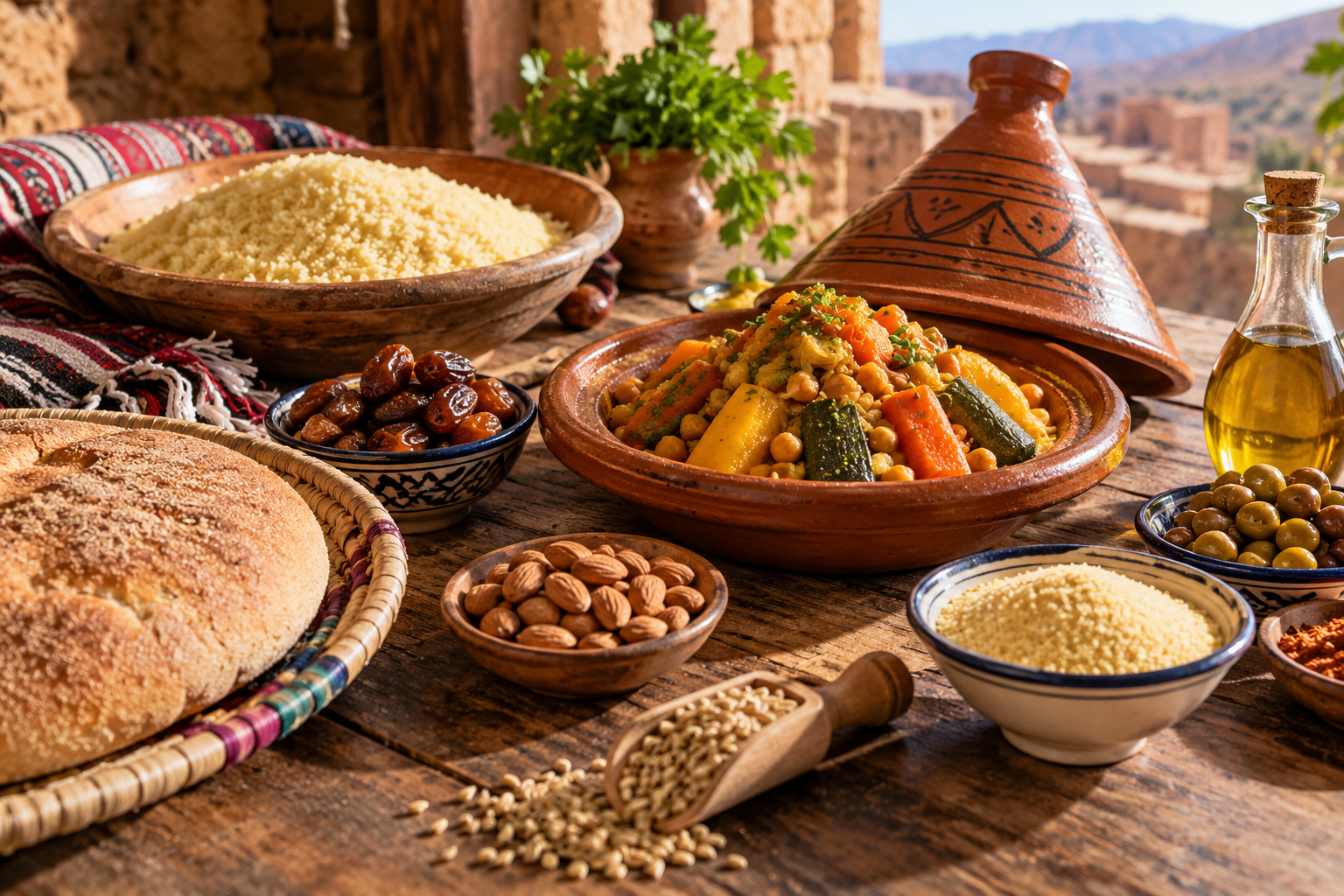
Amazigh food reflects the diversity of communities across North Africa, combining local ingredients, agricultural knowledge, seasonal traditions, and family practices. Often discussed internationally as part of Berber cuisine, these food traditions include many regional variations shaped by geography, climate, and history.
Understanding Amazigh Food Traditions
Amazigh communities are found across different regions of North Africa, including Morocco, Algeria, Libya, Tunisia, and other areas. Because these communities developed in different environments, there is no single Amazigh cuisine.
Mountain regions, coastal areas, farming communities, and desert environments each influenced available ingredients and cooking practices. A dish may have shared elements with broader North African cuisine while also carrying local meanings and preparation traditions.
Ingredients at the Heart of Amazigh Cuisine
Many Amazigh food traditions are connected with agricultural life. Grains, legumes, seasonal vegetables, oils, herbs, and locally available products have historically played important roles.
- Grains: wheat and barley have been important staples in many communities.
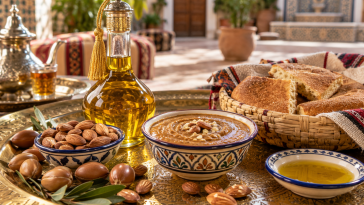
- Oils: olive oil and argan oil are significant in different regional food traditions.
- Seasonal produce: ingredients often reflect local farming cycles.
- Legumes: beans, lentils, and other legumes contribute to many traditional meals.
Couscous and Shared Meals
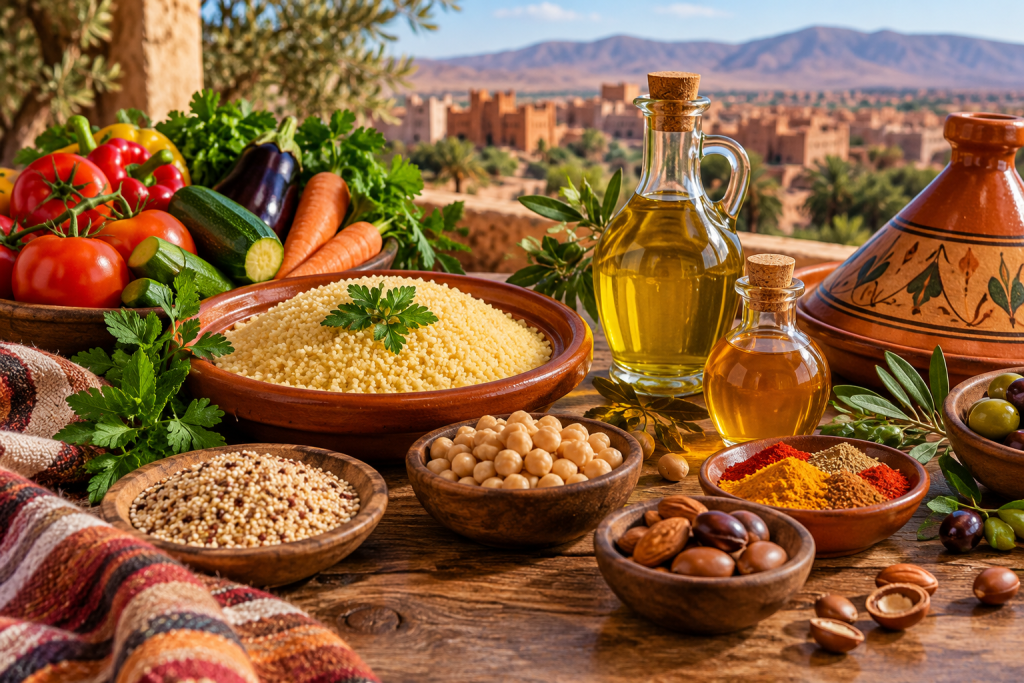
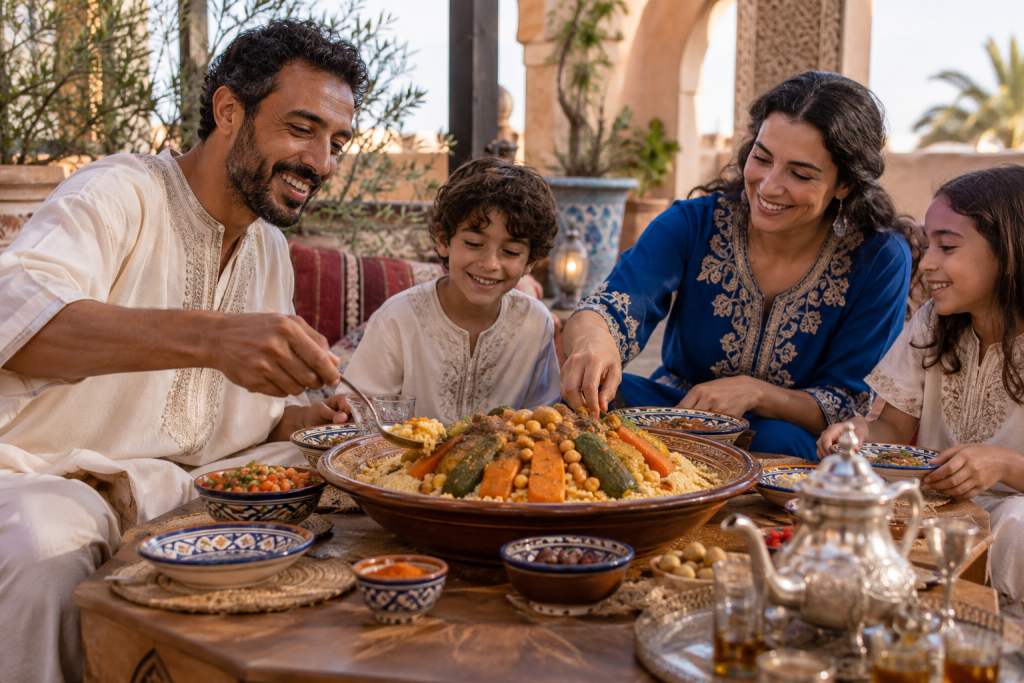
Couscous is one of the most recognized foods associated with North African cuisine and is prepared in many Amazigh communities. It is important to recognize that couscous traditions are shared across different groups and regions rather than belonging exclusively to one community.
Among Amazigh communities, couscous can be connected with family gatherings, celebrations, seasonal occasions, and hospitality. Regional differences may appear in ingredients, preparation styles, and serving traditions.
Breads and Grain-Based Foods
Bread has a central place in many Amazigh households. Different regions developed their own approaches to grain preparation, reflecting available ingredients and local preferences.
Traditional breads may be connected with everyday meals, agricultural life, and social gatherings. Their importance extends beyond nutrition because bread often represents sharing and hospitality.
A Selection of Amazigh and Regional Foods
| Dish or Ingredient | Main Elements | Regional Example | Social Setting |
|---|---|---|---|
| Couscous | Semolina grains with vegetables, legumes, or other additions depending on region. | Prepared across many North African communities, including Amazigh regions. | Family meals, gatherings, celebrations. |
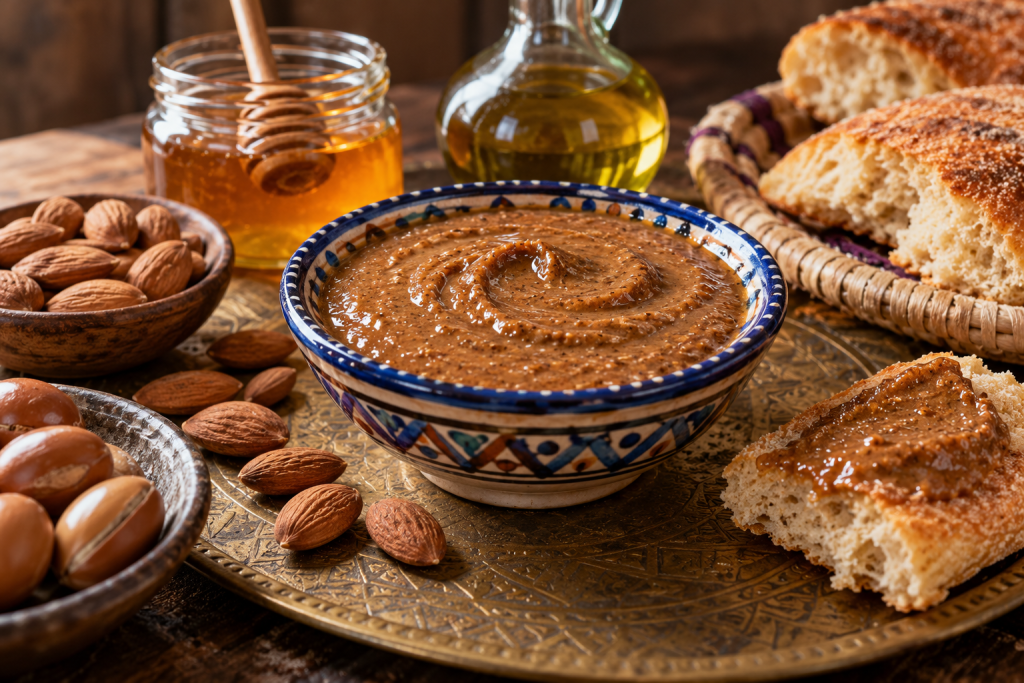
| Amlou | Argan oil, almonds, and a sweet ingredient such as honey. | Associated especially with southwestern Morocco. | Breakfast, hospitality, traditional serving. |
| Barley-based foods | Barley flour or grains prepared in different regional ways. | Various rural Amazigh communities. | Everyday meals and seasonal traditions. |
| Seasonal soups and dishes | Local vegetables, grains, legumes, and herbs. | Different mountain and farming regions. | Daily household cooking. |
Amlou: Argan Oil and Southwestern Food Culture
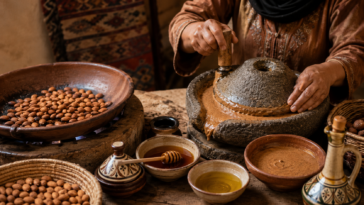
Amlou is a well-known spread associated with southwestern Morocco. It is commonly made with argan oil, almonds, and a sweet ingredient, creating a rich mixture often served with bread.
The use of argan oil connects food traditions with local agriculture and knowledge about processing argan kernels. As with many traditional foods, modern commercial versions may vary from household preparations.
Yennayer and Food Traditions
Food is an important part of many Yennayer celebrations, the Amazigh New Year observed by many communities. Dishes prepared for the occasion vary by region and family tradition.
Meals connected with Yennayer often emphasize themes of abundance, family connection, and seasonal renewal. However, celebrations are diverse, and not every household follows the same customs.
Regional Diversity in Amazigh Food
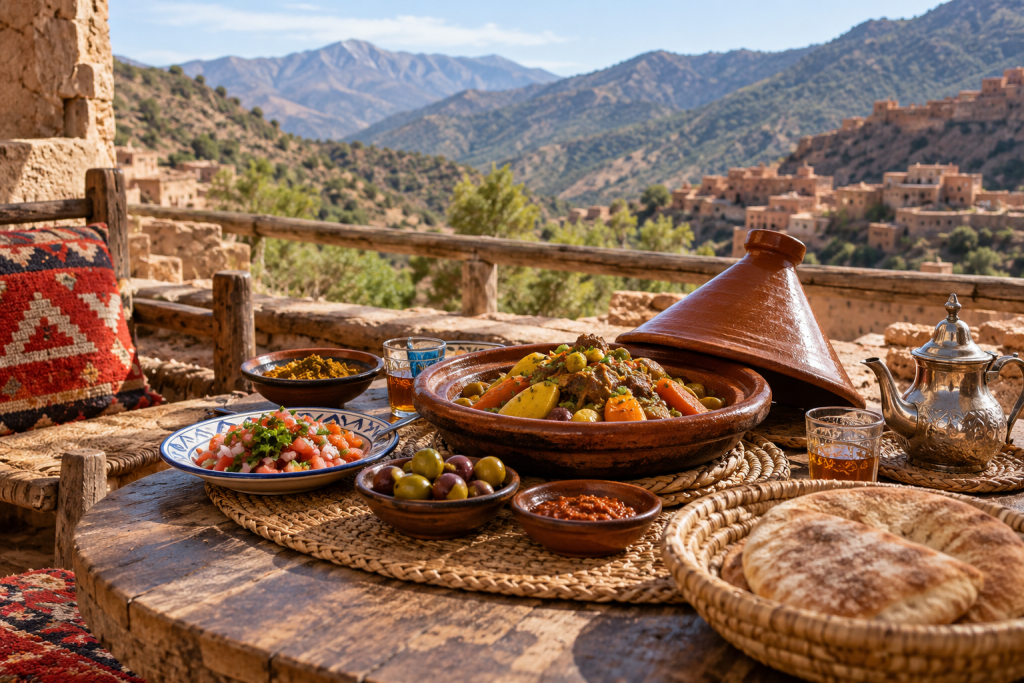
Atlas Mountain Food Traditions
Mountain communities have historically relied on ingredients adapted to local environments. Grains, dairy products, vegetables, and preserved foods have played roles in household cooking.
Souss Food Traditions
The Souss region is known for agricultural products including argan-related foods. Local dishes reflect farming practices and regional resources.
Kabyle Food Traditions
Kabyle cuisine from Algeria includes its own regional dishes, breads, and ingredients. These traditions should be understood within their specific cultural and geographic context.
Food, Family, and Hospitality

Amazigh meals are often connected with relationships between people. Sharing food can express welcome, generosity, and community connection.
Cooking knowledge is frequently passed between generations through observation and participation. Recipes may change over time while maintaining connections with family and regional identity.
Documented Recipes and Modern Adaptations
Traditional food descriptions should distinguish between documented regional practices and modern interpretations. Restaurants, cookbooks, and contemporary cooks may adapt dishes for new audiences while drawing inspiration from older traditions.
These adaptations do not replace traditional practices, but they show how food cultures continue to evolve.
How to Explore Amazigh Food Respectfully
- Learn about the specific region connected with a dish.
- Recognize shared North African culinary influences.
- Support local producers and artisans when possible.
- Understand food traditions through community knowledge and documented research.
The Living Heritage of Amazigh Cuisine
Amazigh food represents more than ingredients and recipes. It reflects relationships between people, land, seasons, and cultural memory.
Through grains, breads, oils, shared meals, and regional dishes, Amazigh culinary traditions continue to connect past knowledge with contemporary life.
Seasonal Food Knowledge and the Agricultural Calendar
Amazigh food traditions are closely connected with the rhythm of agricultural seasons. The availability of ingredients often influenced what families prepared, preserved, and shared throughout the year.
Seasonal knowledge includes understanding when grains are harvested, when fruits become available, and how ingredients can be stored for later use. This relationship between food and the land reflects the importance of agriculture in many Amazigh communities.
Preserving Ingredients Through Traditional Methods
Before modern refrigeration and large-scale food distribution, communities developed methods to preserve foods according to local conditions. Drying, storing grains, and preparing preserved ingredients helped households manage seasonal changes.
These practices demonstrate that traditional cuisine is also a form of environmental knowledge. Food preparation reflects adaptation to climate, resources, and community needs.
Herbs, Spices, and Local Flavors
Regional Amazigh cooking uses different combinations of herbs, spices, and natural flavors depending on location and family tradition. The exact ingredients vary, but many dishes reflect careful use of locally available resources.
Herbs and spices are not only valued for taste. In many culinary traditions, they are connected with household knowledge and the experience of preparing food across generations.
- Fresh herbs: often add aroma and regional character to meals.
- Spices: contribute flavor and reflect local culinary preferences.
- Natural oils: provide important elements of taste and texture.
Traditional Meals as Social Events
Food in Amazigh communities often creates opportunities for connection. A meal can bring together relatives, neighbors, and guests, reinforcing relationships through sharing.
The preparation of food may involve several people working together. These moments allow knowledge about ingredients, techniques, and cultural practices to be passed from one generation to another.
Hospitality and the Meaning of Sharing
Offering food to guests is an important expression of welcome in many North African communities. While specific customs differ between regions and families, hospitality remains an important theme in discussions of Amazigh food culture.
Understanding this social dimension helps explain why certain dishes are valued not only for their ingredients but also for the memories and relationships connected with them.
Differences Between Household Recipes and Commercial Versions
Traditional dishes often change when they move from family kitchens to restaurants, cookbooks, or international markets. Modern adaptations may adjust ingredients, presentation, or preparation methods for different audiences.
These changes do not necessarily remove cultural value, but they should be described accurately. A restaurant interpretation inspired by a traditional dish is different from a documented regional household recipe.
- Household recipes may vary between families.
- Regional versions can include different ingredients.
- Commercial adaptations may reflect modern preferences.
Food Heritage and Cultural Documentation
Documenting Amazigh food involves more than recording ingredients. Researchers and cultural organizations also examine farming practices, food-related celebrations, oral knowledge, and the social importance of meals.
Recipes are part of a wider cultural system that includes language, stories, agricultural practices, and relationships between communities and their environments.
Exploring Amazigh Food Through Responsible Learning
People interested in Amazigh cuisine can deepen their understanding by exploring the specific communities connected with different dishes. Regional context helps avoid reducing a diverse culinary heritage into a single category.
- Explore regional histories behind dishes.
- Learn from cooks, artisans, and documented cultural sources.
- Recognize similarities between Amazigh and other North African cuisines.
- Appreciate food as both nourishment and cultural expression.
The Future of Amazigh Culinary Traditions
Amazigh food continues to develop as new generations preserve family knowledge while creating new interpretations. Younger cooks, restaurants, and cultural projects contribute to keeping traditional dishes visible in changing environments.
The future of Amazigh cuisine depends on both preservation and creativity. Traditional foods remain meaningful because communities continue preparing, adapting, and sharing them.
Conclusion: Stories Served Through Food
Amazigh cuisine is a diverse collection of food traditions shaped by many communities. Exploring these dishes reveals the importance of agriculture, hospitality, and cultural continuity across generations.
 No products in the cart.
Comments (23)