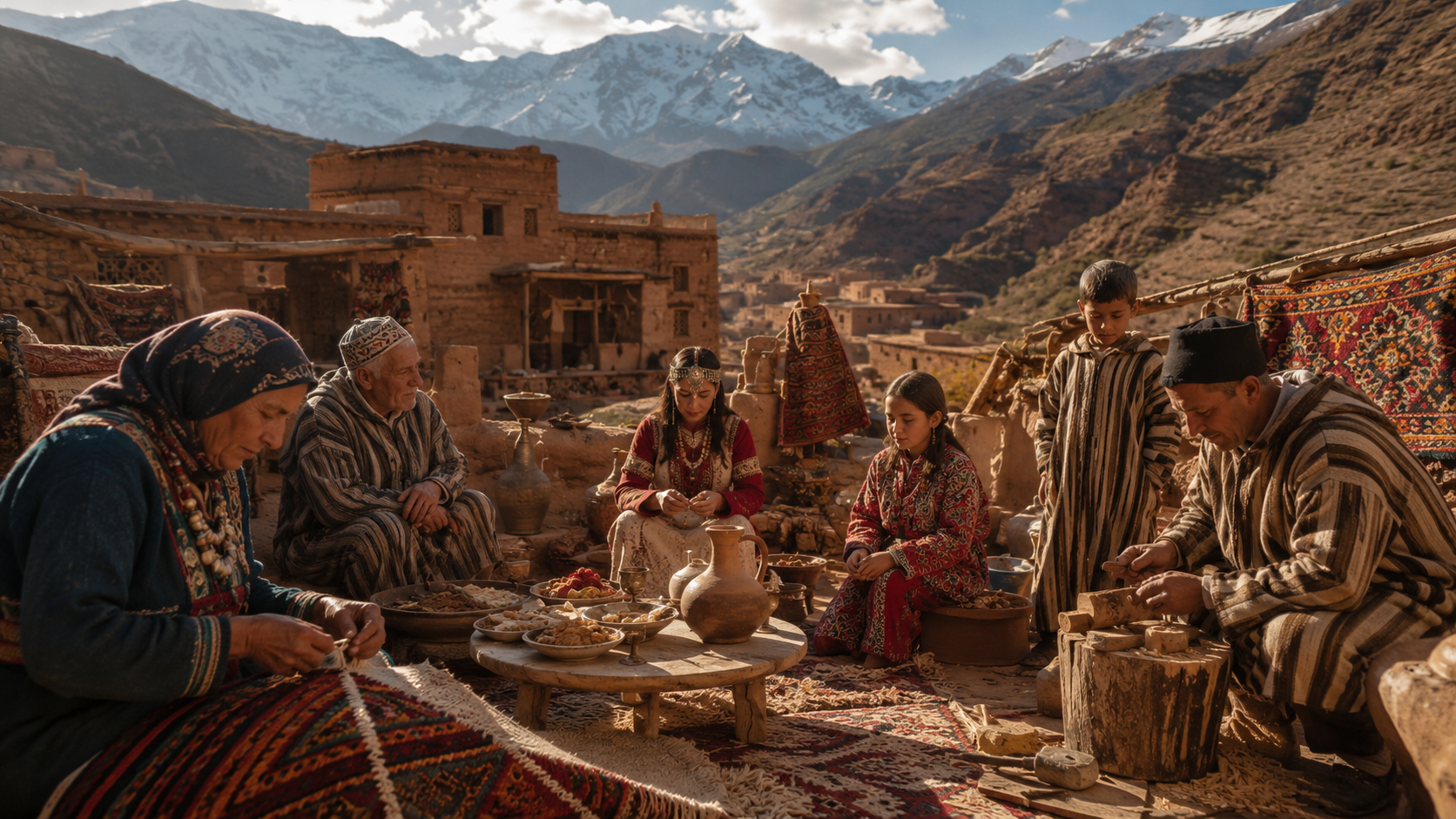
Amazigh culture is one of the oldest and richest cultural heritages of North Africa. Often known internationally as “Berber culture,” Amazigh heritage belongs to the Indigenous peoples of North Africa, with communities found across Morocco, Algeria, Tunisia, Libya, Mauritania, Mali, Niger, and Egypt’s Siwa region.
In Morocco especially, Amazigh identity is visible everywhere: in mountain villages, desert traditions, jewelry, rugs, music, language, symbols, food, architecture, clothing, and everyday family life. It is not only something from the past. Amazigh culture is alive today, carried by families, artisans, farmers, musicians, weavers, cooks, and young people who continue to celebrate their roots in modern ways.
The word “Amazigh” is often translated as “free person” or “noble free person.” The plural form is “Imazighen,” referring to Amazigh people collectively. The language is commonly called “Tamazight,” although there are different Amazigh languages and regional varieties across North Africa.
This guide will introduce you to Amazigh culture in a simple but detailed way: its origins, language, symbols, crafts, clothing, jewelry, food, home decor, and the deeper meaning behind the handmade pieces that continue to inspire Moroccan and North African design.
Amazigh or Berber: What Is the Difference?
Many people around the world know Amazigh people by the word “Berber.” This name appears in history books, travel guides, museums, and product descriptions. However, many people from this culture prefer the word “Amazigh” because it comes from within the culture itself.
“Berber” is an older external name used by outsiders for centuries. “Amazigh” is the name connected to identity, language, heritage, and pride. Today, both words are still used, especially in international searches, but “Amazigh” is more respectful and culturally rooted.
For example:
- Amazigh culture means the culture of the Indigenous people of North Africa.
- Imazighen means Amazigh people.
- Tamazight refers to Amazigh language and identity.
- Tifinagh is the traditional Amazigh writing system used in many cultural signs, designs, and symbols.
- Berber is still commonly used internationally, especially for rugs, jewelry, and textiles.
In a shop like Amazigh Shop, both words can be helpful. “Amazigh” shows respect and authenticity, while “Berber” helps customers who are searching online for Moroccan Berber rugs, Berber jewelry, or Berber-inspired decor.
Where Does Amazigh Culture Come From?
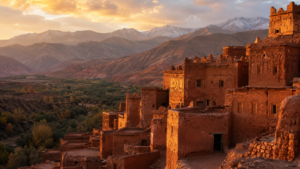
Amazigh culture is deeply connected to the landscapes of North Africa. From the Atlas Mountains of Morocco to the Sahara Desert, from the Rif Mountains to the Souss region, from Kabyle villages in Algeria to Tuareg communities in the Sahara, Amazigh identity has developed across diverse environments.
The mountains, valleys, oases, deserts, and coastal areas all shaped different Amazigh ways of life. Some communities were farmers, some were traders, some were nomadic or semi-nomadic, and others became known for specific crafts such as weaving, metalwork, pottery, leatherwork, woodwork, and jewelry.
This is why Amazigh culture is not one single style. It is a family of traditions. A rug from the High Atlas may look different from one from the Middle Atlas. Jewelry from the Anti-Atlas may have different shapes than Tuareg jewelry from the Sahara. A dress from one region may carry different colors, patterns, and meanings than a dress from another region.
But across these differences, Amazigh culture often shares important themes:
- A strong connection to land and nature
- Deep respect for family and community
- Symbolic patterns and protective signs
- Handmade craftsmanship
- Oral storytelling, poetry, and music
- Traditional food made with local ingredients
- Beautiful textiles, jewelry, and everyday objects with meaning
The Amazigh Language: Tamazight
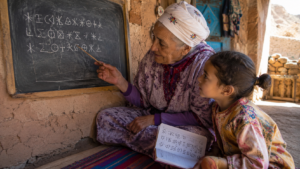
Language is one of the strongest parts of Amazigh identity. Tamazight belongs to the Amazigh branch of the Afro-Asiatic language family. In Morocco, several major Amazigh varieties are spoken, including Tashelhit in the Souss and Anti-Atlas regions, Central Atlas Tamazight, and Tarifit in the Rif.
For many families, Tamazight is the language of home, memory, songs, jokes, proverbs, and traditional wisdom. It carries emotions and expressions that cannot always be translated perfectly into Arabic, French, English, or other languages.
In Morocco, Tamazight has official recognition and is part of the country’s cultural identity. You can see Tifinagh letters on signs, public buildings, cultural centers, and artistic designs. This visibility is important because it shows that Amazigh identity is not hidden. It is part of the public face of Morocco.
For Amazigh people, language is more than communication. It is a bridge between generations. When a grandmother tells a story in Tamazight, she is not only speaking words. She is passing down humor, history, values, rhythm, and identity.
Tifinagh: The Beautiful Amazigh Alphabet
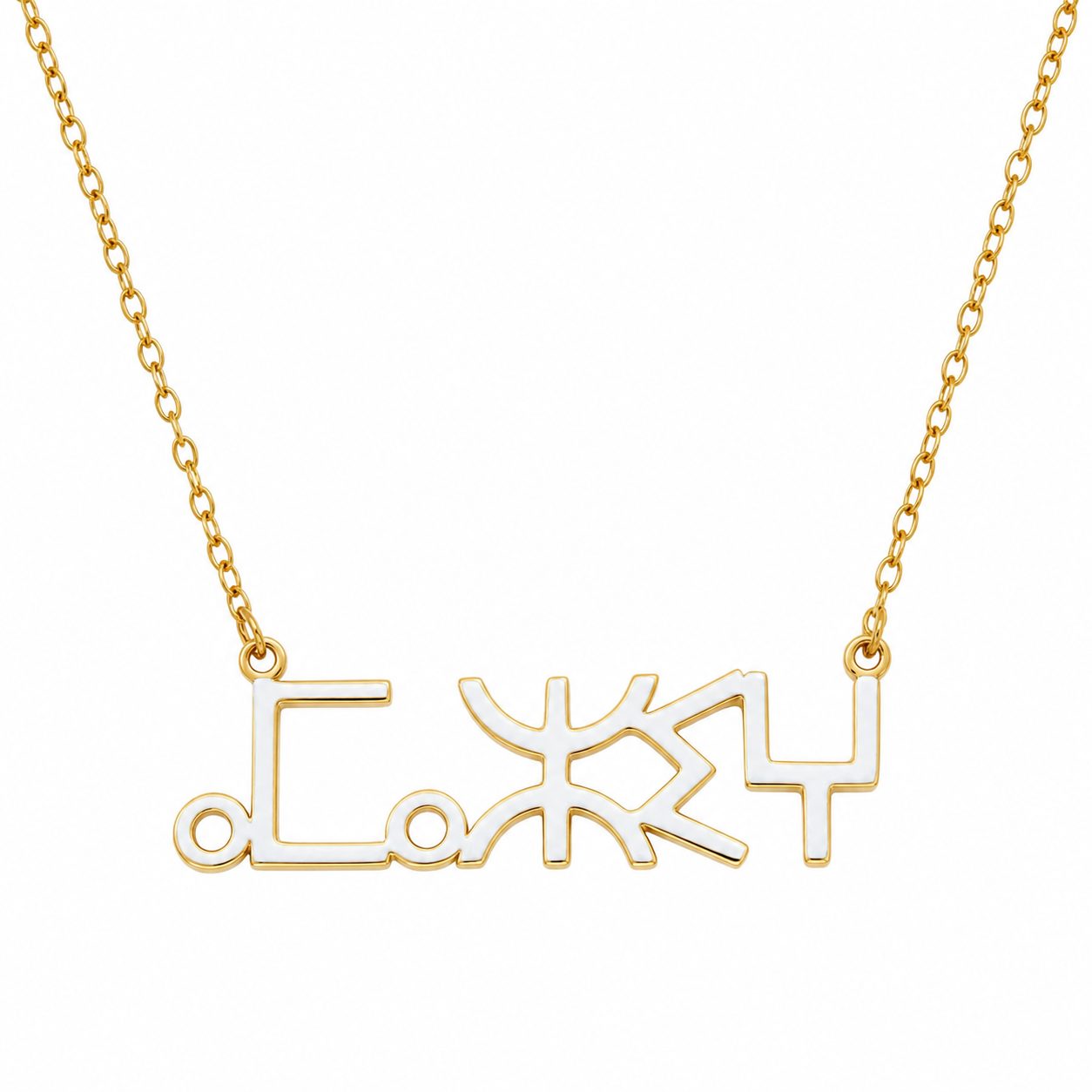
One of the most recognizable parts of Amazigh culture is the Tifinagh alphabet. These letters are geometric, elegant, and deeply symbolic. The most famous character is the Yaz symbol: ⵣ.
The ⵣ symbol is widely recognized as a sign of Amazigh identity, freedom, strength, and cultural pride. It appears on flags, jewelry, tattoos, wall art, clothing, logos, and decorative objects. For many people, it is not just a letter. It is a symbol of belonging.
Tifinagh letters fit beautifully into modern design because they are simple, balanced, and visually powerful. This is why they appear often in Amazigh-inspired art, home decor, jewelry, textiles, and branding.
At Amazigh Shop, the Tifinagh spirit can be seen as part of a wider design language: geometric, meaningful, ancestral, and elegant.
Amazigh Symbols and Their Meanings
Amazigh art is full of symbols. These symbols appear in rugs, jewelry, pottery, tattoos, wall art, clothing, and architecture. Many of them are geometric: diamonds, triangles, lines, crosses, eyes, zigzags, stars, and mountain shapes.
While meanings can vary by region and family tradition, Amazigh symbols are often connected to:
- Protection
- Fertility
- Motherhood
- Freedom
- Strength
- Nature
- Water and rain
- Mountains
- The sun
- The home
- Life journey
- Spiritual protection
- Identity and belonging
For example, diamond shapes are often associated with femininity, protection, and life. Zigzag lines may be connected to water, movement, or journey. Eye-like symbols are often seen as protective motifs. Mountain shapes can represent land, strength, and connection to place.
It is important to remember that Amazigh symbols are not just decoration. They are a visual language. Before many people wrote stories in books, they told stories through wool, silver, clay, wood, leather, and pattern.
A rug could speak. A necklace could protect. A tattoo could show identity. A pot could carry memory. This is the beauty of Amazigh design: it turns everyday objects into meaningful cultural expressions.
Amazigh Jewelry: Beauty, Protection, and Identity
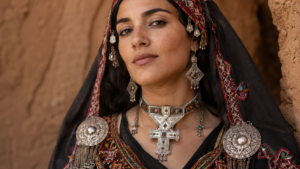
Amazigh jewelry is one of the most powerful expressions of Berber heritage. Traditionally, jewelry was not only worn for beauty. It could represent family status, protection, regional identity, wealth, femininity, and spiritual meaning.
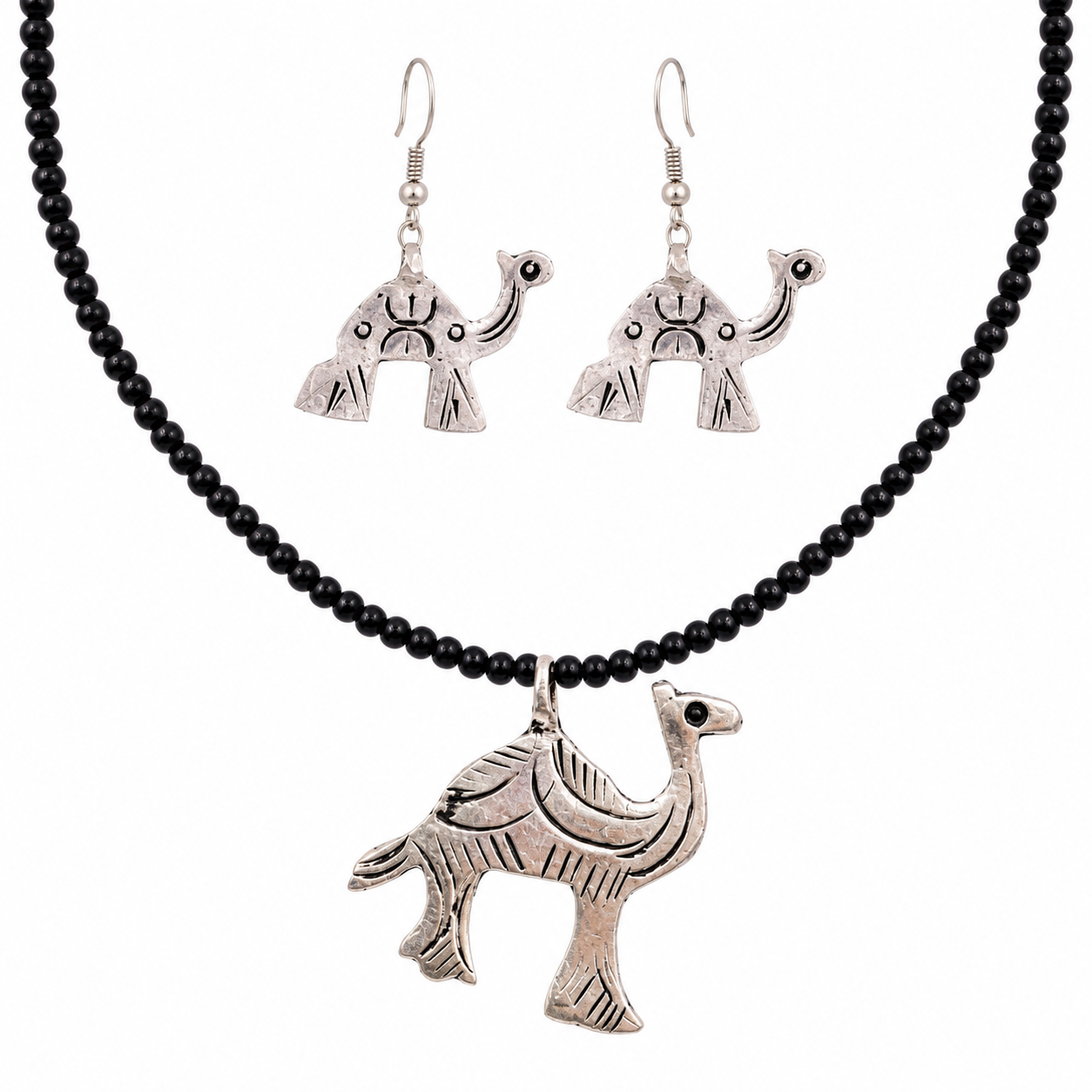
Many traditional pieces are bold, detailed, and symbolic. Silver and silver-plated designs are common in Amazigh-inspired jewelry, especially in necklaces, earrings, fibulas, crowns, bracelets, and pendants.
The Fibula
One of the most iconic Amazigh jewelry forms is the fibula. Historically, fibulas were used to fasten traditional garments, almost like decorative brooches. But they were also rich in meaning. They could symbolize protection, feminine strength, identity, and cultural belonging.
Today, the fibula is often reimagined as earrings, necklaces, pendants, and modern boho accessories. A small fibula necklace or pair of earrings can carry a deep connection to Amazigh tradition while still fitting modern style.
The Tuareg Cross
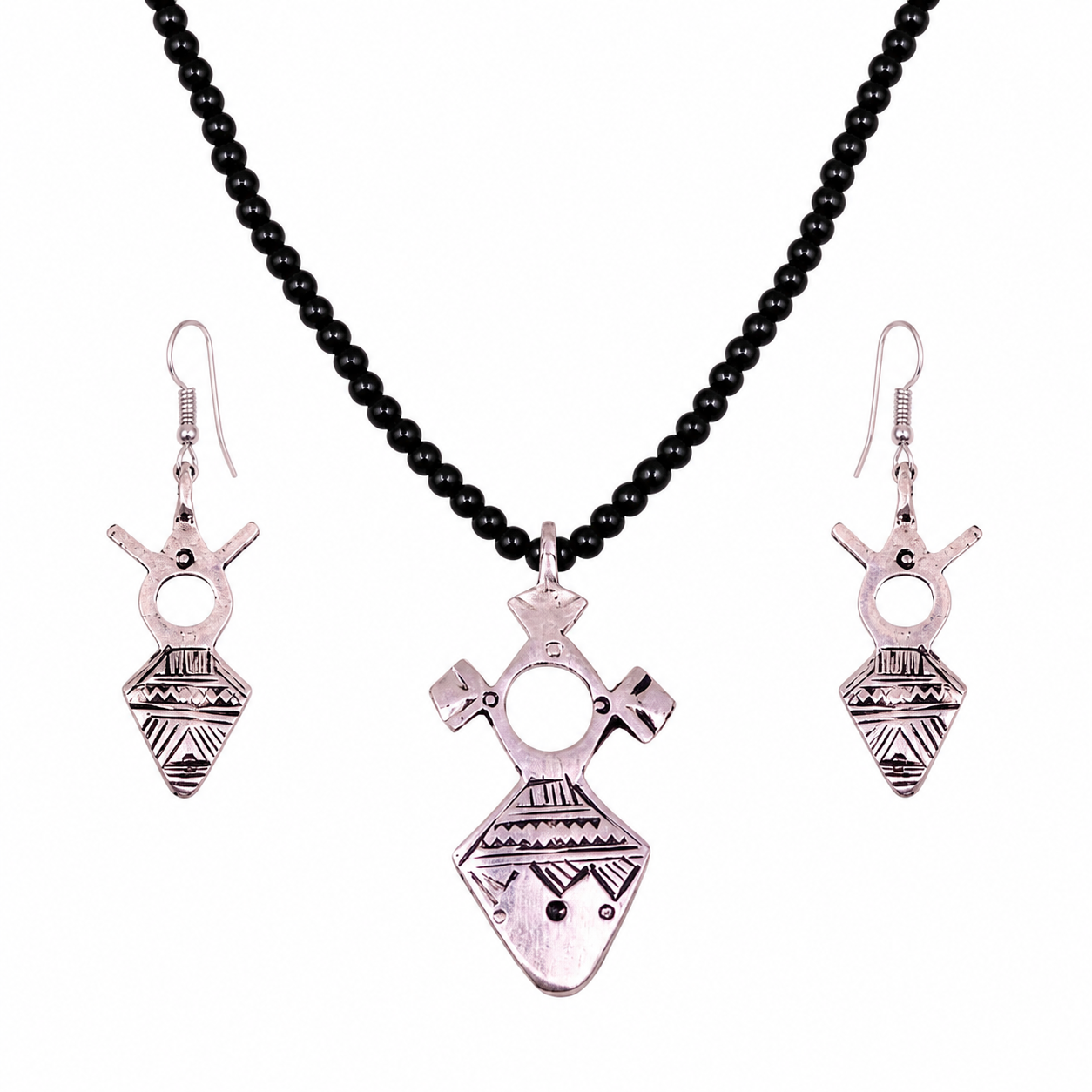
The Tuareg Cross is another meaningful design connected to Saharan and Amazigh heritage. It is often associated with protection, direction, identity, and the nomadic spirit of the desert.
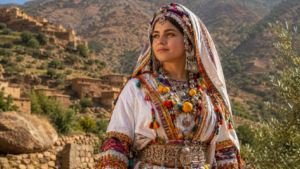
In modern jewelry, Tuareg Cross necklaces are worn by both men and women as symbolic, elegant, and meaningful accessories. Their simple geometric shape makes them perfect for boho, ethnic, and minimalist styling.
The Yaz Symbol ⵣ in Jewelry
Jewelry featuring the Yaz ⵣ symbol carries a message of freedom, identity, and inner strength. It is especially meaningful for people who want to wear a small symbol of Amazigh pride and connection to their roots.
Whether in earrings, necklaces, or pendants, Amazigh jewelry brings together beauty and meaning. It is not just an accessory. It is a story worn close to the body.
Moroccan Amazigh Rugs: Stories Woven in Wool
Moroccan rugs are among the most famous Amazigh crafts in the world. They are loved for their texture, warmth, patterns, and handmade character. But behind their beauty is a deeper cultural meaning.
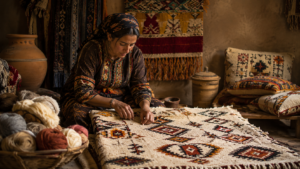
Traditionally, Amazigh women wove rugs for the home, family, marriage, warmth, and daily life. Rugs could be practical objects, but they could also hold personal stories. Symbols, colors, and patterns could reflect the weaver’s emotions, environment, memories, or hopes.
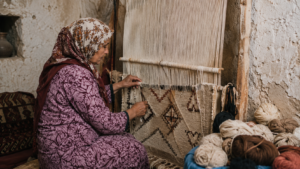
Amazigh rugs may feature:
- Diamonds
- Lines
- Chevrons
- Abstract symbols
- Black and cream contrast
- Earthy colors
- Bright tribal patterns
- Thick wool texture
- Irregular handmade charm
No two handmade-style rugs are exactly the same. This uniqueness is part of their beauty. Small variations in line, color, and pattern show the human hand behind the work.
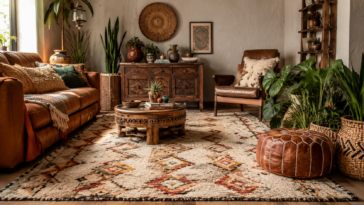
In modern homes, Moroccan rugs work beautifully with boho, minimalist, Scandinavian, rustic, Japandi, desert modern, and eclectic interiors. They add warmth, softness, and soul to a room. A Moroccan wool rug can transform a living room, bedroom, reading corner, or entryway into a space that feels grounded and welcoming.
Amazigh Textiles and Pillow Covers
Textiles are central to Amazigh home life. Beyond rugs, Moroccan pillow covers, blankets, throws, and wall hangings bring color and texture into the home.
Sabra pillow covers, often called cactus silk pillow covers, are popular for their luminous texture and handmade look. They are used on sofas, beds, chairs, and reading corners to add a warm Moroccan accent.
Common colors include:
- Burnt orange
- Vintage pink
- Cream
- Mustard
- Terracotta
- Brown
- Black
- Soft green
- Earthy neutrals
These colors are inspired by Moroccan landscapes: desert sand, clay houses, mountain paths, sunset skies, argan trees, and traditional markets.
A pillow cover may seem like a small item, but in home decor it can completely change the feeling of a room. It brings softness, culture, and personality without overwhelming the space.
Amazigh Clothing: Tradition, Color, and Celebration
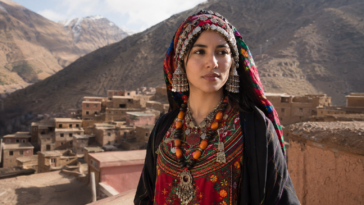
Traditional Amazigh clothing is rich in color, movement, and symbolism. It varies by region, but it often includes flowing fabrics, embroidered details, headscarves, jewelry, belts, and decorative accessories.
For special occasions such as weddings, festivals, and family celebrations, Amazigh women may wear complete traditional outfits with silver jewelry, crowns, necklaces, fibulas, scarves, and decorated slippers.
These outfits are not only fashion. They are cultural expression. They show beauty, family heritage, regional identity, and respect for tradition.
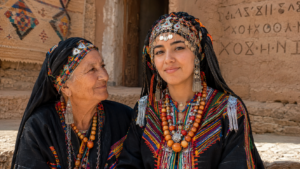
Traditional Amazigh dress sets often include:
- A long dress or kaftan-style garment
- A skirt or layered fabric
- A headscarf
- A silver-plated crown or headpiece
- A statement necklace
- Fibulas or decorative pins
- Traditional slippers
In modern styling, Amazigh-inspired fashion can be worn for photoshoots, cultural events, weddings, festivals, performances, or as collectible heritage clothing.
Babouche Slippers: Moroccan Comfort and Craft
Moroccan babouche slippers are another beautiful example of traditional design meeting everyday comfort. Made from leather and shaped with a soft, flexible form, babouches are worn indoors, outdoors, and as part of traditional outfits.
Leather babouches are appreciated for:
- Comfort
- Flexibility
- Natural materials
- Handmade-style character
- Moroccan identity
- Simple elegance
- Vintage charm
The leather often softens with wear, gradually shaping to the foot. This makes them practical as well as beautiful.
In Amazigh Shop, babouche slippers fit perfectly under Fashion, Traditional Clothing, or Moroccan Accessories. They are also excellent gifts because they are useful, cultural, and stylish.
Amazigh Food: A Taste of Tradition
Amazigh culture is also tasted through food. Moroccan Amazigh cuisine is connected to land, seasons, family, and local ingredients. Food is often shared, generous, and full of flavor.
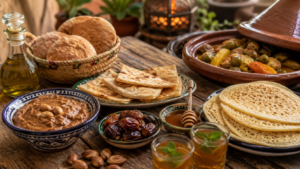
Some important Amazigh and Moroccan food traditions include:
- Amlou
- Argan oil
- Couscous
- Tagine
- Msemen
- Baghrir
- Honey
- Dates
- Olive oil
- Almonds
- Herbs and spices
Amlou
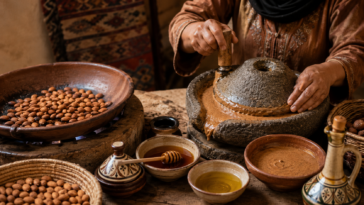
Amlou is one of the most beloved traditional Moroccan spreads, especially in the Souss and Tafraout regions. It is often made with almonds, argan oil, and honey. Some variations use pumpkin seeds or other nuts and seeds.
Amlou is creamy, rich, nutty, and naturally sweet. It is often eaten with warm bread, msemen, baghrir, pancakes, toast, or even added to smoothies and desserts.
It represents the simplicity and richness of Moroccan ingredients: something natural, nourishing, and full of flavor.
Argan Oil
Argan oil is one of Morocco’s most precious natural products. Culinary argan oil is used in food, while cosmetic argan oil is used for skin, hair, and beauty care.
In Amazigh regions, especially around the argan tree areas of southwestern Morocco, argan oil is connected to women’s work, local knowledge, and traditional production. It is a symbol of Moroccan natural richness.
Tagine
The tagine is both a cooking pot and a dish. Its cone-shaped lid helps circulate steam, keeping food moist and flavorful. It is used for slow-cooked meals with meat, vegetables, olives, preserved lemon, spices, dried fruits, or fish.
A tagine pot is not only cookware. It is also a table centerpiece. It brings people together around one shared dish, which reflects an important value in Moroccan and Amazigh culture: eating together.
Olive Wood, Pottery, and Kitchen Craft
Amazigh and Moroccan homes are full of natural materials: clay, wool, leather, silver, wood, cotton, and stone. Kitchen objects are often beautiful and useful at the same time.
Olive wood products such as honey pots, serving boards, cutting boards, and small bowls bring rustic warmth to the table. Each piece has unique natural grain, making it different from the next.
Ceramic and clay tagines, hand-painted plates, serving bowls, and pottery carry the colors of Morocco: blue, red, turquoise, terracotta, cream, black, and green.
These pieces show an important idea in Amazigh and Moroccan design: everyday objects can still be beautiful. A pot, a board, a bowl, or a spoon can carry tradition into daily life.
Music, Dance, and Oral Tradition
Amazigh culture is not only visual. It is also musical and oral. Songs, poetry, dance, and storytelling have long been part of community life.
In Morocco, Amazigh music varies by region. There are mountain rhythms, village songs, wedding songs, spiritual sounds, and modern Amazigh music that blends traditional instruments with contemporary styles.
Poetry is especially important. In many Amazigh communities, poetry is used to express love, wisdom, humor, social issues, pride, and memory. Oral tradition helped preserve stories before they were written down.
Dance is also important at weddings, festivals, and celebrations. It brings people together and strengthens community bonds.
Amazigh Architecture and the Moroccan Landscape
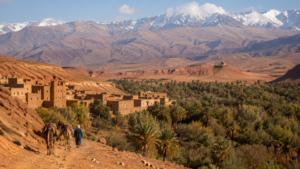
Amazigh architecture is shaped by the land. In the mountains and desert regions, buildings are often made from local materials such as earth, clay, stone, and wood. Kasbahs, granaries, village houses, and mountain homes often blend naturally with the landscape.
The colors of Amazigh architecture are warm and earthy: clay red, sand beige, stone grey, and sun-baked brown. These same colors influence Moroccan home decor today.
This is why Moroccan and Amazigh-inspired interiors often feel grounded and natural. They use materials and colors that come from the environment.
Amazigh Culture in Modern Design
Today, Amazigh culture continues to inspire modern fashion, home decor, jewelry, beauty products, and lifestyle design.
You can see Amazigh influence in: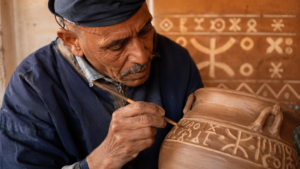
- Minimalist Tifinagh logos
- Moroccan rugs in modern homes
- Boho jewelry with fibula shapes
- Tuareg Cross necklaces
- Sabra pillow covers
- Hand-tufted wall art
- Leather babouche slippers
- Argan oil skincare
- Amlou and Moroccan food gifts
- Tagine pots and olive wood kitchenware
This modern use of Amazigh design allows tradition to continue in new ways. A young person in Europe, America, or anywhere in the world may discover Amazigh culture through a rug, a necklace, a pillow cover, or a jar of amlou.
When these products are presented respectfully, they become bridges between cultures.
Why Handmade and Artisan-Style Products Matter
In a world full of mass-produced items, handmade and artisan-style products feel special because they carry human touch.
A handmade-style rug has texture and irregularity. A leather babouche softens with time. A piece of jewelry carries symbols. A wooden board has natural grain. A ceramic tagine brings beauty to the table.
These objects are not just products. They help people feel connected to tradition, place, and story.
Buying Amazigh-inspired products can support appreciation for Moroccan heritage and help keep traditional design visible in modern homes. It also encourages people to choose meaningful pieces instead of empty decoration.
How to Bring Amazigh Style Into Your Home
You do not need to redesign your whole house to enjoy Amazigh style. Small touches can bring warmth and character to your space.
Here are simple ideas:
- Add a Moroccan wool rug to your living room
- Style a Sabra pillow cover on a sofa or bed
- Hang Amazigh textile wall art in an entryway
- Use an olive wood serving board for bread and cheese
- Cook and serve with a traditional tagine pot
- Wear a Tuareg Cross necklace or fibula earrings
- Place a handmade-style basket or pottery piece on a shelf
- Use warm earthy colors like terracotta, cream, brown, ochre, and burnt orange
Amazigh style works beautifully with many interior styles, including boho, rustic, Mediterranean, minimalist, Japandi, Scandinavian, and eclectic decor.
The key is balance. Let one or two meaningful pieces speak.
Amazigh Culture and Identity Today
Amazigh culture today is both ancient and modern. It lives in villages, cities, family homes, music festivals, universities, social media, fashion, art, and online shops.
Young Amazigh people continue to celebrate their language, symbols, and heritage in new creative ways. The ⵣ symbol appears in logos, tattoos, jewelry, clothing, and digital art. Tamazight is spoken at home and promoted in education and public life. Traditional crafts are being reimagined for modern buyers.
This is the beauty of living heritage: it does not stay frozen in the past. It grows, adapts, and continues.
Amazigh Shop: Celebrating Tradition, Beauty, and Identity
At Amazigh Shop, our mission is to share the beauty of Amazigh and Moroccan-inspired products with people who love meaningful design, cultural heritage, natural materials, and traditional craftsmanship.
Our collections are inspired by the richness of North African culture:
- Moroccan rugs and home decor
- Amazigh jewelry and accessories
- Traditional clothing and babouche slippers
- Amlou, argan oil, and Moroccan food products
- Beauty and health products inspired by natural Moroccan ingredients
- Kitchen and dining pieces such as tagines and olive wood boards
- Collectibles, wall art, and cultural decor
Every product tells a story of warmth, identity, and beauty. Whether you are buying a symbolic necklace, a wool rug, a tagine pot, or a jar of amlou, you are bringing a piece of Moroccan spirit into your daily life.
Conclusion: Amazigh Culture Is a Story That Continues
Amazigh culture is not only history. It is a living story.
It lives in the sound of Tamazight, the shape of Tifinagh letters, the warmth of wool rugs, the silver shine of fibula jewelry, the scent of argan oil, the taste of amlou, the comfort of babouche slippers, and the slow cooking of a tagine shared with family.
It is a culture of beauty, resilience, creativity, and identity.
To understand Amazigh heritage is to understand that every handmade object can carry meaning. A rug can tell a story. A symbol can protect. A necklace can speak of freedom. A meal can connect generations. A home can become warmer through tradition.
Amazigh culture reminds us that beauty is not only something we see — it is something we inherit, preserve, share, and live with.
At Amazigh Shop, we are proud to celebrate this heritage and bring its spirit into homes around the world.

 No products in the cart.