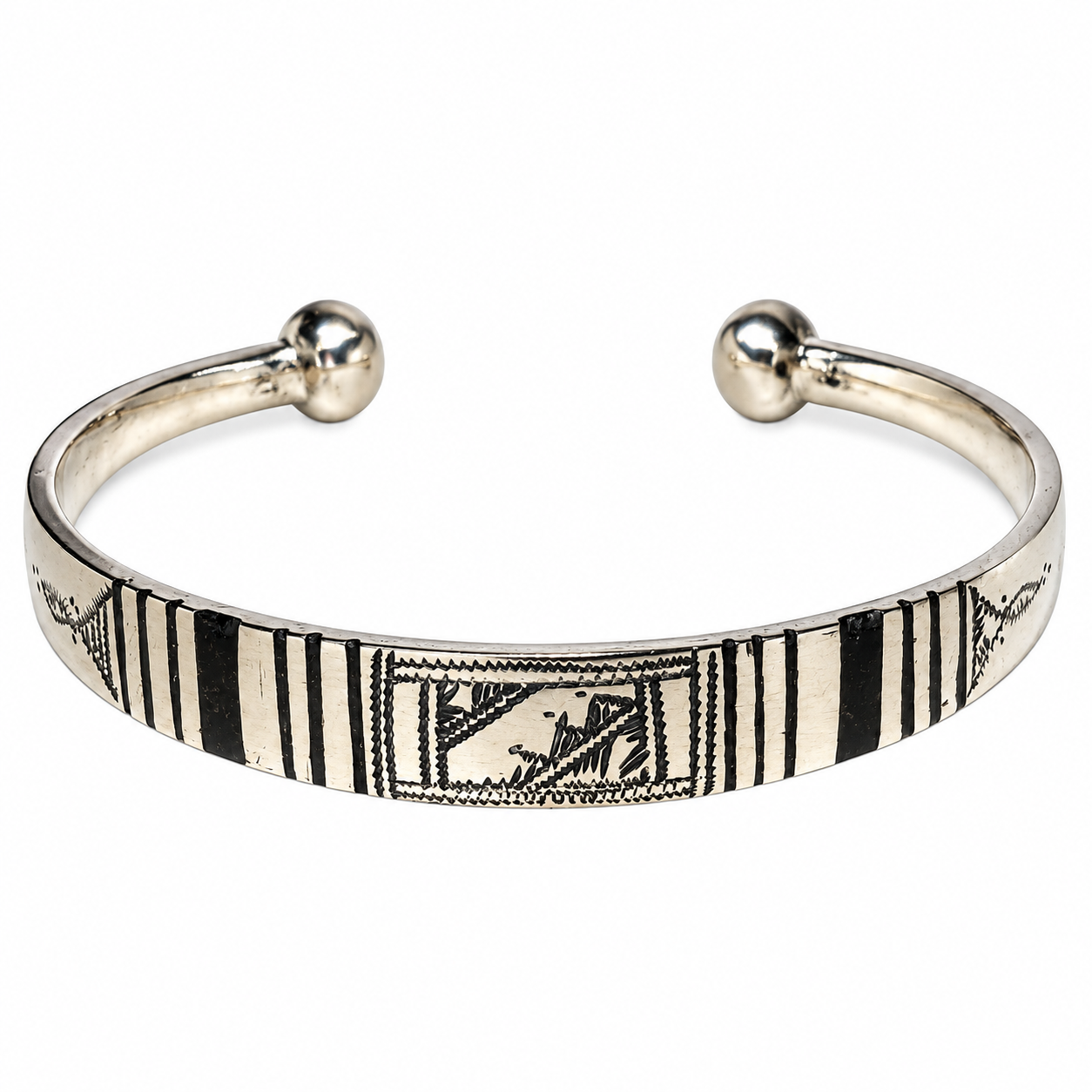
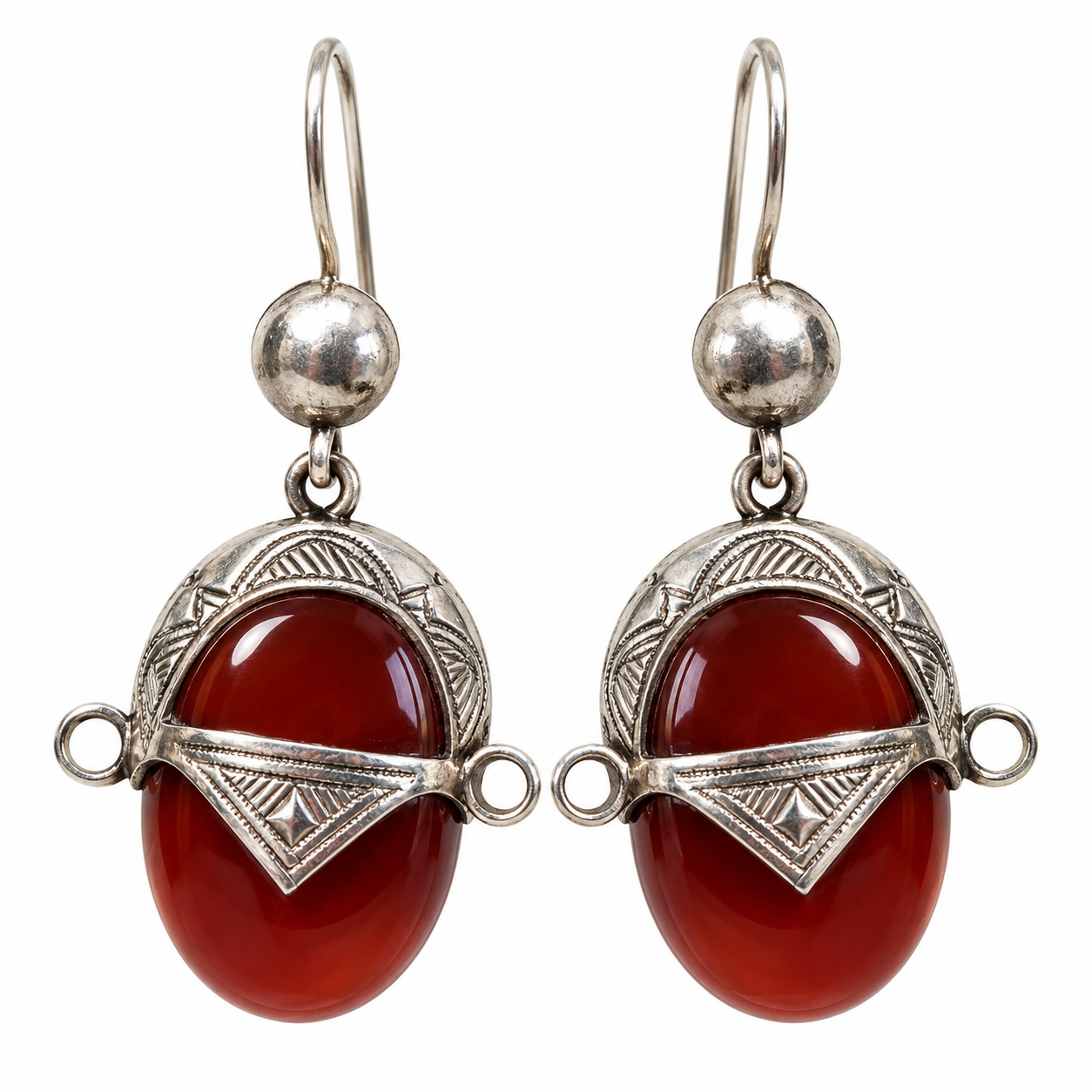
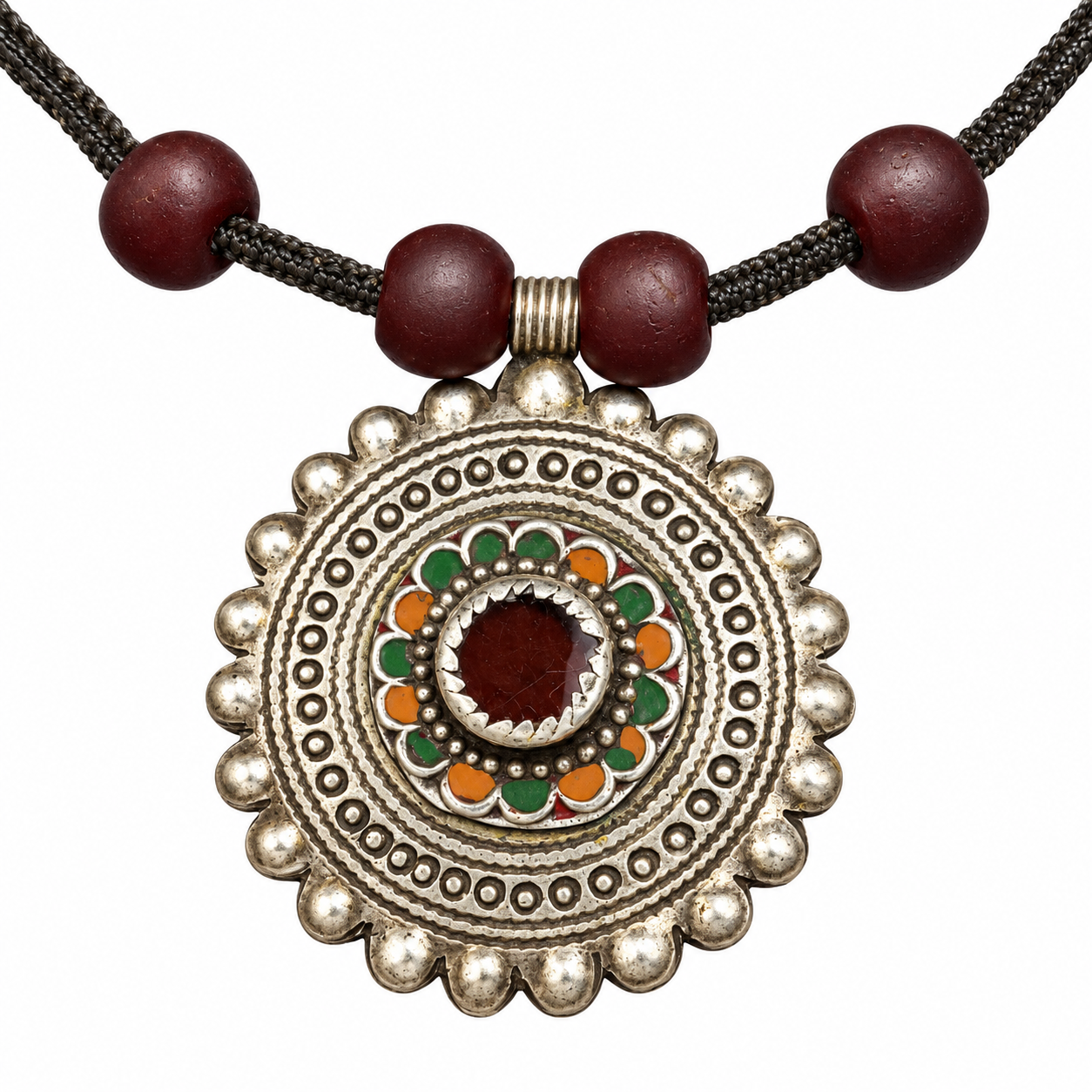
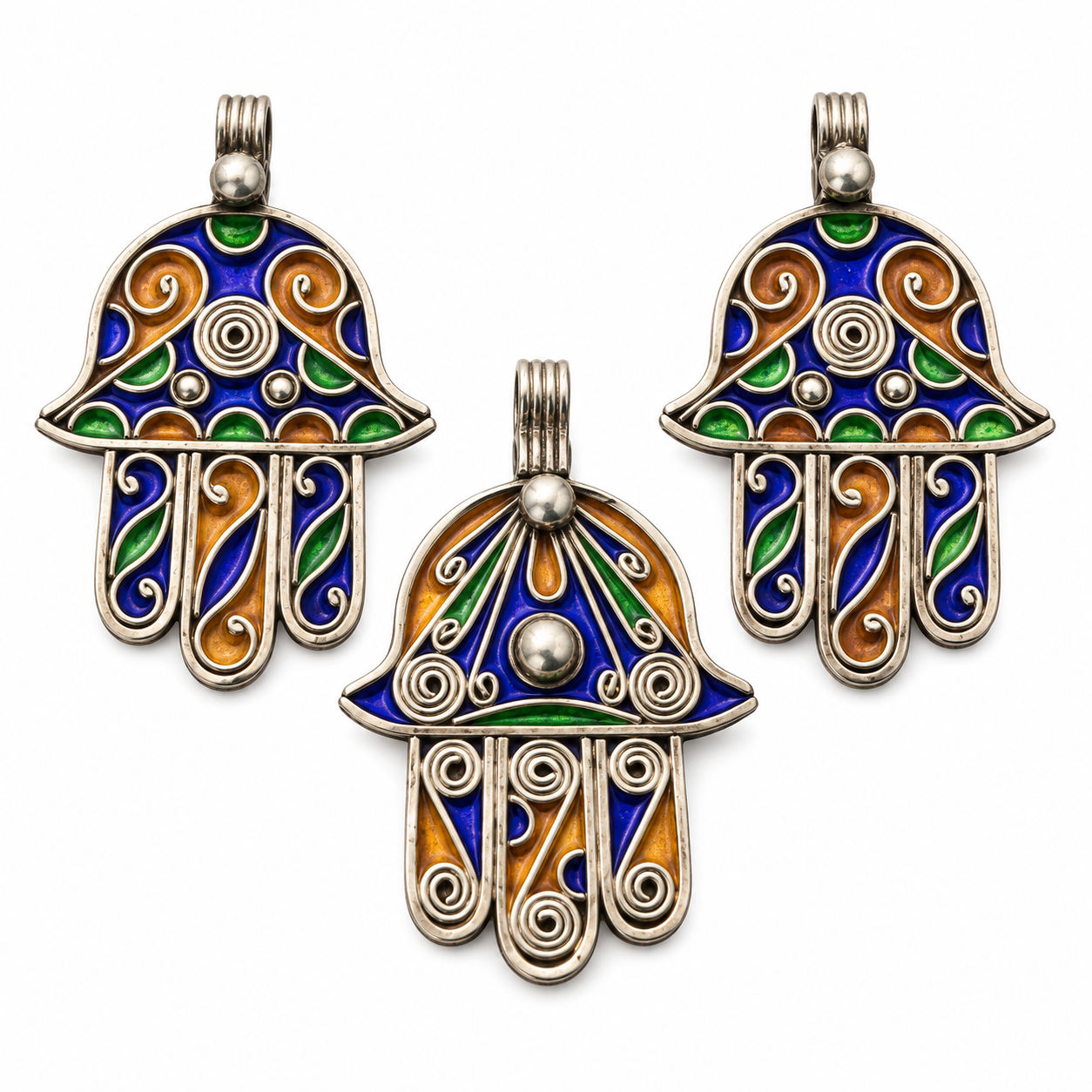
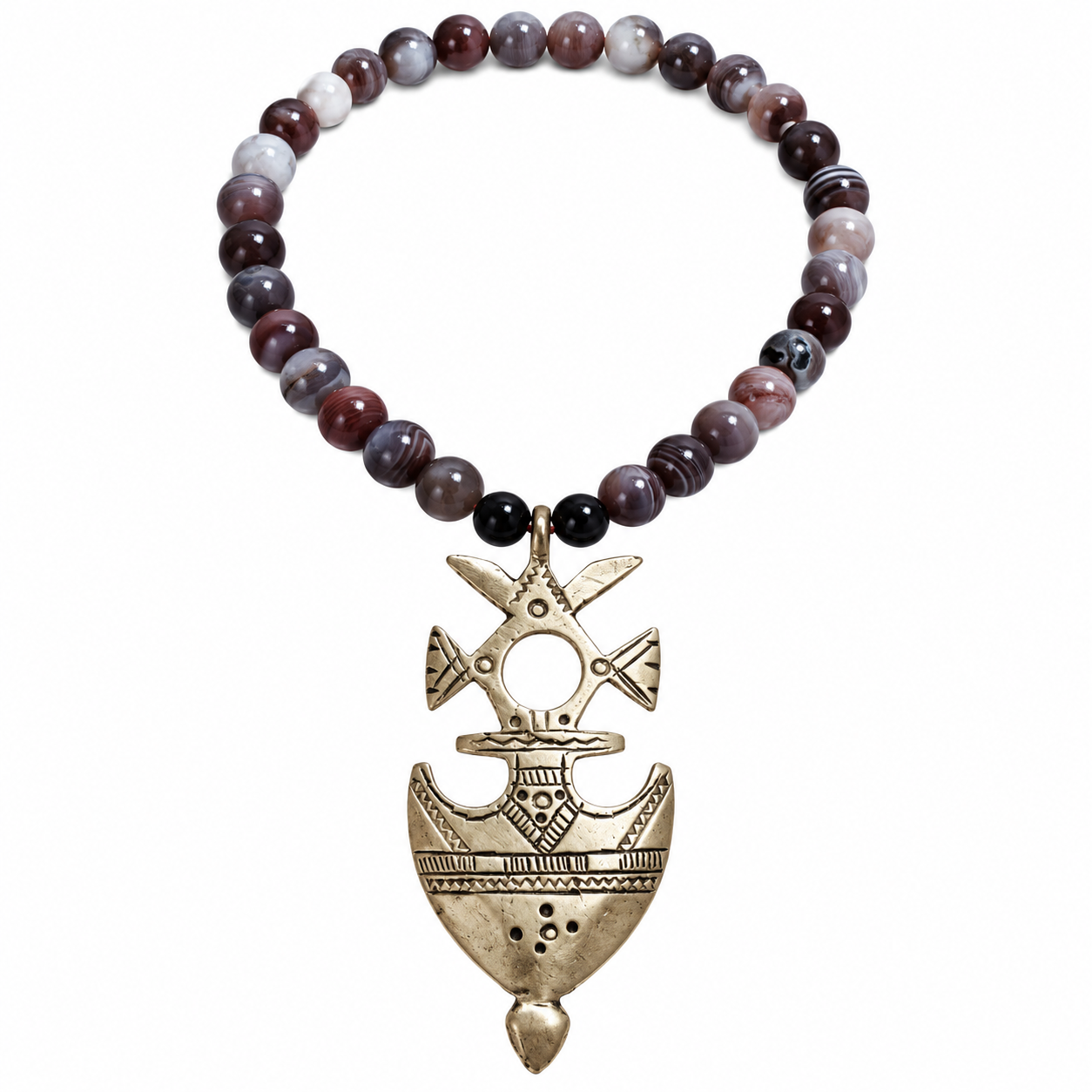

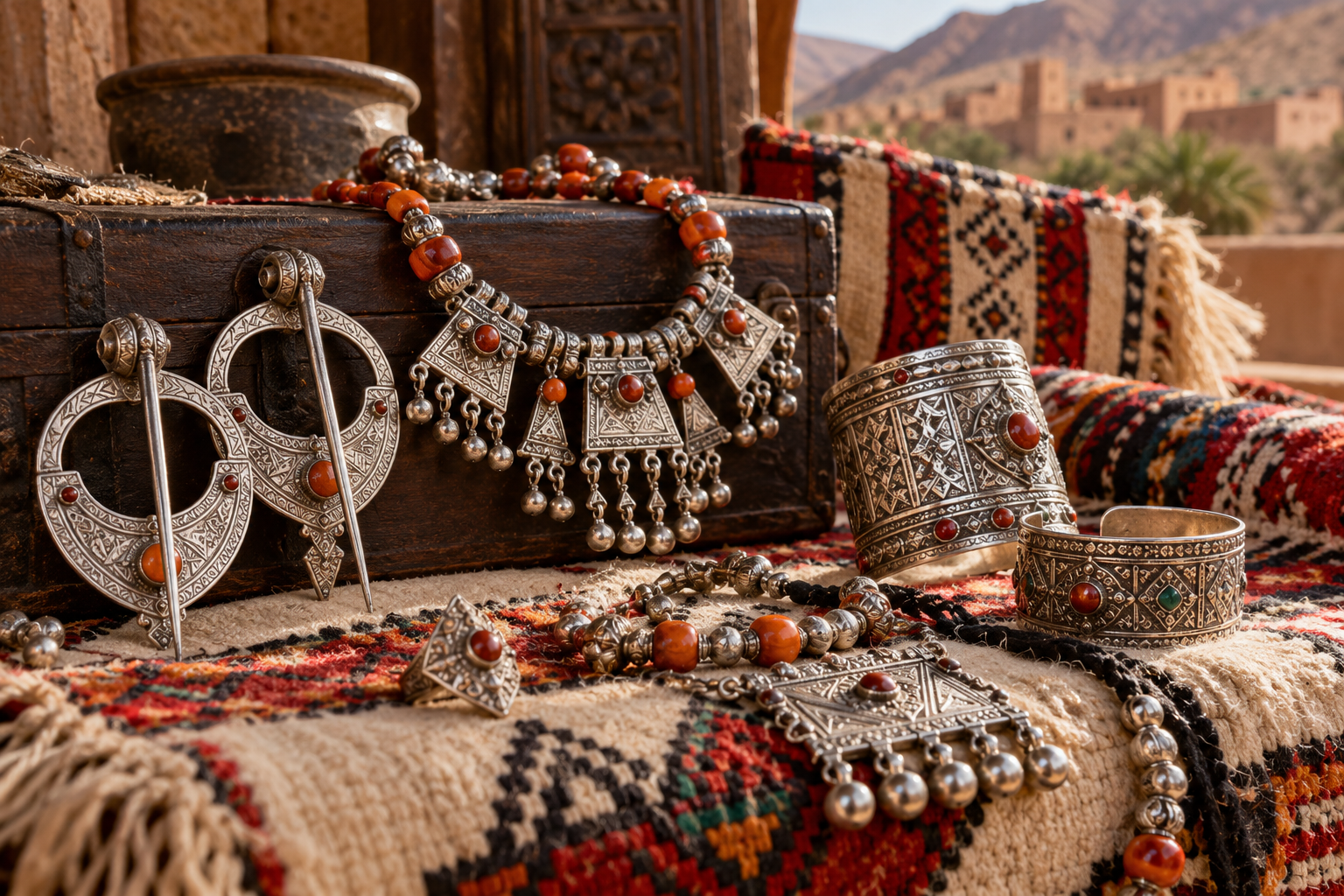
Amazigh jewelry represents a rich tradition of craftsmanship, personal expression, and cultural identity across North Africa. From silver fibulae used to fasten garments to necklaces, bracelets, rings, and decorative pieces, these objects combine practical functions with artistic skill.
Understanding Amazigh Jewelry Traditions
Amazigh jewelry developed across many regions, including areas of Morocco, Algeria, Libya, and other parts of North Africa. Because Amazigh communities are diverse, jewelry styles differ according to local histories, materials, techniques, and social traditions.
Descriptions such as “Berber silver jewelry” are often used internationally, but they can cover many different regional traditions. A piece from Morocco and a piece from Kabylie may both belong to Amazigh heritage while having different designs, histories, and cultural contexts.
The Amazigh Fibula: Function and Symbolism
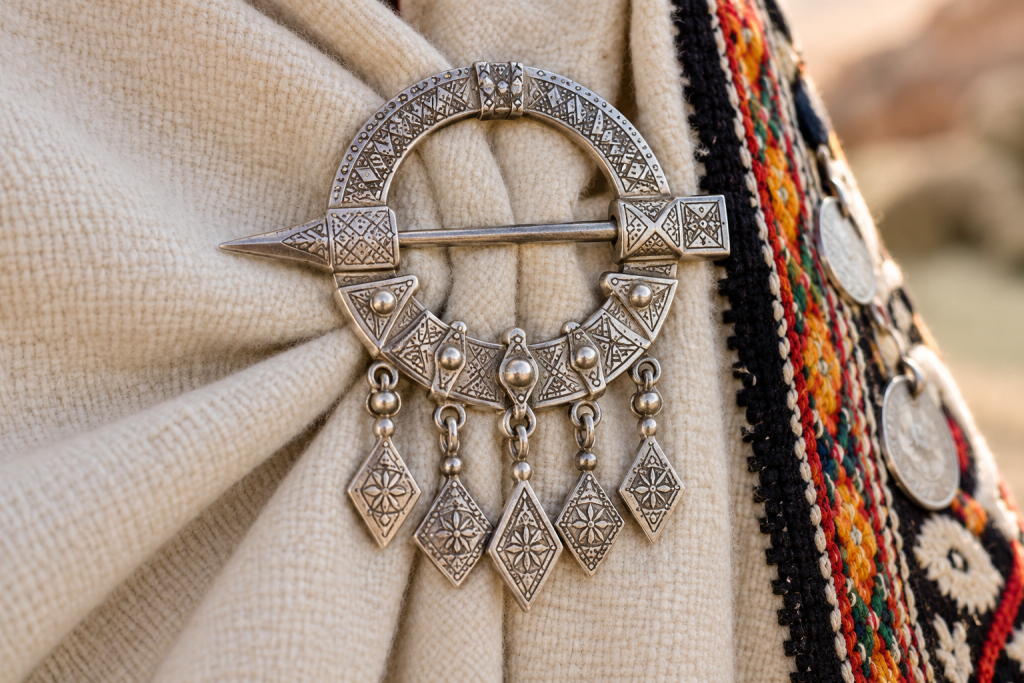
The fibula is one of the most recognizable forms of Amazigh jewelry. Traditionally, fibulae served a practical purpose by fastening garments, especially clothing such as cloaks and traditional dresses.
Beyond their practical role, fibulae could also represent craftsmanship, regional identity, and personal adornment. Their shapes and decorations vary between communities, making them important examples of local artistic traditions.
Different Forms of Fibulae
Fibulae can differ in size, construction, decoration, and materials. Some examples feature geometric engraving, enamel details, stones, or other decorative elements depending on the region and period.
When studying an Amazigh fibula, it is important to consider its origin, maker, and historical context rather than assigning one universal meaning to every shape.
Silverwork Across Amazigh Communities
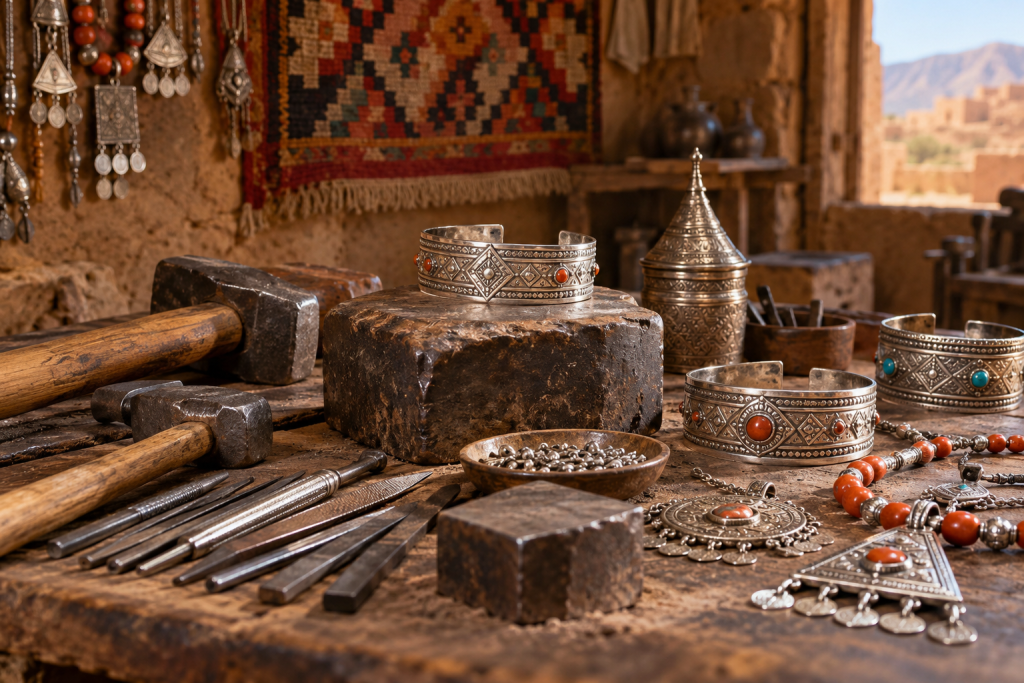
Silver has been an important material in many Amazigh jewelry traditions. Craftspeople developed techniques including engraving, shaping, stamping, and decorative metalwork to create detailed objects.
Silver jewelry could serve multiple purposes, including personal decoration, family inheritance, ceremonial use, and expressions of regional style.
Moroccan and Kabyle Traditions
Moroccan Amazigh jewelry includes many regional styles shaped by communities such as those in the Atlas Mountains, Souss, and other areas. Designs may include large fibulae, necklaces, bracelets, and decorated ornaments.
Kabyle jewelry from Algeria has its own distinctive traditions, often recognized for particular combinations of silver, enamel, coral-colored elements, and decorative patterns. These traditions should be appreciated separately rather than treated as identical to Moroccan examples.
Materials Used in Amazigh Jewelry
Amazigh jewelry can include different materials, and appearance alone is not enough to identify composition. A bright metallic surface does not automatically prove that an item is solid silver, and colored details do not automatically indicate natural stones or coral.
| Material | Description | Important Consideration |
|---|---|---|
| Solid silver | A precious metal traditionally used in many jewelry traditions. | Composition should be verified through reliable information. |
| Plated metal | A base material covered with a metallic layer. | Should not be described as solid silver without evidence. |
| Glass | Used in some decorative elements and beads. | Appearance alone cannot confirm material. |
| Enamel | Colored decorative material applied to metal. | Techniques vary by region and maker. |
| Coral | A material historically used in some jewelry traditions. | Modern descriptions should verify authenticity. |
Jewish Silversmith Contributions in North Africa
Jewish silversmiths historically contributed to metalworking traditions in parts of North Africa. In some communities, Jewish artisans practiced specialized crafts, including jewelry production and metalwork, serving local populations.
The relationship between artisans and communities was complex and varied by location and period. Recognizing these contributions adds important historical context while acknowledging that Amazigh jewelry traditions were shaped by many influences.
Museum Objects and Historical Understanding
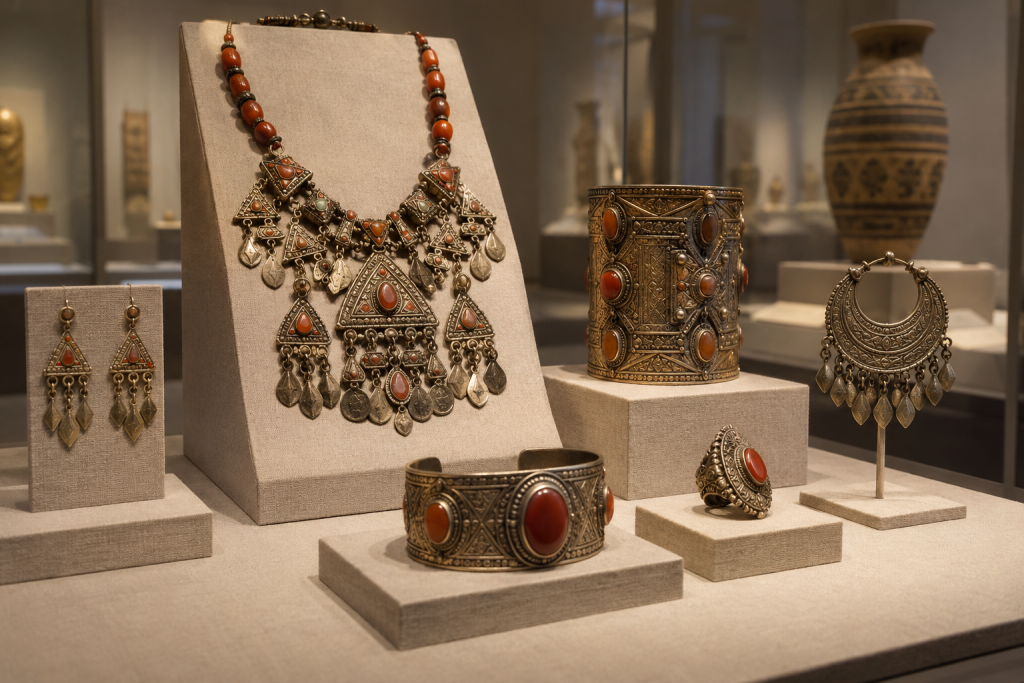
Museum collections provide valuable opportunities to study historical jewelry because objects can be examined with information about materials, dates, locations, and cultural context.
Historical objects should be understood through documentation rather than assumptions based only on appearance. Museum research helps connect individual pieces with broader histories of craftsmanship and community life.
Changing Uses of Amazigh Jewelry Today
Contemporary Amazigh jewelry continues to evolve. Some artisans preserve traditional forms, while others create modern designs inspired by historical techniques and motifs.
Today, jewelry may be worn for cultural events, fashion, personal identity, or artistic appreciation. The meaning of a piece can change depending on the person wearing it and the context in which it is used.
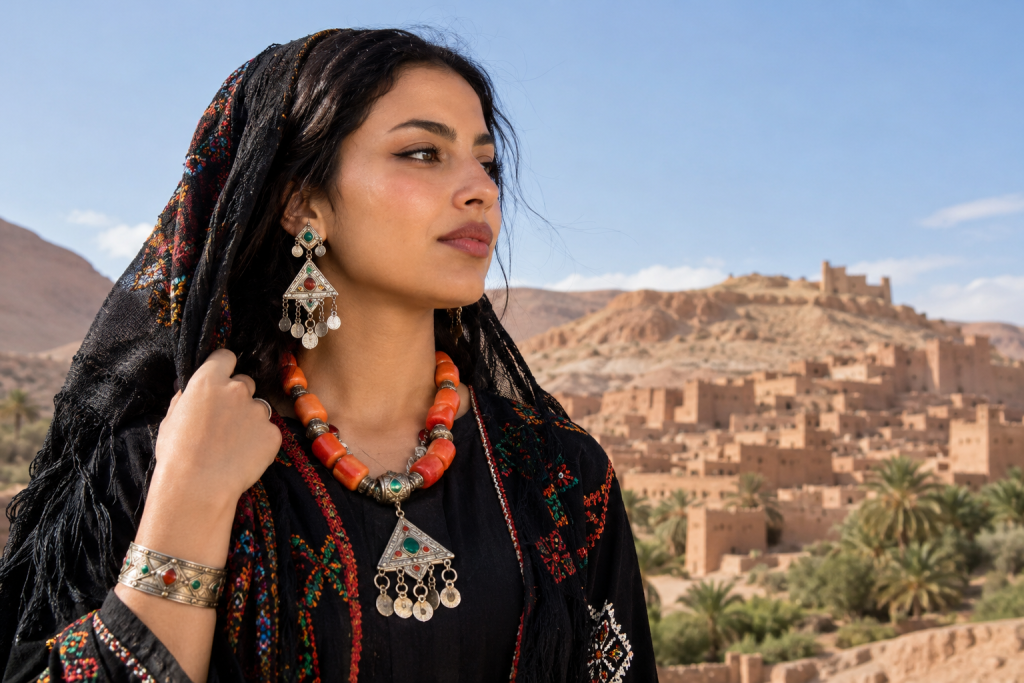
A Buyer’s Checklist for Amazigh Jewelry
When purchasing Amazigh-inspired jewelry, careful evaluation helps distinguish well-documented pieces from unclear commercial descriptions.
- Material disclosure: ask whether the piece is solid silver, plated metal, or another material.
- Provenance: look for information about region, maker, and production background.
- Condition: inspect wear, repairs, missing elements, and structural quality.
- Craftsmanship: consider details of engraving, construction, and finishing.
- Description accuracy: avoid relying only on symbolic claims without context.
How to Appreciate Amazigh Jewelry Respectfully
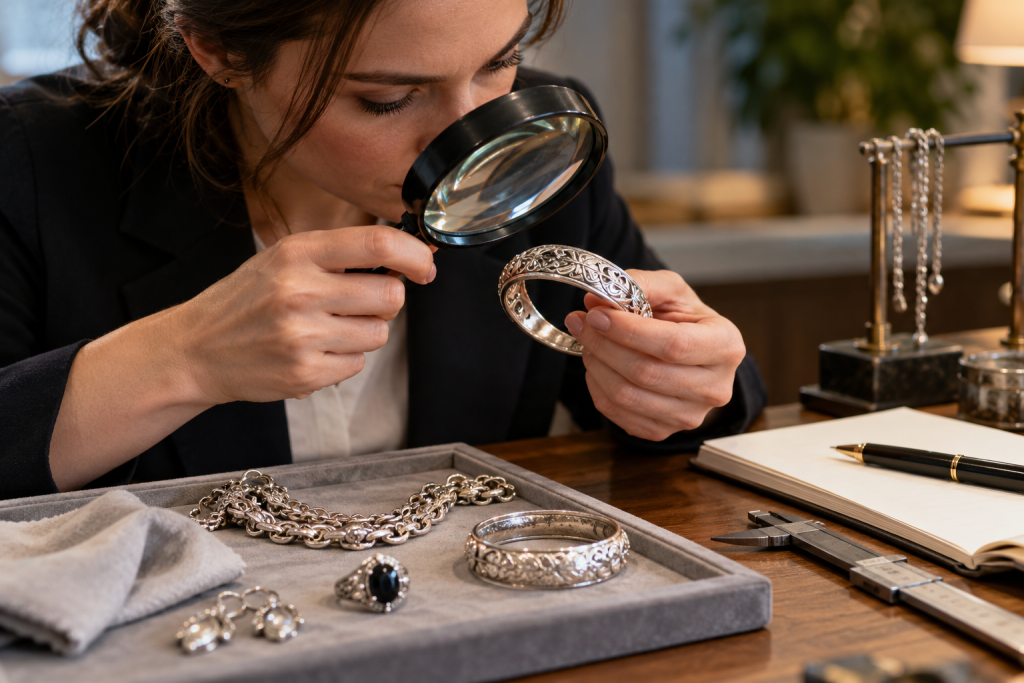
Amazigh jewelry is best understood as both art and cultural heritage. Appreciating these pieces means recognizing the skills of artisans, the diversity of regional traditions, and the histories connected with each object.
- Learn about the specific community connected with a style.
- Value craftsmanship alongside appearance.
- Ask for transparent information about materials and origin.
- Avoid presenting one interpretation as universal.
The Living Heritage of Amazigh Jewelry
Amazigh jewelry continues to connect past and present through craftsmanship, design, and personal expression. Fibulae, silverwork, and regional ornaments demonstrate how practical objects can also preserve cultural memory.
Understanding these traditions requires attention to regional differences, historical context, and the voices of the artisans who continue creating these works.
The Role of Jewelry in Amazigh Social Life
Amazigh jewelry has historically existed within social contexts, not only as decoration. Pieces could accompany important moments in life, including celebrations, family gatherings, and cultural events. The meaning of an item often depended on who created it, who owned it, and when it was worn.
Jewelry could also represent connections between generations. A necklace, bracelet, or fibula passed through a family might carry memories connected with previous owners. In this way, some objects become part of family history as well as artistic heritage.
Adornment and Personal Expression
Although jewelry traditions are connected with cultural practices, individuals also use jewelry to express personal taste. Contemporary wearers may combine traditional pieces with modern clothing or choose designs inspired by heritage without following older customs exactly.
This changing relationship between tradition and personal style shows that Amazigh jewelry is a living practice rather than a collection of objects frozen in the past.
Craft Techniques Behind Amazigh Silver Jewelry
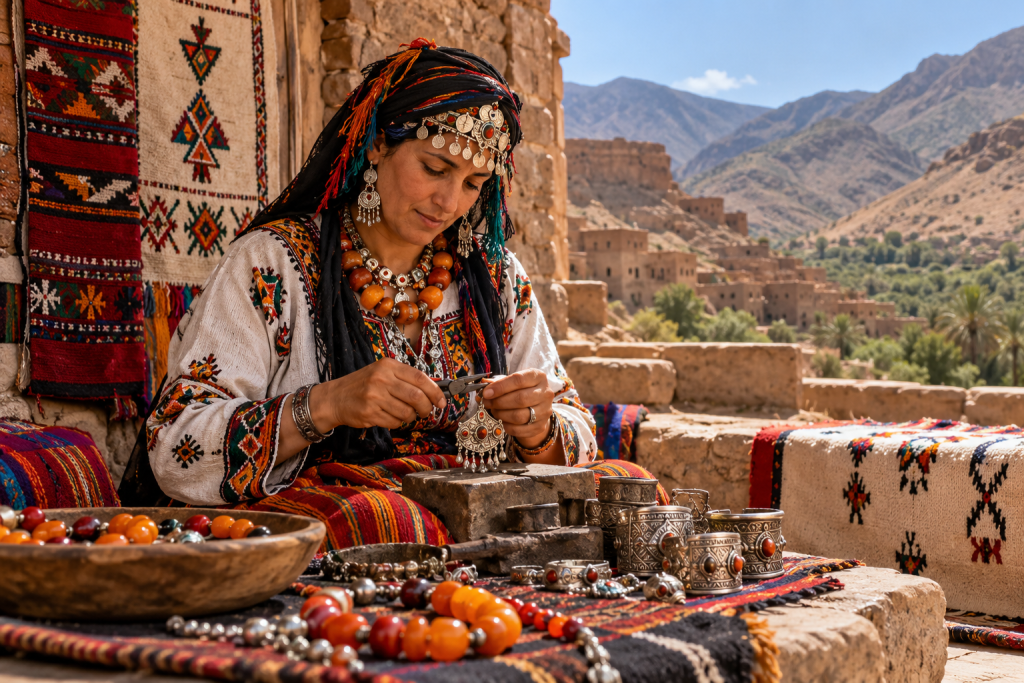
The beauty of Amazigh jewelry comes not only from its final appearance but also from the skills required to create it. Metalworkers may use techniques such as cutting, engraving, shaping, soldering, and applying decorative details.
Each stage requires experience and precision. Small differences in workmanship can reveal information about the artisan, workshop, and regional style.
Recognizing Handmade Details
Handmade jewelry often contains individual characteristics that distinguish it from mass-produced items. Slight variations in engraving, surface texture, or finishing can reflect the maker’s process.
These details should be appreciated as signs of craftsmanship while remembering that appearance alone cannot always confirm age, origin, or material composition.
Regional Identity and the Diversity of Designs
The variety of Amazigh jewelry demonstrates the diversity of Amazigh communities. Geographic location, available resources, historical connections, and local aesthetics all influenced the development of different styles.
For example, mountain communities, coastal areas, and desert regions developed their own approaches to ornamentation. Similar materials may appear in different places while being arranged in distinct ways.
- Atlas traditions: often include jewelry connected with regional clothing and ceremonial use.
- Kabyle traditions: are known for distinctive combinations of silver, enamel, and decorative elements.
- Saharan traditions: include metalwork styles shaped by desert environments and local histories.
Buying Authentic Amazigh Jewelry Online
When purchasing jewelry online, photographs and descriptions should be examined carefully. Digital images can show design details, but they may not provide enough information about weight, materials, age, or craftsmanship.
A responsible seller should provide clear information about the piece and avoid unsupported claims about symbolism, origin, or precious materials.
Questions for Online Buyers
- Is the material clearly identified?
- Are dimensions and weight provided?
- Is the regional background explained?
- Are any repairs or modifications disclosed?
- Are symbolic descriptions presented as documented information or personal interpretation?
Preserving Amazigh Jewelry Knowledge
Preserving jewelry traditions involves more than protecting physical objects. It also includes documenting the knowledge of artisans, techniques, regional histories, and the stories connected with individual pieces.
Craft knowledge can change as communities adapt to new economic conditions and consumer interests. Supporting skilled artisans and accurate documentation helps maintain connections between historical traditions and future generations.
Amazigh Jewelry as Art, History, and Living Culture
Amazigh jewelry brings together many forms of knowledge: metalworking, design, regional identity, personal expression, and historical memory. A fibula or silver ornament can be appreciated both for its visual qualities and for the human expertise behind its creation.
The most accurate way to understand these objects is to recognize their diversity. There is no single Amazigh jewelry style; instead, there are many traditions shaped by different communities and continuing to evolve today.
Conclusion: Preserving Amazigh Jewelry Traditions
Amazigh jewelry represents centuries of artistic knowledge and cultural creativity. From functional fibulae to contemporary designs, these pieces remain important examples of North African craftsmanship and living heritage.
 No products in the cart.
Comments (6)