


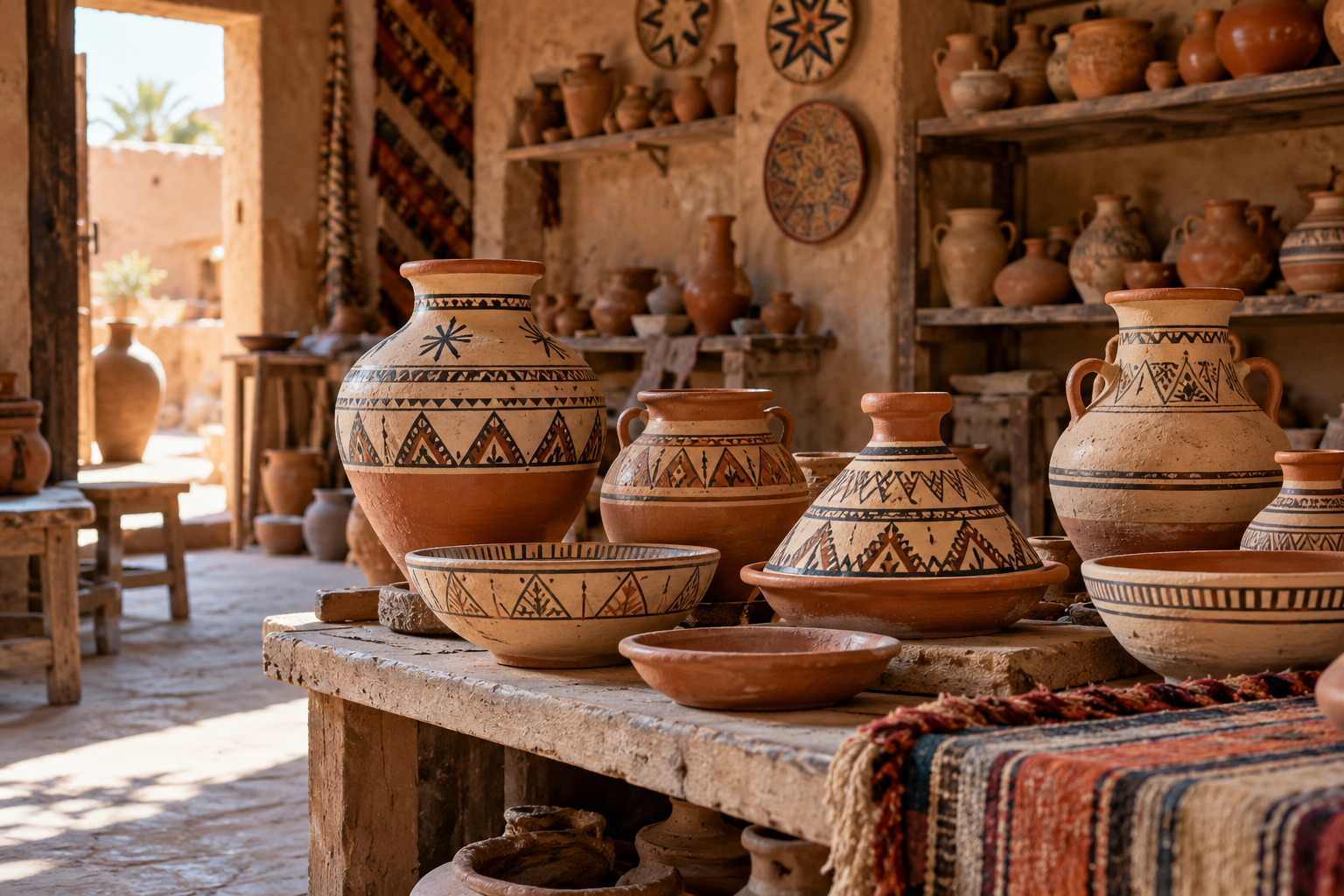
Amazigh pottery reflects generations of knowledge about clay, decoration, daily life, and artistic expression across North Africa. Handmade ceramics created in Amazigh communities show the relationship between local materials, practical needs, and regional identity.
Understanding Amazigh Pottery Traditions
Amazigh pottery is not one single style shared by every community. Different regions developed their own approaches based on available clay, production methods, local needs, and artistic preferences.
The term “Berber pottery” is often used internationally, but it can describe a wide range of ceramic traditions. A careful study of pottery considers where an object was made, how it was formed, how it was decorated, and how it was used.
Clay, Materials, and Traditional Production
Traditional pottery begins with local materials, especially clay collected from nearby environments. The preparation of clay, shaping methods, drying process, and firing techniques all influence the final object.
Many handmade ceramics were created for practical purposes, including storage, serving, and household activities. Their designs often combine usefulness with visual expression.
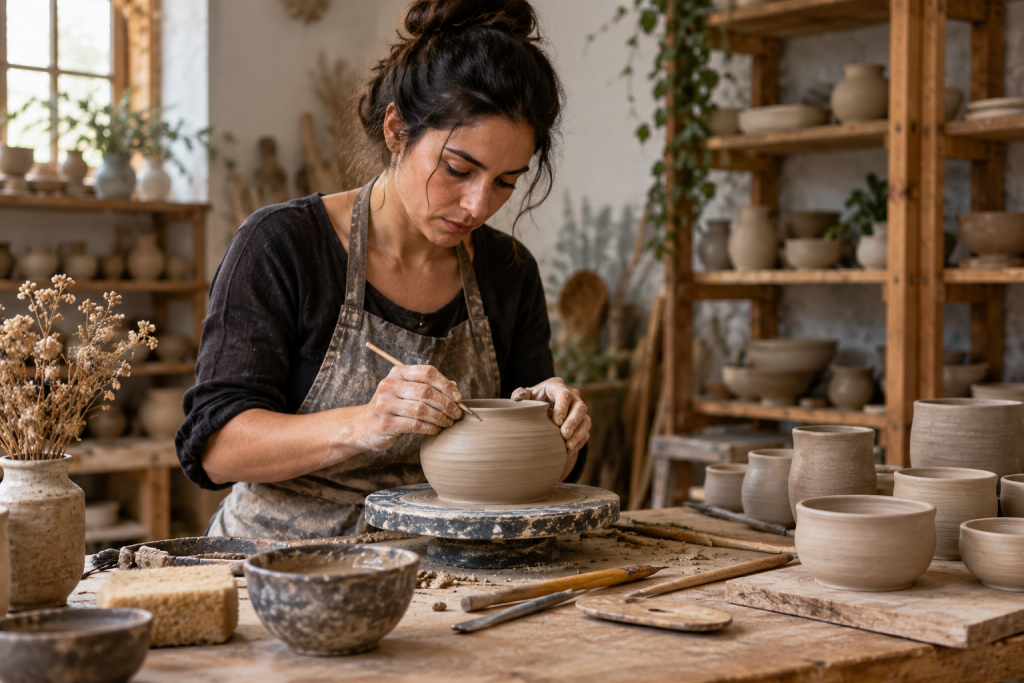
Hand Forming and Craft Techniques
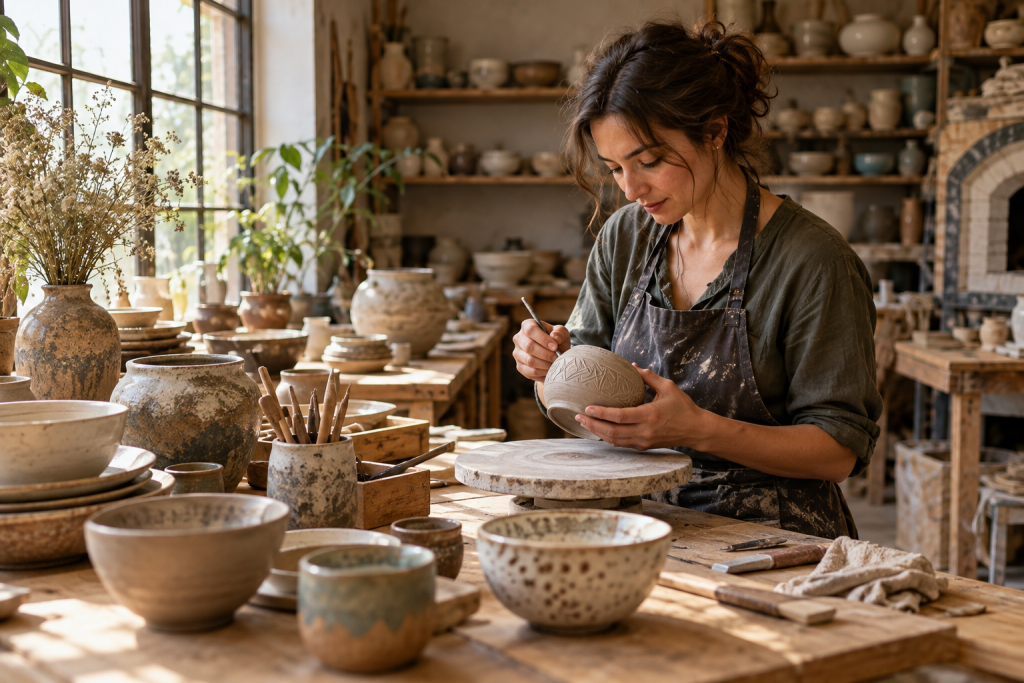
Traditional pottery may involve hand-building techniques rather than industrial production. Artisans can shape vessels using methods passed through generations, creating objects with individual characteristics.
Decoration may be applied before or after firing depending on the technique and regional practice. Patterns, colors, and surface treatments vary widely.
Regional Amazigh Pottery Examples
Regional diversity is essential when discussing Amazigh ceramics. The following examples represent selected traditions rather than a complete description of all Amazigh pottery.
Rif Mountain Pottery
Pottery traditions in northern Morocco, including areas associated with the Rif region, include handmade vessels shaped for household use. Some examples feature geometric decoration and locally developed techniques.
Regional pottery reflects the environment and daily needs of communities that produced it. The exact meaning of designs should be considered within their local context.
Atlas Mountain Pottery
Communities in mountain regions developed pottery traditions connected with agricultural life and household activities. Objects could serve practical purposes while also displaying decorative creativity.
Kabyle Pottery Traditions
Kabyle pottery from Algeria represents another important Amazigh ceramic tradition. It is known for distinctive decorative approaches and relationships between pottery, household life, and regional identity.
Decoration, Symbols, and Visual Language
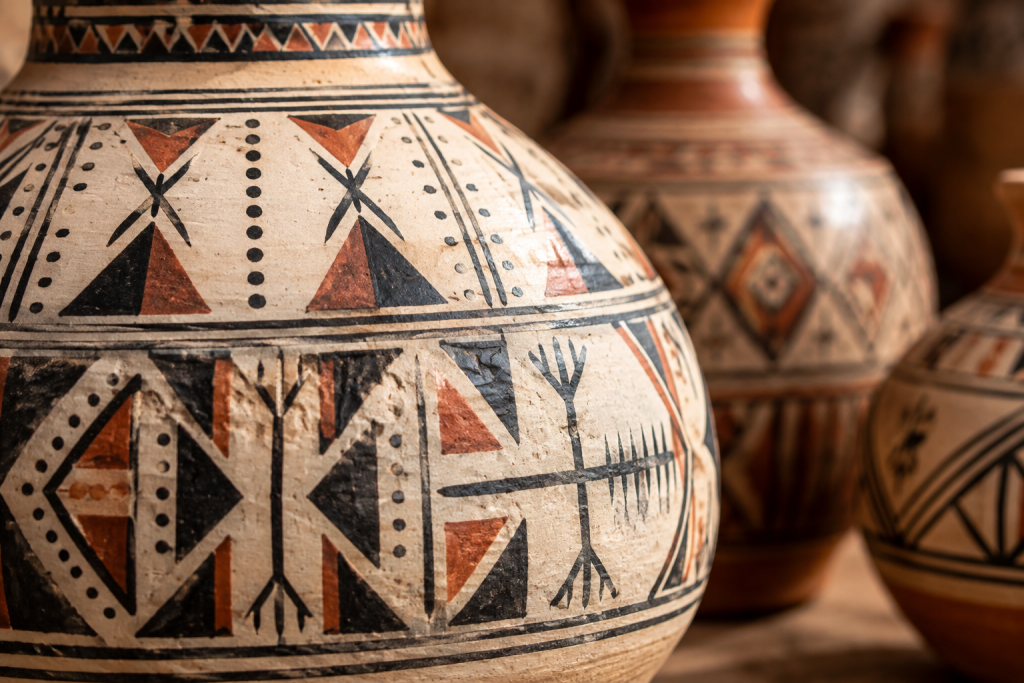
Amazigh pottery often includes geometric decoration, painted elements, and repeated patterns. These designs can be connected with regional artistic traditions, but interpretations should avoid assuming that every shape has one universal meaning.
Some motifs may have documented cultural associations, while others may represent artistic choices, local styles, or individual creativity.
| Object Feature | What It Can Reveal | Important Limit |
|---|---|---|
| Material | Information about clay and production methods. | Appearance alone does not confirm composition. |
| Technique | Clues about craftsmanship and regional practice. | Similar techniques can appear in different places. |
| Decoration | Regional artistic preferences and visual traditions. | Symbols should not be assigned fixed meanings without evidence. |
| Shape | Possible information about function. | Use depends on historical and local context. |
Pottery and Everyday Life
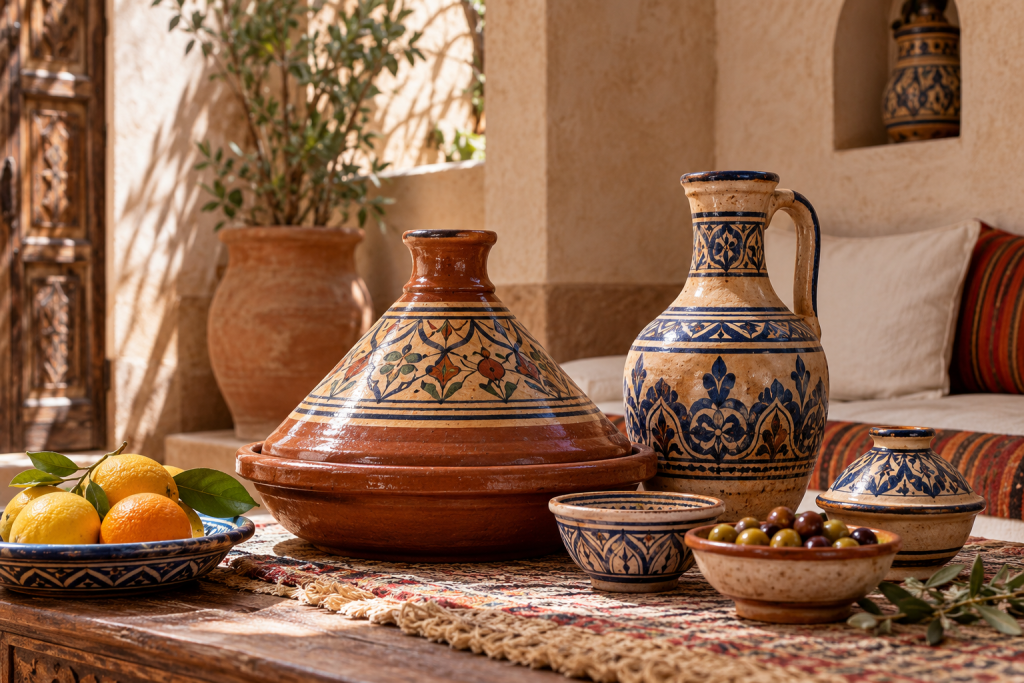
Many traditional ceramic objects were created for everyday activities rather than only decoration. Vessels could support cooking, storage, serving, and household organization.
The connection between pottery and daily life provides insight into how communities used local resources and developed practical solutions through craftsmanship.
- Storage containers for household materials.
- Serving vessels for food and drink.
- Decorative objects reflecting local artistic traditions.
- Ceramic pieces connected with cultural practices.
Beyond Pottery: Basketry, Woodwork, and Decorative Arts
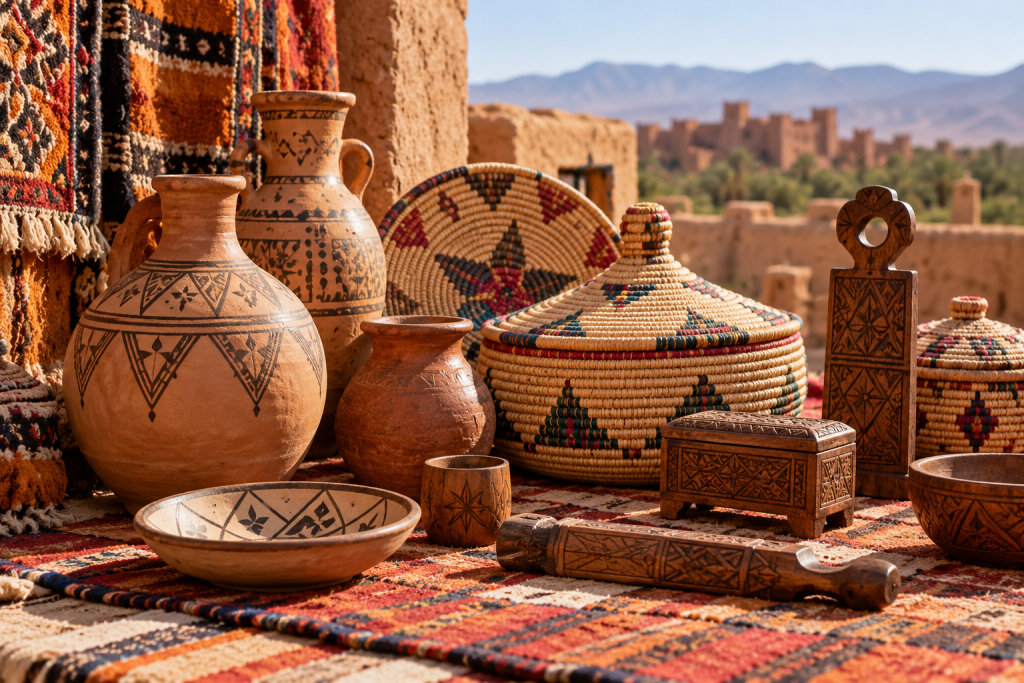
Amazigh everyday art includes many crafts beyond ceramics. Basketry, carved wood, textiles, and modern decorative objects each have their own materials and techniques.
Basketry
Basketry uses plant fibers and weaving methods to create practical objects such as containers and household items. Like pottery, basket traditions depend on local resources and regional knowledge.
Carved Wood
Woodworking traditions include practical objects and decorative pieces. Carving techniques may vary depending on available materials and artisan practices.
Modern Decorative Work
Contemporary artists and makers may combine traditional inspirations with modern design. These objects should be understood as new creations influenced by heritage rather than automatically treated as historical artifacts.
How to Read an Amazigh Ceramic Object
When examining a ceramic piece, a useful approach is to consider several questions instead of focusing only on appearance.
- Material: What type of clay or surface treatment is documented?
- Technique: Was it handmade, molded, painted, or decorated using a specific method?
- Place: Is there reliable information about the region of production?
- Maker: Is the artisan or workshop identified?
- Use: Was the object created for daily life, ceremony, or decoration?
Buying Amazigh Pottery Responsibly
When purchasing handmade ceramics, buyers should consider craftsmanship and accurate information. A decorative object should not automatically be described as suitable for food use or cooking unless this has been confirmed.
- Ask about materials and production methods.
- Confirm whether the object is decorative or intended for practical use.
- Learn about the maker or workshop when possible.
- Appreciate regional differences rather than expecting one universal style.
Contemporary Amazigh Pottery and Cultural Continuity
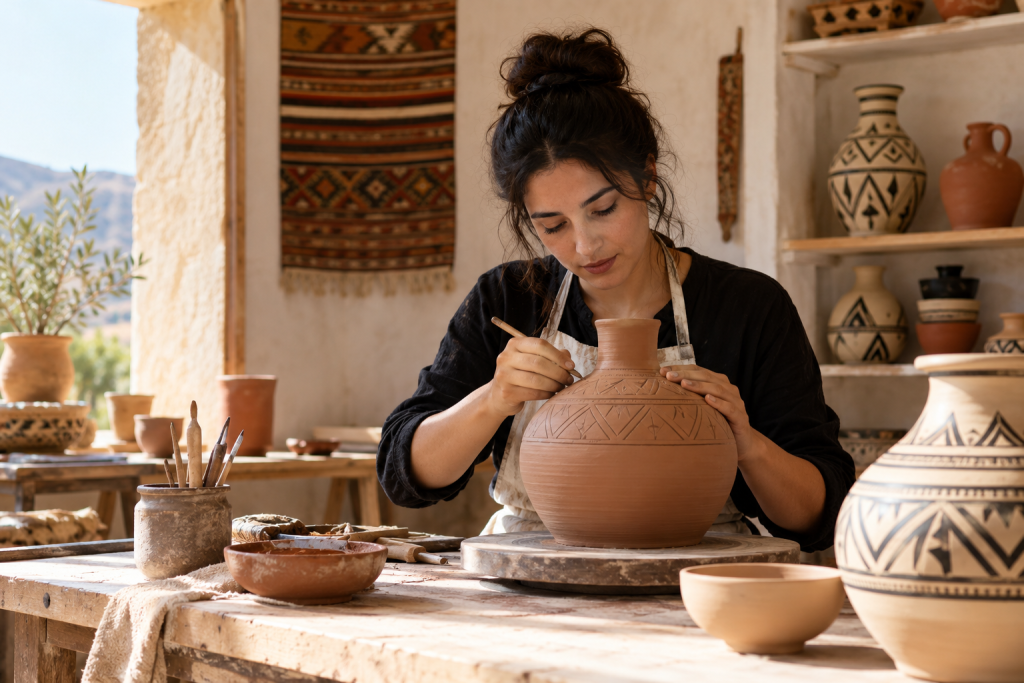
Today, Amazigh pottery continues to evolve through artisans, designers, and cultural projects. Some makers preserve traditional methods, while others introduce new forms and creative approaches.
This combination of preservation and innovation allows ceramic traditions to remain active parts of cultural expression.
The Relationship Between Pottery and Community Knowledge
Amazigh pottery traditions are connected with more than the finished ceramic object. They also preserve knowledge about local environments, seasonal activities, and methods of making objects useful for everyday life.
The skills involved in pottery often develop through observation and practice. Learning how to prepare clay, shape vessels, decorate surfaces, and manage firing requires experience that can be shared within families and communities.
Women and Ceramic Production
In many documented Amazigh pottery traditions, women have played important roles in ceramic production. Their work may include preparing clay, forming vessels, decorating surfaces, and maintaining techniques passed between generations.
Recognizing these contributions helps create a more complete understanding of pottery as both artistic production and social knowledge. However, the specific roles of women and men differ between regions and historical contexts.
Traditional Pottery Forms and Their Functions
The shape of a ceramic object often reflects the purpose for which it was created. Traditional vessels were designed according to practical needs, available materials, and household practices.
- Storage vessels: created to help preserve household materials.
- Serving dishes: designed for presenting food or drinks.
- Cooking-related objects: made for specific uses where appropriate materials and techniques allowed.
- Decorative ceramics: created primarily for visual appreciation or cultural display.
Understanding an object’s original function is important because modern decorative use does not always match historical purpose.
Color Choices and Surface Decoration
Colors and decorative elements contribute strongly to the appearance of Amazigh ceramics. Artisans may use different pigments, paints, and surface treatments depending on available resources and regional techniques.
Geometric lines, repeated forms, and contrasting colors can create visually distinctive compositions. These elements should be appreciated as part of artistic practice while avoiding assumptions that every design has a fixed symbolic meaning.
Reading Decoration Carefully
A ceramic pattern can reveal information about style, technique, and regional aesthetics. However, interpretation requires context. A similar shape may appear in different communities and may have different meanings or no specific symbolic meaning at all.
The most reliable approach combines visual observation with information from makers, researchers, and documented collections.
Pottery Preservation and Museum Collections
Museum collections provide valuable opportunities to study historical ceramics because objects are often accompanied by information about origin, materials, and cultural background.
Studying preserved objects helps researchers understand changes in pottery traditions over time. It also demonstrates how everyday objects can become important records of craftsmanship and social history.
Differences Between Handmade and Industrial Ceramics
Modern markets include both handmade pottery and factory-produced ceramics inspired by traditional designs. These categories can look similar at first glance but differ in production methods and cultural context.
Handmade objects often show individual characteristics created during the making process. Industrial ceramics usually follow standardized production methods designed for consistency.
- Handmade pieces may contain natural variations.
- Industrial products usually have more uniform shapes and finishes.
- Origin information is important when describing cultural heritage objects.
Creating a Meaningful Connection With Amazigh Crafts
Learning about Amazigh pottery provides an opportunity to appreciate craftsmanship beyond decoration. Each object can represent relationships between people, materials, environment, and history.
Whether displayed as artwork or used in daily life, ceramics carry the traces of the decisions made by their creators. Understanding these choices creates a deeper appreciation for handmade traditions.
The Future of Amazigh Pottery
Contemporary artisans continue exploring ways to maintain ceramic traditions while responding to changing interests and markets. Some preserve established techniques, while others experiment with new forms, materials, and artistic approaches.
This ongoing development shows that heritage is not only something inherited from the past. It is also something shaped by the people who continue creating and adapting it today.
Conclusion: Clay as a Record of Living Heritage
Amazigh pottery represents a connection between materials, craftsmanship, and everyday life. Through regional traditions and contemporary adaptations, ceramic arts continue to preserve knowledge while inspiring new generations of makers.

 No products in the cart.
Comments (8)