




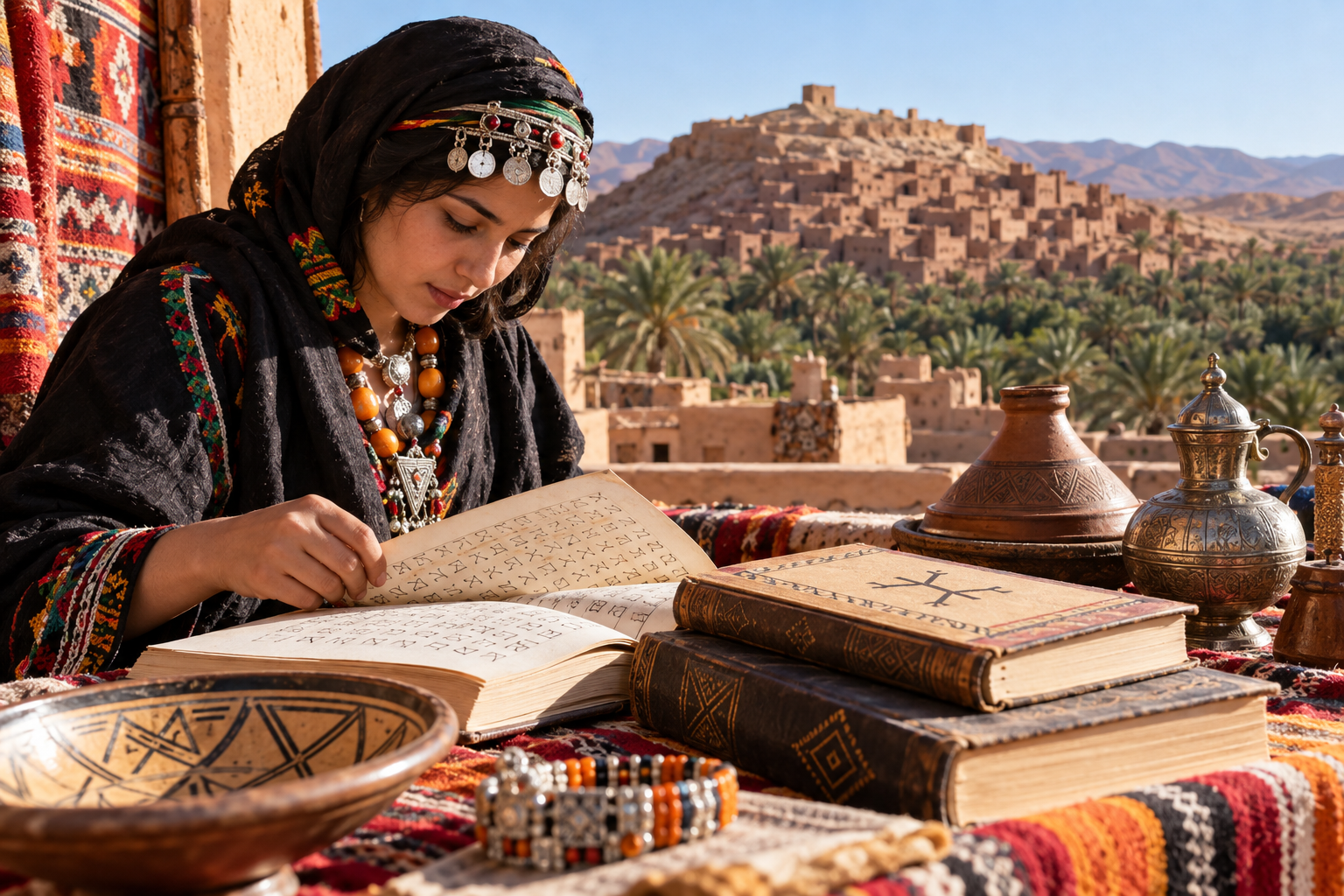
Amazigh languages are a family of Indigenous languages spoken across North Africa and parts of the Sahara. They connect millions of people through history, literature, oral traditions, and everyday communication. Often called Berber languages in international sources, these languages are known by many speakers as Tamazight languages, reflecting their connection to Amazigh identity and heritage.
What Does Tamazight Mean?
The word Tamazight can have different meanings depending on the context. It may refer broadly to the Amazigh language family, a specific standardized language variety, or particular regional forms spoken by communities in North Africa.
Because Amazigh languages developed across a large geographic area, they are not one single identical language. They include many related varieties with shared historical roots but differences in vocabulary, pronunciation, and grammar.
For this reason, specialists often use terms such as Amazigh languages or Berber languages when discussing the whole family, while Tamazight may refer to a particular variety or broader linguistic concept depending on the speaker and region.
The Origins and History of Amazigh Languages
Amazigh languages belong to the Afroasiatic language family, which also includes languages such as Arabic, Hebrew, and several other language groups. They have a long history in North Africa, where they developed alongside many civilizations and cultural exchanges.
Historical forms of Amazigh writing include ancient inscriptions connected with the Libyco-Berber script. A modern version of this writing tradition, Tifinagh, is used today in cultural, educational, and official contexts in some regions.
Amazigh languages have traditionally been preserved through oral transmission, including poetry, songs, storytelling, and community knowledge. Modern publishing, education, and digital technology have expanded opportunities for written use.
Main Amazigh Language Varieties
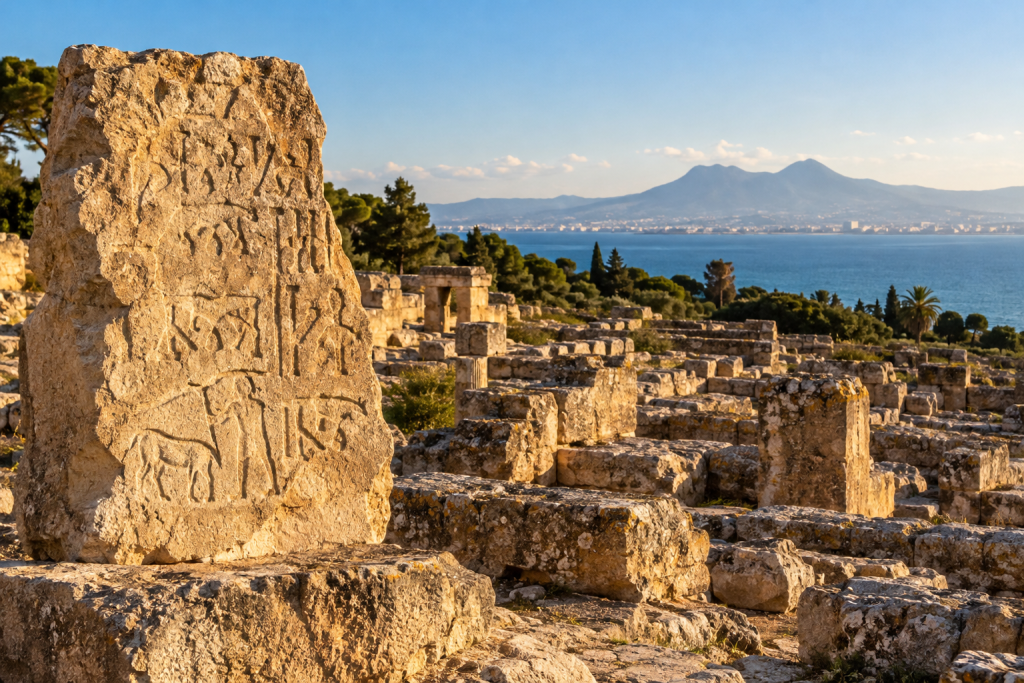
Amazigh languages include many regional varieties. These varieties reflect the history and geography of the communities that speak them.
| Language variety | Main regions | Writing practices |
|---|---|---|
| Tashelhit | Southern Morocco, including Souss and parts of the Atlas regions | Written using Arabic script, Latin script, and Tifinagh depending on context |
| Tarifit | Rif region of northern Morocco | Uses different writing traditions including Latin and Tifinagh in modern contexts |
| Central Atlas Tamazight | Middle Atlas region of Morocco | Used in educational and cultural materials with modern writing systems |
| Kabyle | Kabylia region of Algeria | Has a significant written tradition using mainly Latin script |
| Tamasheq and related Tuareg varieties | Sahara regions including parts of Mali, Niger, Algeria, and Libya | Uses Tifinagh traditions alongside other writing systems |
Are Amazigh Languages Mutually Intelligible?
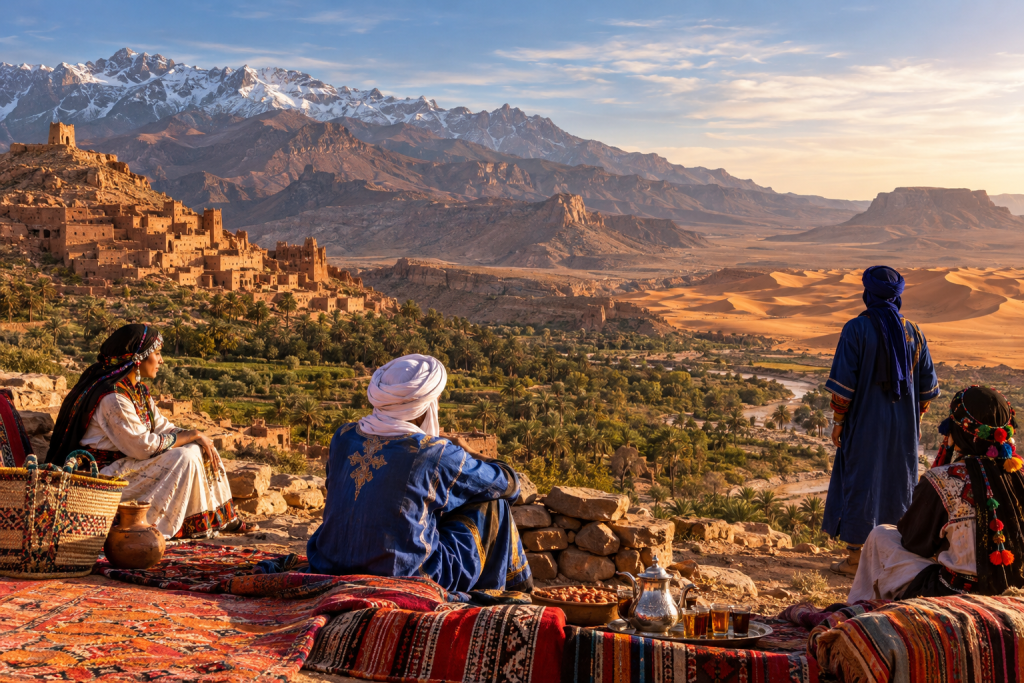
Some Amazigh speakers can understand related varieties more easily than others, especially when they share geographical or cultural connections. However, mutual understanding is not always automatic.
A speaker of one Amazigh variety may need exposure or education to understand another variety from a distant region. Differences can appear in pronunciation, vocabulary, and expressions, similar to the relationships between some other language groups with regional varieties.
This diversity does not make Amazigh languages separate from one another. Instead, it reflects centuries of development among communities living in different environments.
Tifinagh: The Amazigh Writing System
Tifinagh is one of the most recognizable symbols associated with Amazigh languages. It has historical connections to ancient North African writing traditions and has been adapted for modern use.
Today, Tifinagh appears in cultural publications, education, signage, digital fonts, and artistic projects. In Morocco, the Tifinagh script has been used in official contexts connected with the recognition and teaching of Tamazight.
Different Ways of Writing Amazigh Languages
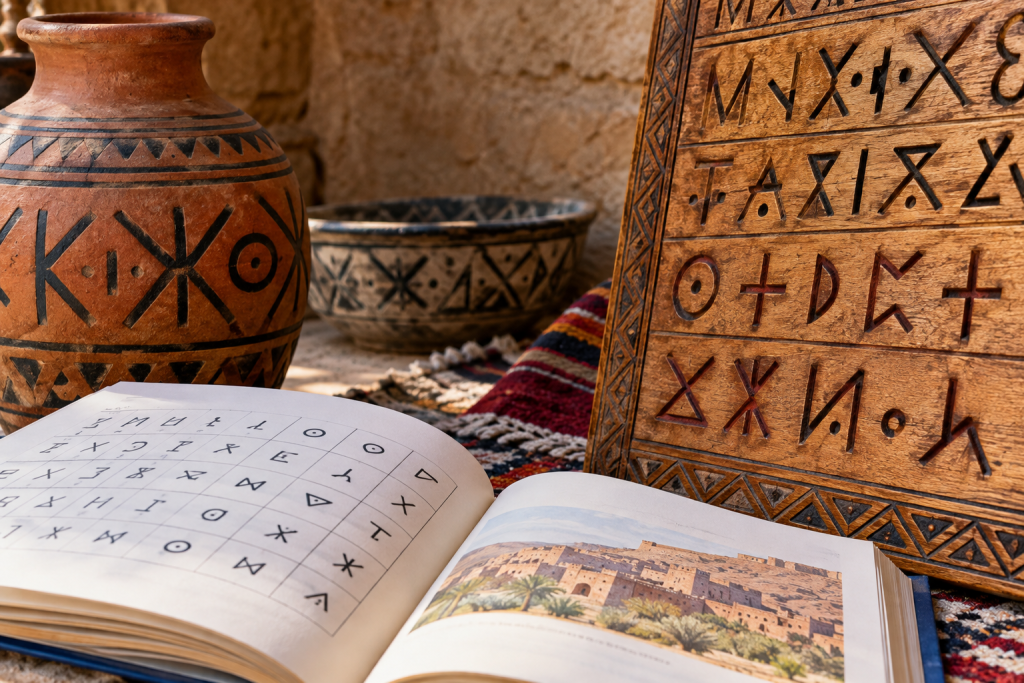
Amazigh languages have been written using several scripts throughout history. The choice of writing system can depend on region, educational background, purpose, and community preference.
- Tifinagh: Connected with Amazigh identity and used in modern cultural and educational contexts.
- Latin script: Widely used in some academic, literary, and community publications.
- Arabic script: Historically used by some writers and communities.
Amazigh Languages in Education and Public Life
The recognition of Amazigh languages has developed differently across North African countries. Morocco recognized Amazigh as an official language alongside Arabic in 2011. Algeria recognized Tamazight as a national language in 2002 and later as an official language in 2016.
The implementation of language education and public use continues to vary by region and institution. Language policies, educational resources, and community initiatives all influence how Amazigh languages are used today.
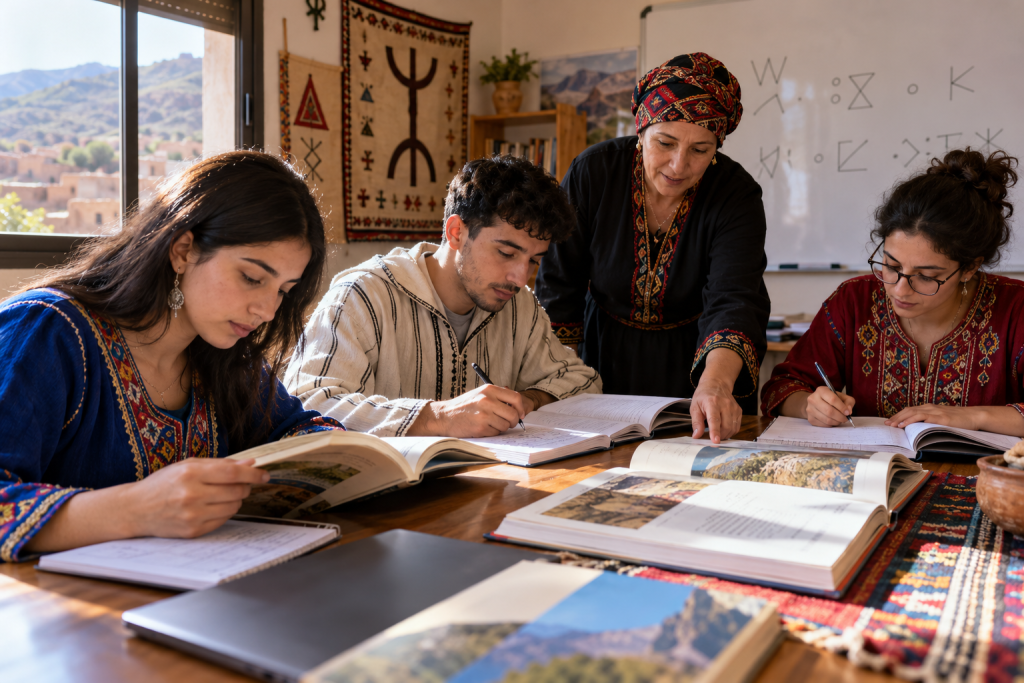
A Small Amazigh Phrase Sampler
Because Amazigh languages have regional varieties, phrases should always be identified by variety. The examples below represent specific varieties rather than a universal Amazigh language.
| Meaning | Variety | Example |
|---|---|---|
| Hello | Tashelhit | Azul |
| Hello | Common Amazigh greeting across several varieties | Azul |
| Thank you | Tarifit / other varieties may differ | Tanemmirt |
Simple examples like these show shared cultural connections, but learners should remember that vocabulary and pronunciation may change between communities.
Amazigh Languages and Modern Identity
For many speakers, language is an important part of Amazigh identity. It connects families with ancestral traditions while also serving as a modern means of communication, education, and creativity.
Contemporary Amazigh literature, music, films, online content, and educational projects continue to expand the visibility of these languages. Younger generations increasingly use digital platforms to learn, write, and share Amazigh languages.
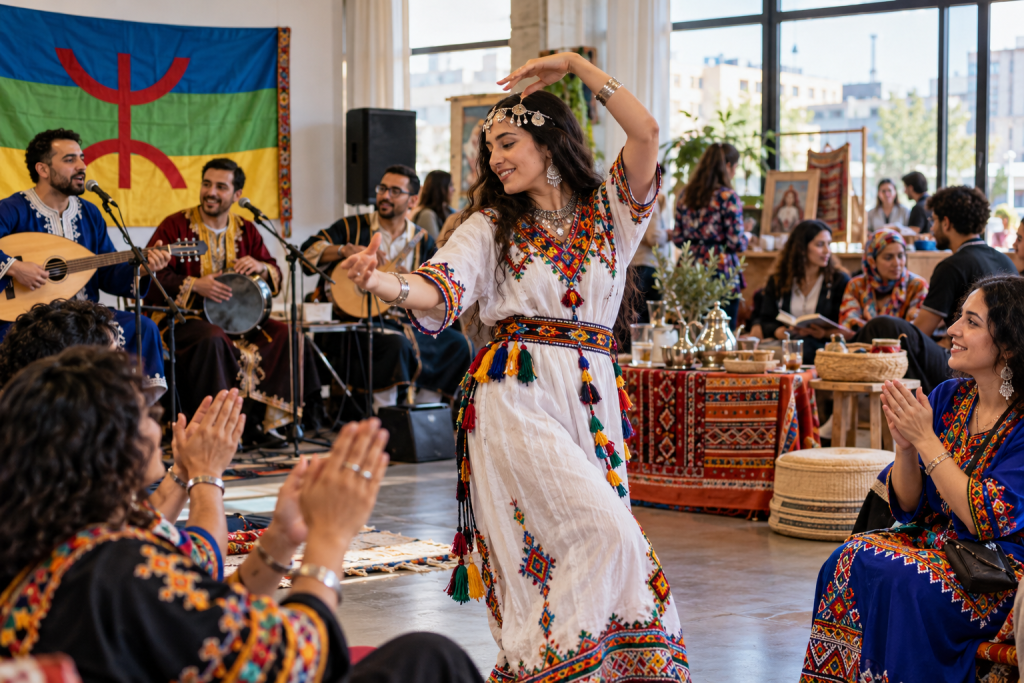
Amazigh Languages Beyond North Africa
Migration has created Amazigh-speaking communities in many countries, especially in Europe and North America. Diaspora communities often maintain connections with Amazigh languages through family life, cultural organizations, festivals, and online resources.
For many families abroad, language preservation is connected with questions of identity, belonging, and cultural continuity. Some younger speakers learn Amazigh as a heritage language while also using the languages of their countries of residence.
Why Amazigh Languages Matter
Amazigh languages represent thousands of years of human expression in North Africa. They preserve stories, poetry, knowledge of landscapes, and community memories.
Understanding Amazigh languages means recognizing both their shared roots and their regional diversity. They are not only historical languages but living languages that continue to evolve.
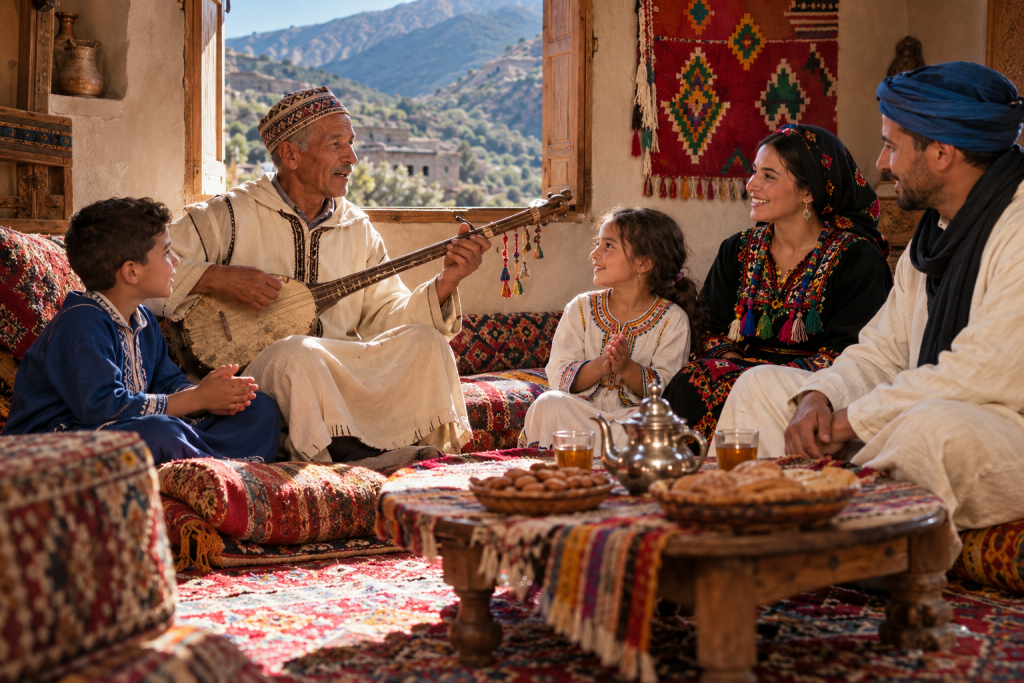
How Amazigh Languages Are Preserved Today
The preservation of Amazigh languages involves many different efforts, including family transmission, education, publishing, cultural organizations, and digital projects. Because many Amazigh languages were traditionally passed through speech rather than formal writing systems, community use has always been central to their survival.
Families continue to play an important role by teaching children everyday vocabulary, songs, stories, and expressions. Schools, universities, and cultural institutions also contribute by developing learning materials, dictionaries, and language resources.
The Role of Literature and Media
Modern Amazigh literature has expanded through poetry, novels, journalism, and online publications. Writers and artists use different scripts and regional varieties to create works that reflect local experiences while contributing to broader Amazigh cultural expression.
Music has also been a powerful way to share Amazigh languages. Traditional songs, contemporary performances, and digital recordings allow speakers and learners around the world to engage with Amazigh vocabulary and storytelling.
Challenges Facing Amazigh Languages
Like many minority and Indigenous languages, Amazigh languages face challenges related to transmission, education, and public visibility. In some communities, younger generations may use dominant national or international languages more frequently because of schooling, employment, and migration.
The situation differs greatly between regions. Some communities have stronger institutional support, while others rely mainly on families and cultural initiatives to maintain language use.
- Language transmission: Maintaining everyday use between generations is essential for long-term continuity.
- Educational resources: Textbooks, teachers, and standardized materials influence how widely a language can be taught.
- Digital presence: Online content, keyboards, fonts, and software support modern language use.
Learning Amazigh as a Second Language
Interest in learning Amazigh languages has grown among heritage learners, researchers, travelers, and people interested in North African cultures. Beginners often start with greetings, common expressions, pronunciation, and basic vocabulary before exploring a specific regional variety.
Because Amazigh languages are diverse, learners benefit from choosing a particular variety connected with a region or community. Learning Tashelhit, Tarifit, Kabyle, or another variety provides deeper cultural understanding and avoids mixing different forms into an artificial language.
Respecting Linguistic Diversity
Amazigh languages show how language reflects geography, history, and community experience. The existence of multiple varieties is not a weakness; it is evidence of a rich linguistic heritage shaped by centuries of human creativity.
Recognizing this diversity helps learners appreciate Amazigh languages as living systems rather than only historical traditions. Each variety carries unique expressions, sounds, and cultural knowledge.
 No products in the cart.
Comments (5)