


Amazigh music is one of the most important expressions of North African cultural heritage. Across Morocco, Algeria, Libya, the Sahara, and diaspora communities, music has preserved languages, stories, poetry, celebrations, and collective memories. Often called Berber music, Amazigh music is not one single genre but a wide collection of regional traditions shaped by different landscapes, communities, and histories.
Understanding Amazigh Music
Amazigh music includes many styles connected to specific communities and regions. A mountain village in Morocco, a Kabyle community in Algeria, and a Tuareg settlement in the Sahara may all have Amazigh heritage while expressing it through different rhythms, instruments, languages, and performance traditions.
Many Amazigh musical traditions developed through oral transmission. Songs often carry poetry, social messages, memories of important events, and knowledge passed between generations. Performances may accompany weddings, seasonal celebrations, community gatherings, religious occasions, or artistic events.
The Role of Language in Amazigh Music
Language is central to Amazigh music because songs often preserve regional varieties of Tamazight. Lyrics may express personal emotions, community values, relationships, landscapes, history, and social observations.
Because Amazigh languages include many varieties, musicians usually perform in their own regional language. Tashelhit, Tarifit, Central Atlas Tamazight, Kabyle, and Tuareg varieties each have their own poetic traditions and musical expressions.
Ahwash: Collective Music of Southern Morocco
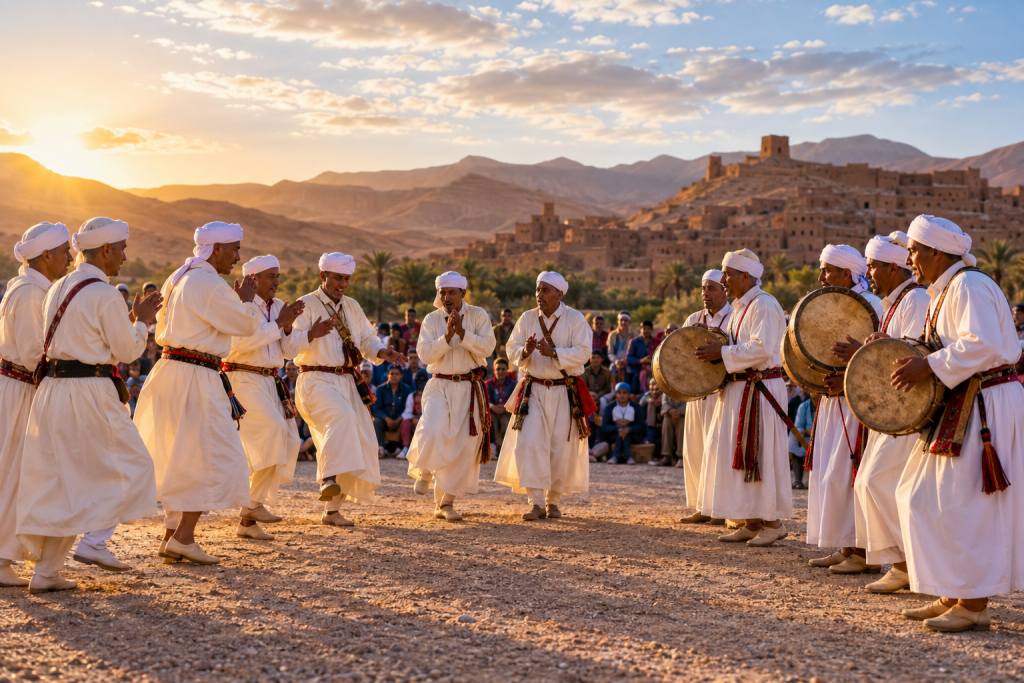
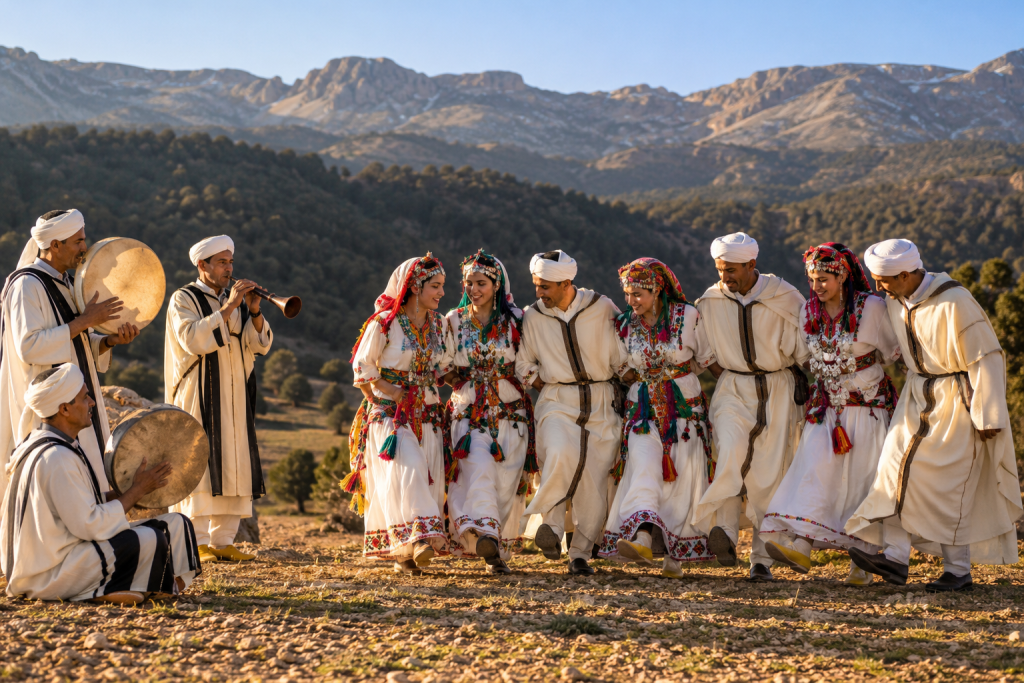
Ahwash is a traditional performance from southern Morocco, particularly associated with Amazigh communities in areas such as the High Atlas and Anti-Atlas regions. It combines music, poetry, singing, and coordinated movement.
Ahwash performances often involve groups of men and women responding to each other through song and rhythm. The communal nature of the performance reflects the importance of collective participation rather than only individual musicianship.
Sounds and Instruments of Ahwash
Common elements include frame drums, rhythmic clapping, group vocals, and poetic exchanges. The atmosphere can range from ceremonial performances to community celebrations where music creates social connection.
Ahidous: Rhythm and Dance of the Middle Atlas
Ahidous is another important Amazigh collective tradition, especially associated with Central Atlas communities in Morocco. It combines singing, poetry, dancing, and circular or line formations.
Performers often create a dialogue between singers and musicians while maintaining complex rhythms. Ahidous demonstrates how music can function as both artistic expression and community participation.
Kabyle Music: Poetry and Modern Expression
Kabyle music comes from the Kabylia region of northern Algeria and has a strong connection with Amazigh language, poetry, and social commentary.
Traditional Kabyle songs often feature vocals accompanied by instruments such as the mandole, guitar, violin, and percussion. Modern Kabyle musicians have also incorporated influences from other musical styles while maintaining the Kabyle language as an important part of their identity.
Modern Kabyle Artists
Artists such as Idir helped introduce Kabyle music to international audiences through songs performed in Kabyle. Other musicians have continued developing contemporary forms that combine Amazigh traditions with modern arrangements.
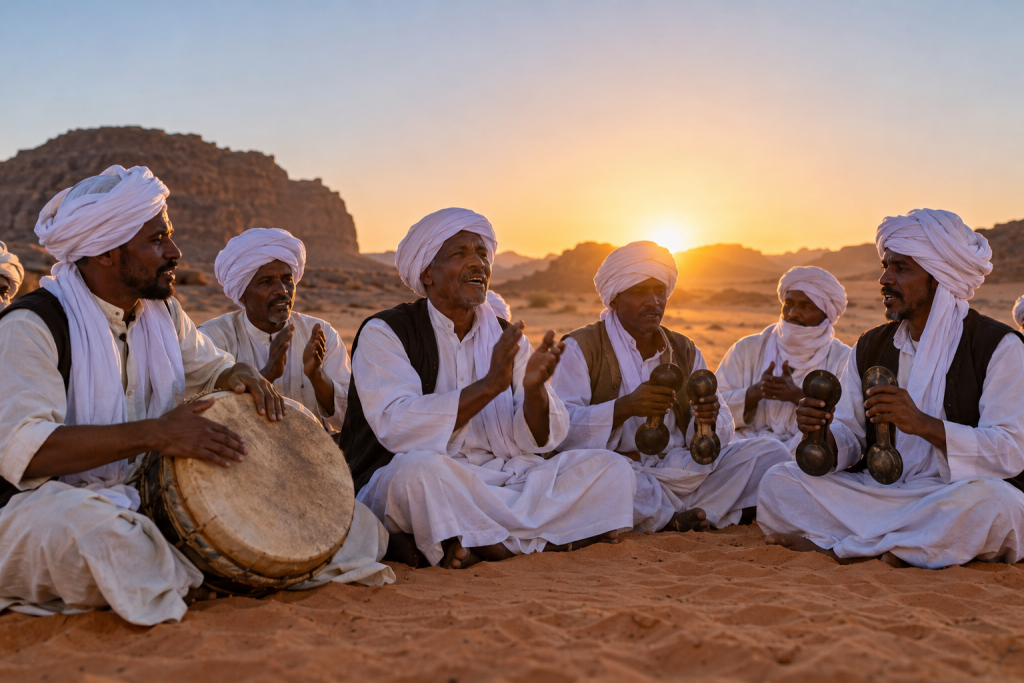
Ahellil: A Saharan Amazigh Musical Tradition
Ahellil is a poetic and musical tradition associated with the Gourara region of Algeria. It is performed by groups of singers and musicians and is connected with community ceremonies and cultural gatherings.
UNESCO inscribed Ahellil of Gourara on the Representative List of the Intangible Cultural Heritage of Humanity in 2008, recognizing its importance as a living tradition combining poetry, music, and collective performance.
The tradition demonstrates how Amazigh cultural expression has adapted to different environments, including Saharan regions where music preserves memory and community identity.
Tuareg Music: Desert Sounds and Identity
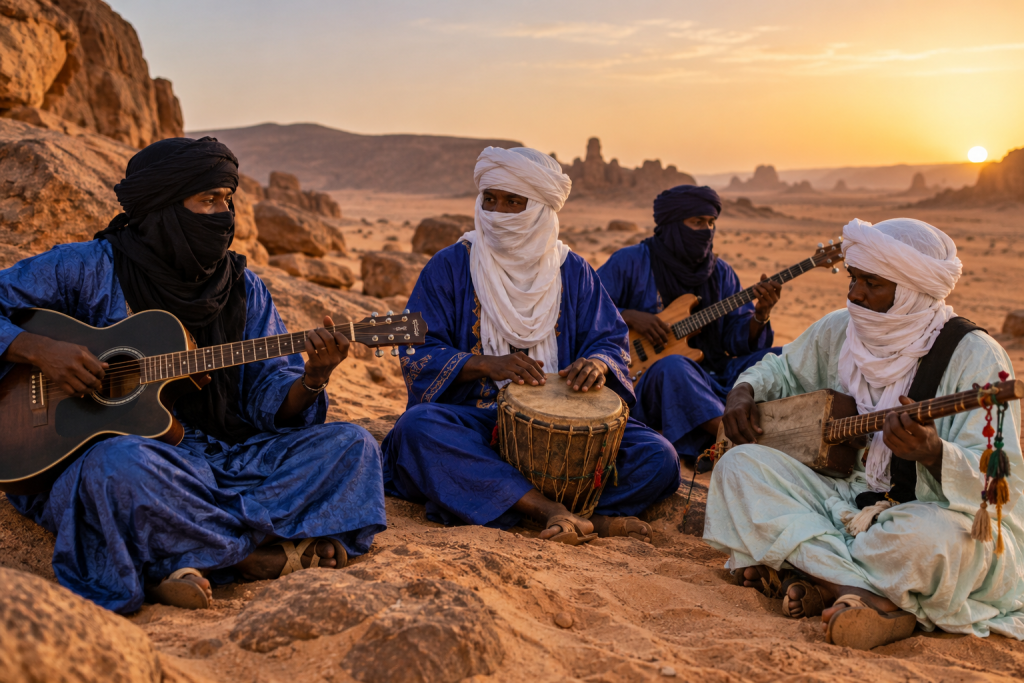
Tuareg music represents Amazigh traditions from Saharan communities across countries including Mali, Niger, Algeria, and Libya. Tuareg languages belong to the Amazigh language family, and music plays an important role in expressing history, identity, and social experiences.
Traditional Tuareg music includes instruments such as the tende drum and the imzad, a traditional one-string bowed instrument. Modern Tuareg groups have also introduced electric guitars and contemporary arrangements.
Modern Tuareg Artists
Groups such as Tinariwen have brought Tuareg music to international audiences by combining desert musical traditions with blues-inspired guitar sounds. Their work is performed mainly in Tamasheq and reflects contemporary Saharan experiences.
Amazigh Musical Instruments
Different regions use different instruments, but several instruments appear frequently in Amazigh musical traditions.
- Bendir: A frame drum used in many North African musical traditions.
- Imzad: A traditional Tuareg bowed instrument.
- Tende: A drum associated with Tuareg communities.
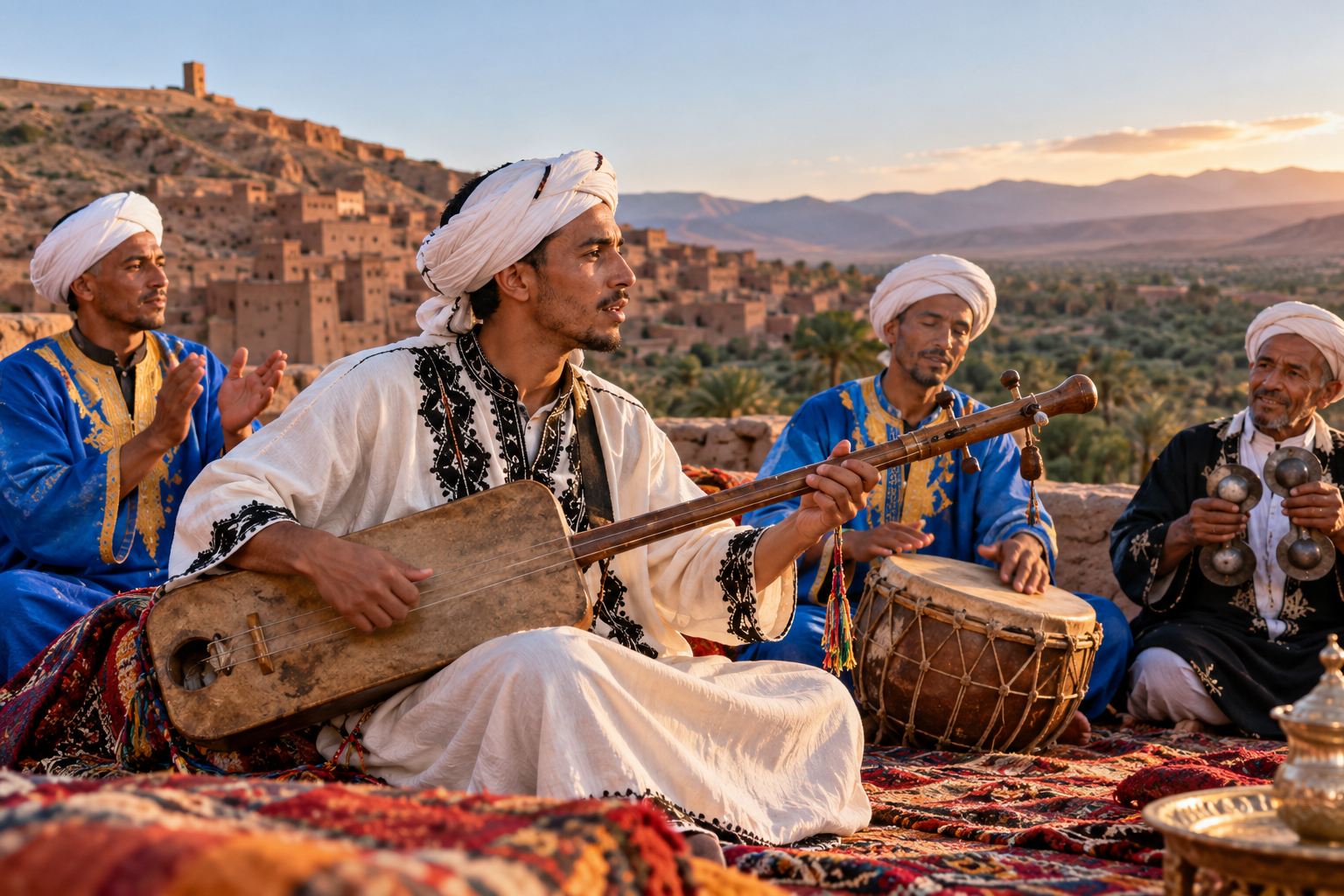
- Loutar: A traditional string instrument used in parts of Morocco.
- Vocals and percussion: Important elements in many collective Amazigh performances.
Amazigh Music Today
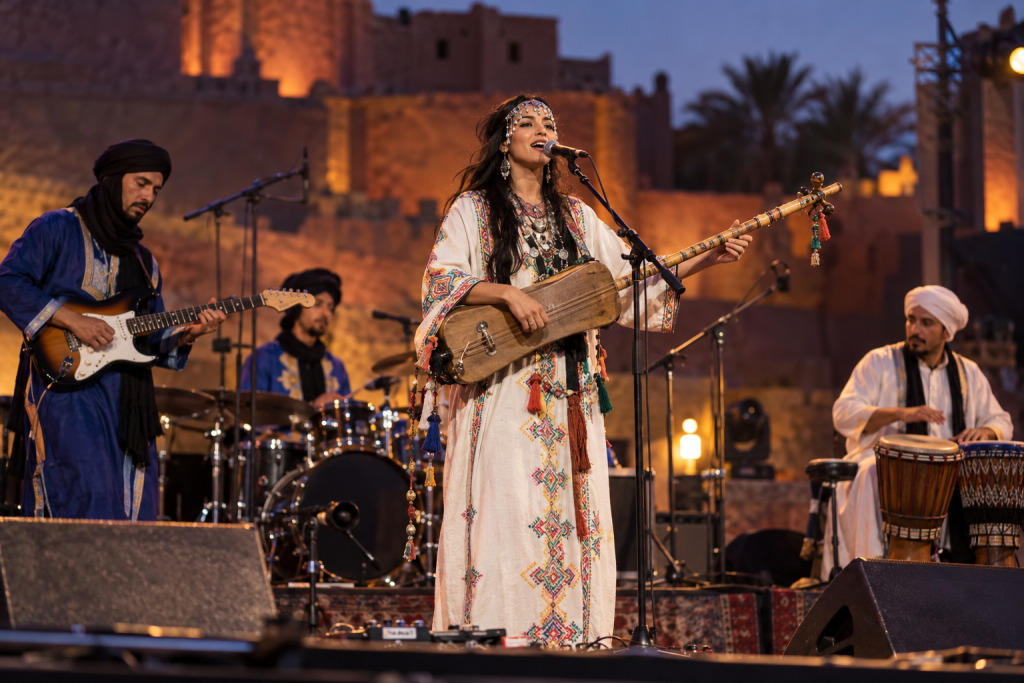
Contemporary Amazigh musicians continue to combine traditional sounds with modern production. Artists may use electronic instruments, global musical influences, and digital platforms while continuing to perform in Amazigh languages.
Festivals, streaming platforms, and social media have helped new audiences discover Amazigh music. At the same time, many musicians continue to protect regional traditions by documenting older songs and working with traditional performers.
A Beginner’s Listening Guide
Listeners exploring Amazigh music can begin by exploring different regional traditions rather than searching for one single style.
- For southern Moroccan traditions: Explore Ahwash performances and Tashelhit-language music.
- For Middle Atlas traditions: Listen to Ahidous performances and Central Atlas Tamazight songs.
- For Algeria: Explore Kabyle artists and Kabyle-language recordings.
- For Saharan traditions: Explore Ahellil and Tuareg musicians performing in Tamasheq.
How to Listen Respectfully
Understanding the cultural background of Amazigh music makes listening more meaningful. Rather than viewing these traditions as a single exotic style, it is useful to recognize the communities, languages, and histories behind each performance.
Official artist channels, cultural institutions, and authorized recordings are good ways to discover musicians while supporting their work.
Why Amazigh Music Matters
Amazigh music is more than entertainment. It preserves languages, connects generations, and records experiences that might otherwise disappear. Through songs, rhythms, and performances, communities continue expressing their relationship with history and identity.
The Connection Between Amazigh Music and Community Life
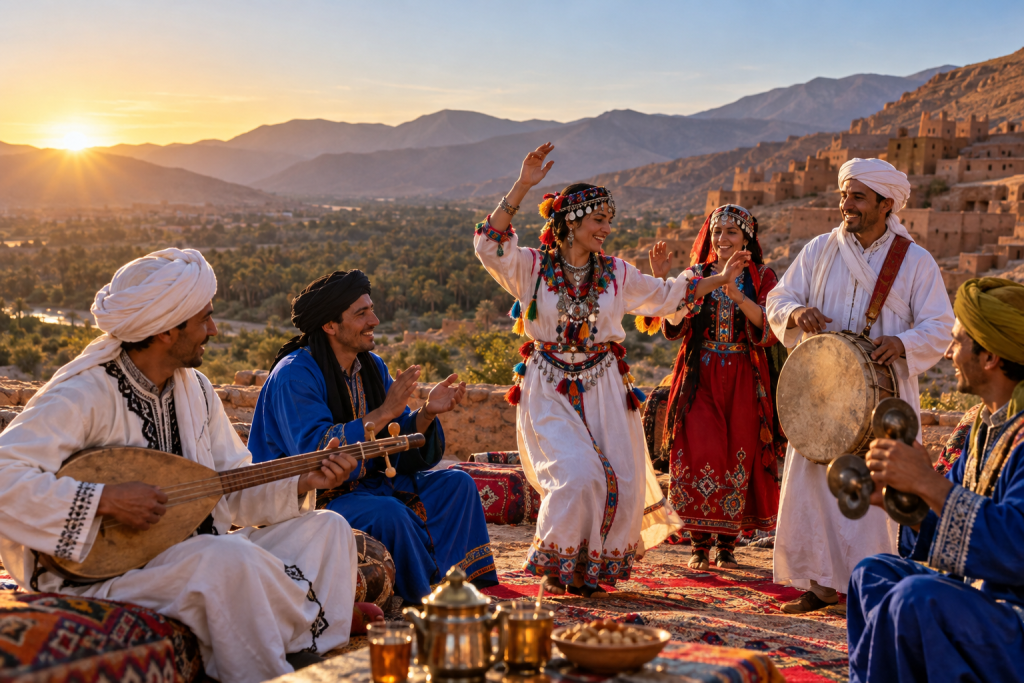
Amazigh music has traditionally been closely connected with community events rather than only individual performances. Songs and rhythms often appear during weddings, seasonal celebrations, festivals, and gatherings where participation is as important as listening.
In many traditions, musicians, singers, dancers, and audiences interact with each other. This creates a shared experience where music becomes a way of strengthening relationships and expressing collective identity.
Poetry, Memory, and Storytelling
Poetry is a central element in many Amazigh musical traditions. Performers may use carefully composed verses to discuss love, nature, social relationships, historical memories, and everyday experiences.
Before widespread written records, songs helped preserve knowledge within communities. Through melodies and repeated performances, generations remembered stories, values, and local histories.
Regional Diversity Within Amazigh Music
The diversity of Amazigh music reflects the geography of North Africa. Mountains, valleys, coastlines, and desert environments influenced the instruments, rhythms, and performance styles developed by different communities.
For example, collective village performances in the Atlas Mountains often emphasize group participation, while Saharan traditions may reflect desert landscapes, travel routes, and different social settings. These differences show why Amazigh music should be understood as a family of traditions rather than a single sound.
Traditional Music and Cultural Change
Amazigh musicians have always adapted their art to changing circumstances. Traditional forms continue alongside new styles that include modern instruments, recording technology, and international influences.
This combination of preservation and innovation allows Amazigh music to remain connected to its roots while reaching new audiences.
Women’s Contributions to Amazigh Music
Women have made important contributions to Amazigh musical traditions as singers, performers, poets, and transmitters of cultural knowledge. In many communities, women’s songs have preserved personal stories, celebrations, and social memories.
The role of women differs between regions and historical periods, but their artistic contributions are an essential part of understanding Amazigh music as a whole.
Discovering Amazigh Music in the Digital Age
Digital platforms have created new opportunities for Amazigh musicians to share recordings beyond their local communities. Online archives, streaming services, and social media allow listeners worldwide to explore regional traditions.
At the same time, digital preservation helps document older performances and provides resources for younger generations interested in learning about their musical heritage.
Starting a Personal Listening Journey
New listeners can explore Amazigh music by focusing first on one region or tradition. Learning about the language, instruments, and community behind a style often creates a deeper appreciation of the music itself.
- Begin with traditional recordings: These provide insight into the original performance settings and instruments.
- Explore contemporary artists: Modern musicians show how Amazigh traditions continue evolving.
- Learn regional context: Understanding geography and language makes the listening experience richer.
Conclusion
Amazigh music represents a diverse world of sounds shaped by geography, language, and community traditions. From Ahwash and Ahidous to Kabyle songs, Ahellil, and Tuareg music, each tradition offers a different window into Amazigh heritage. Together, they show how music can preserve culture while continuing to evolve.
 No products in the cart.
Comments (26)