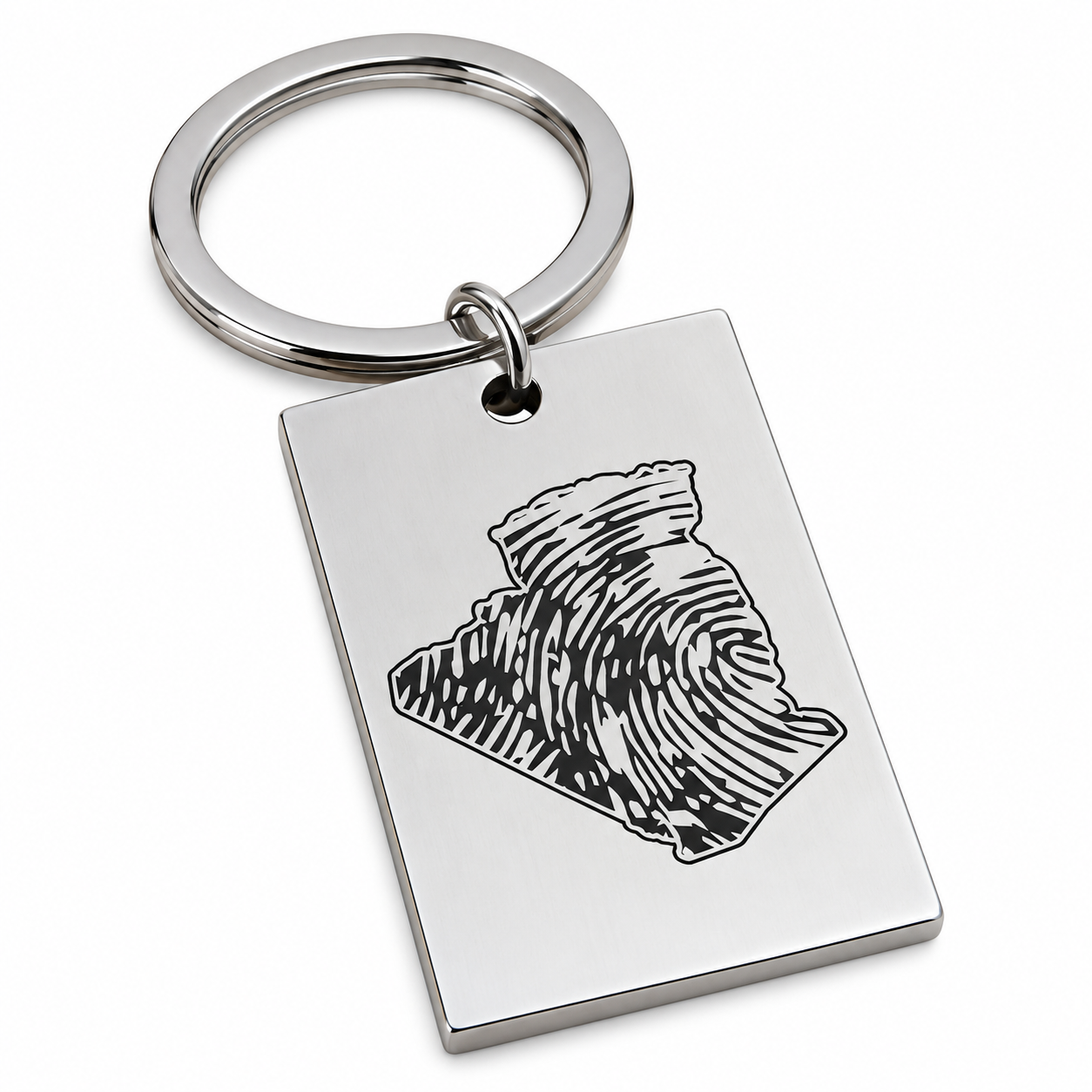
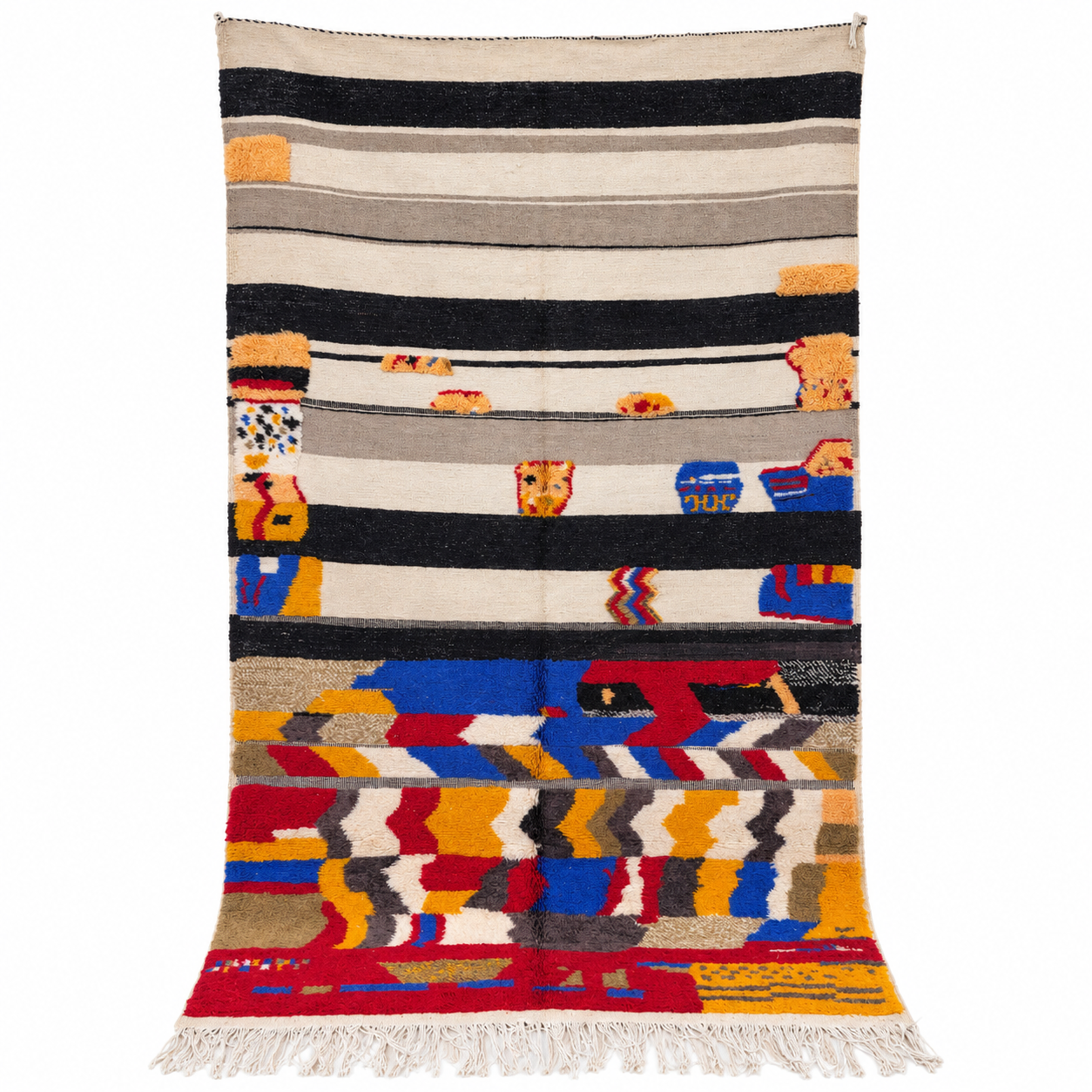
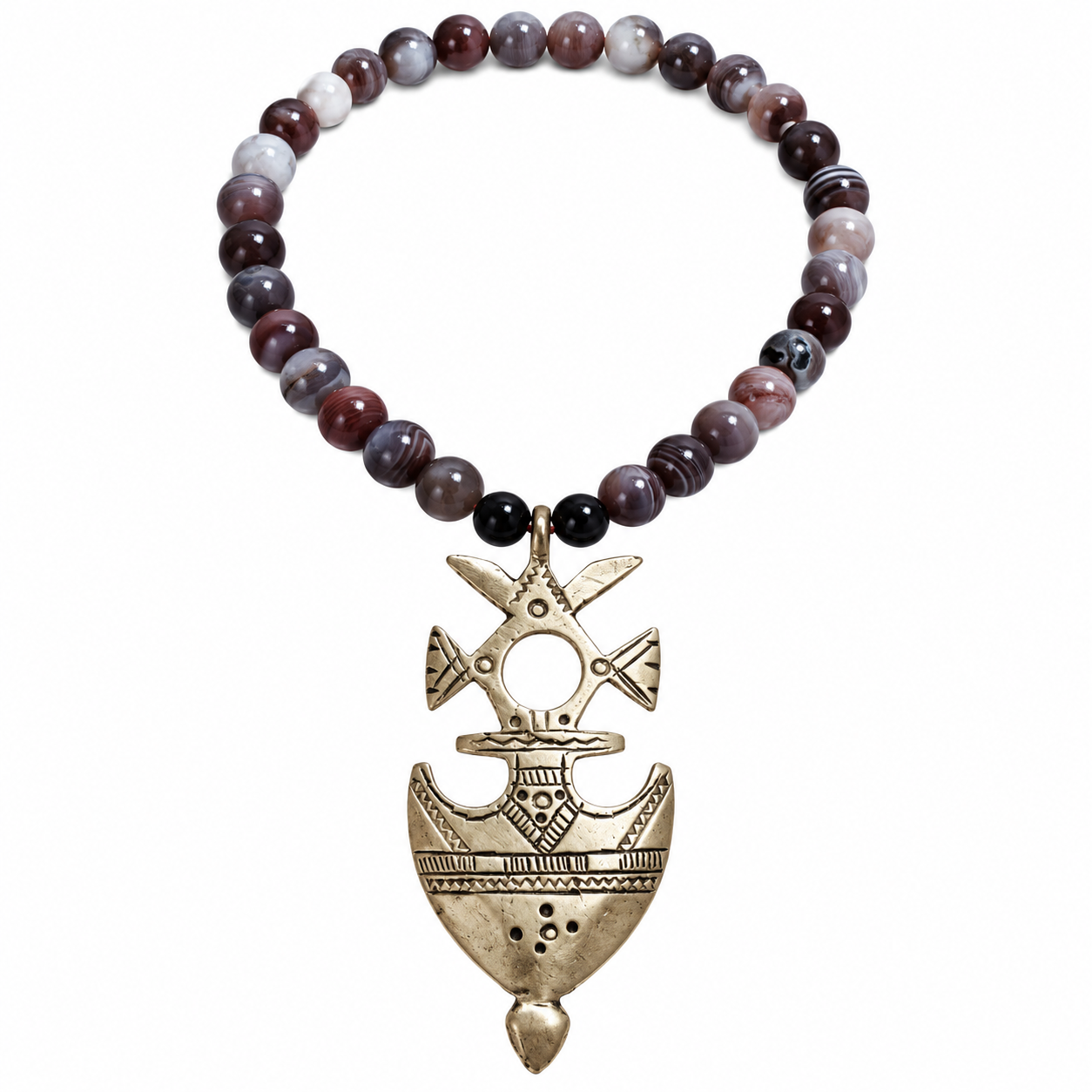
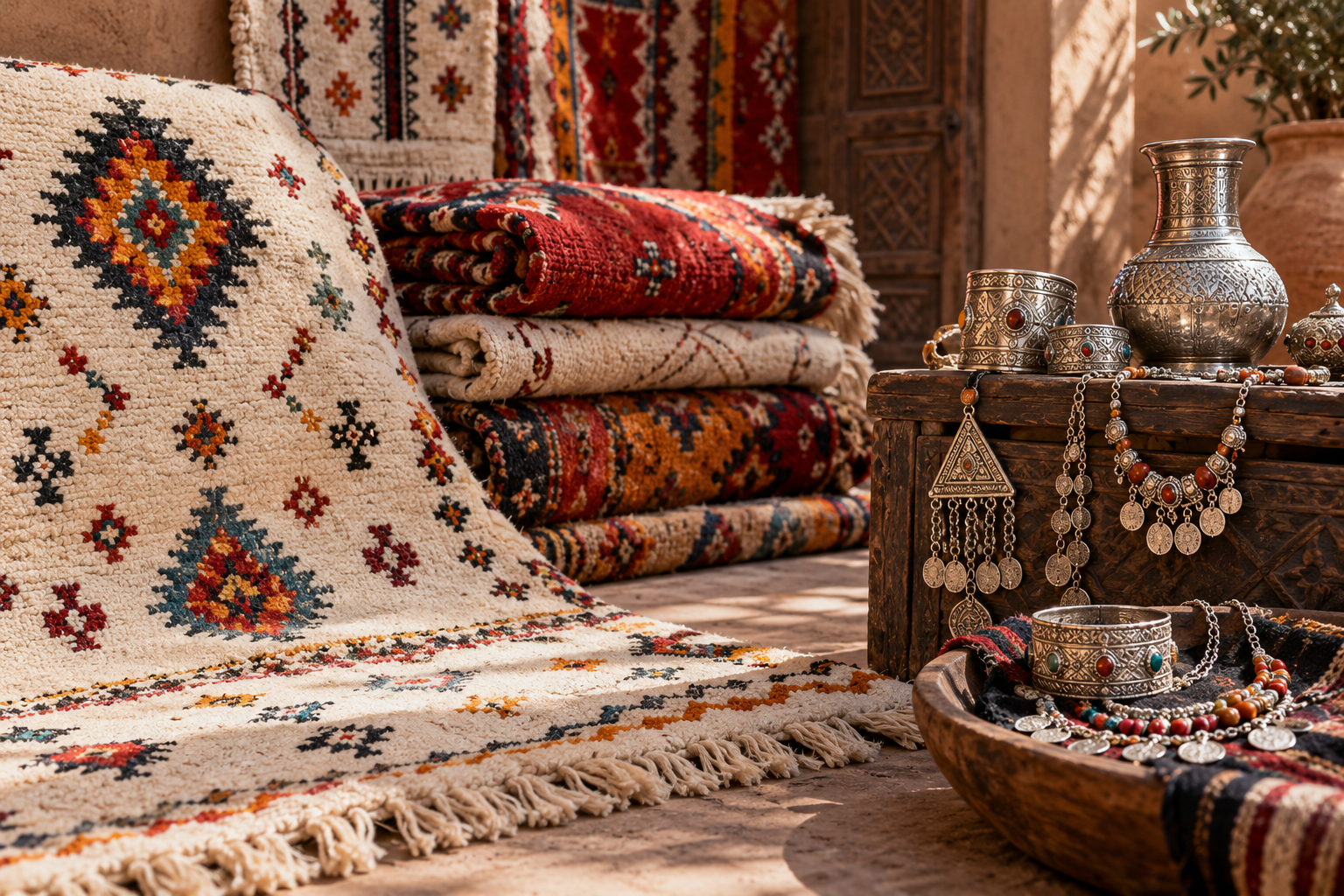
Amazigh symbols appear across many forms of artistic expression, including woven rugs, silver jewelry, pottery, clothing, and written traditions. These visual elements are an important part of Amazigh cultural heritage, but their meanings are often more complex than simple symbol dictionaries suggest.
Understanding Amazigh Symbols and Their Meanings
Amazigh communities across North Africa have developed diverse artistic traditions shaped by local histories, languages, environments, and craftsmanship. Symbols found on a rug from one region may not carry exactly the same interpretation as similar shapes found elsewhere.
When discussing Berber symbols meaning, it is important to separate documented information from interpretations created by sellers, artists, researchers, and modern audiences. Some motifs have recorded cultural associations, while others remain open to interpretation.
Tifinagh: The Amazigh Writing System
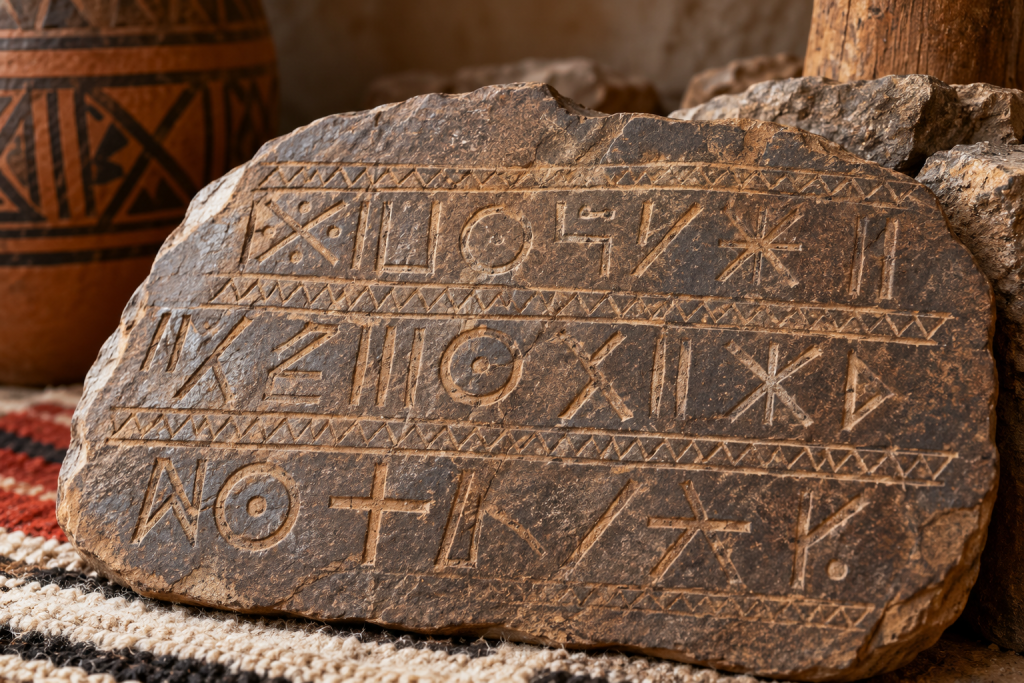
Tifinagh is one of the most recognizable forms of Amazigh visual identity. Unlike decorative geometric motifs, Tifinagh characters belong to a writing tradition connected with Amazigh languages.
Individual letters can represent specific sounds, making them different from many decorative symbols found in textiles and jewelry. Modern uses of Tifinagh appear in education, cultural projects, signage, design, and artwork.
Geometric Motifs in Amazigh Rugs
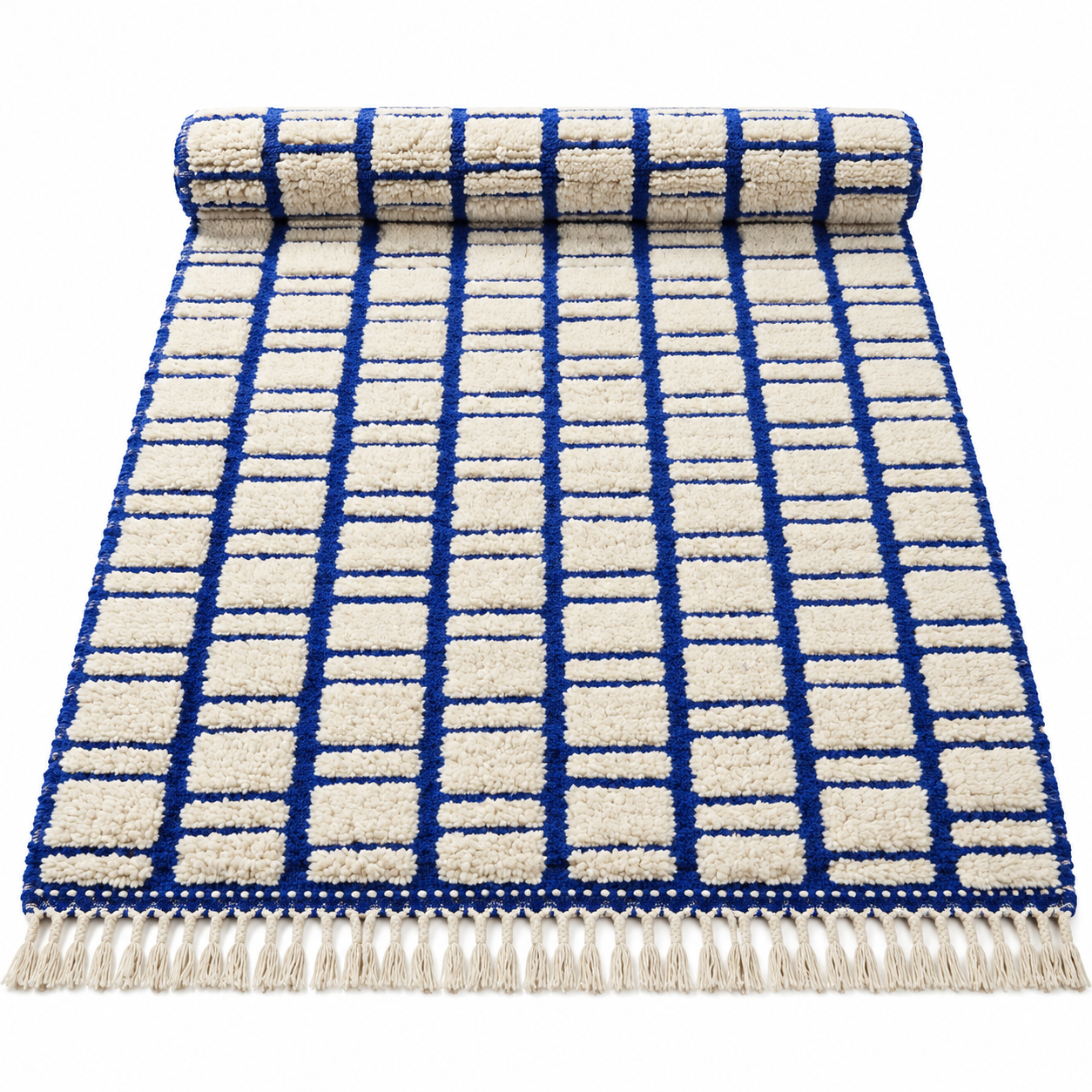
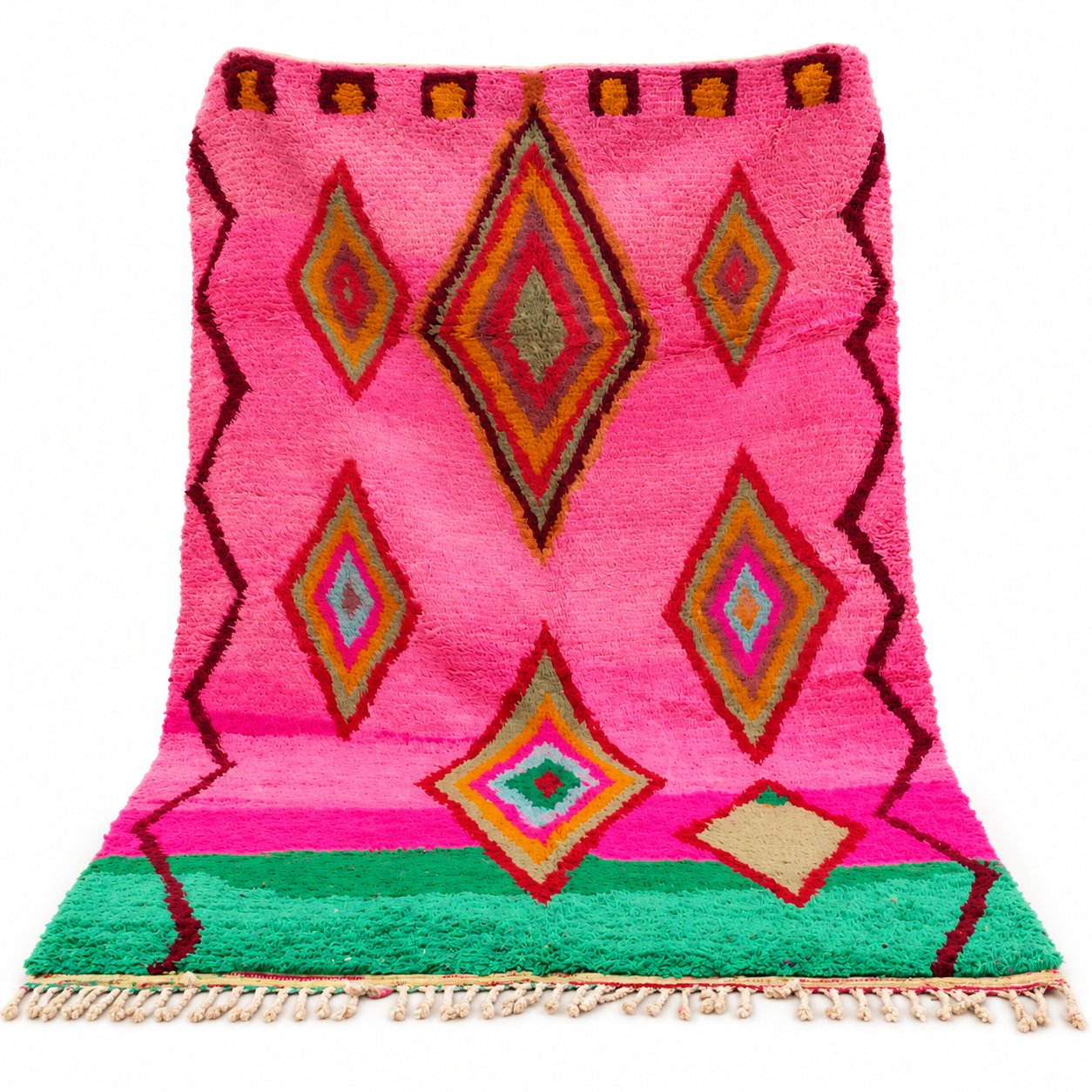
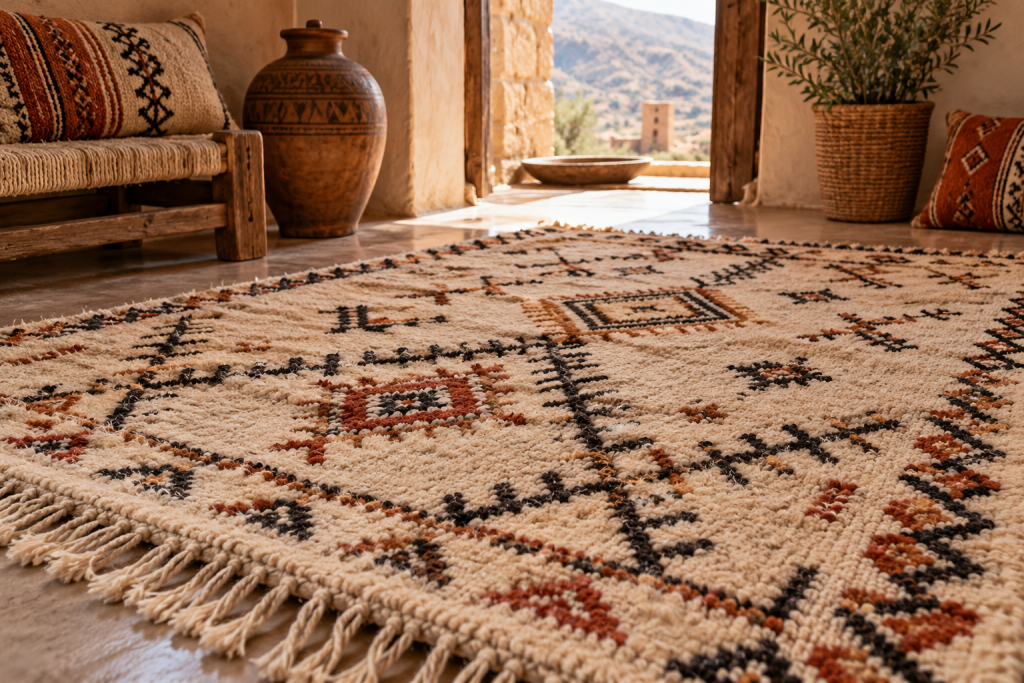
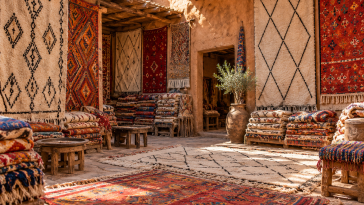
Amazigh rugs frequently feature geometric designs such as diamonds, lines, crosses, zigzags, and repeated patterns. These designs are created through weaving techniques and regional artistic traditions.
However, assigning one universal meaning to every geometric shape can be misleading. A diamond pattern, for example, may have different explanations depending on the maker, region, historical context, and the purpose of the textile.
Patterns and the Importance of the Maker
Many interpretations of rug motifs come from artisan explanations, local knowledge, and cultural research. The person who created a textile may understand a pattern through family tradition, personal creativity, or regional practice.
For this reason, the most accurate description of a rug should focus first on visible features, weaving style, materials, colors, and verified information about its origin.
Jewelry Motifs and Amazigh Silver Craftsmanship
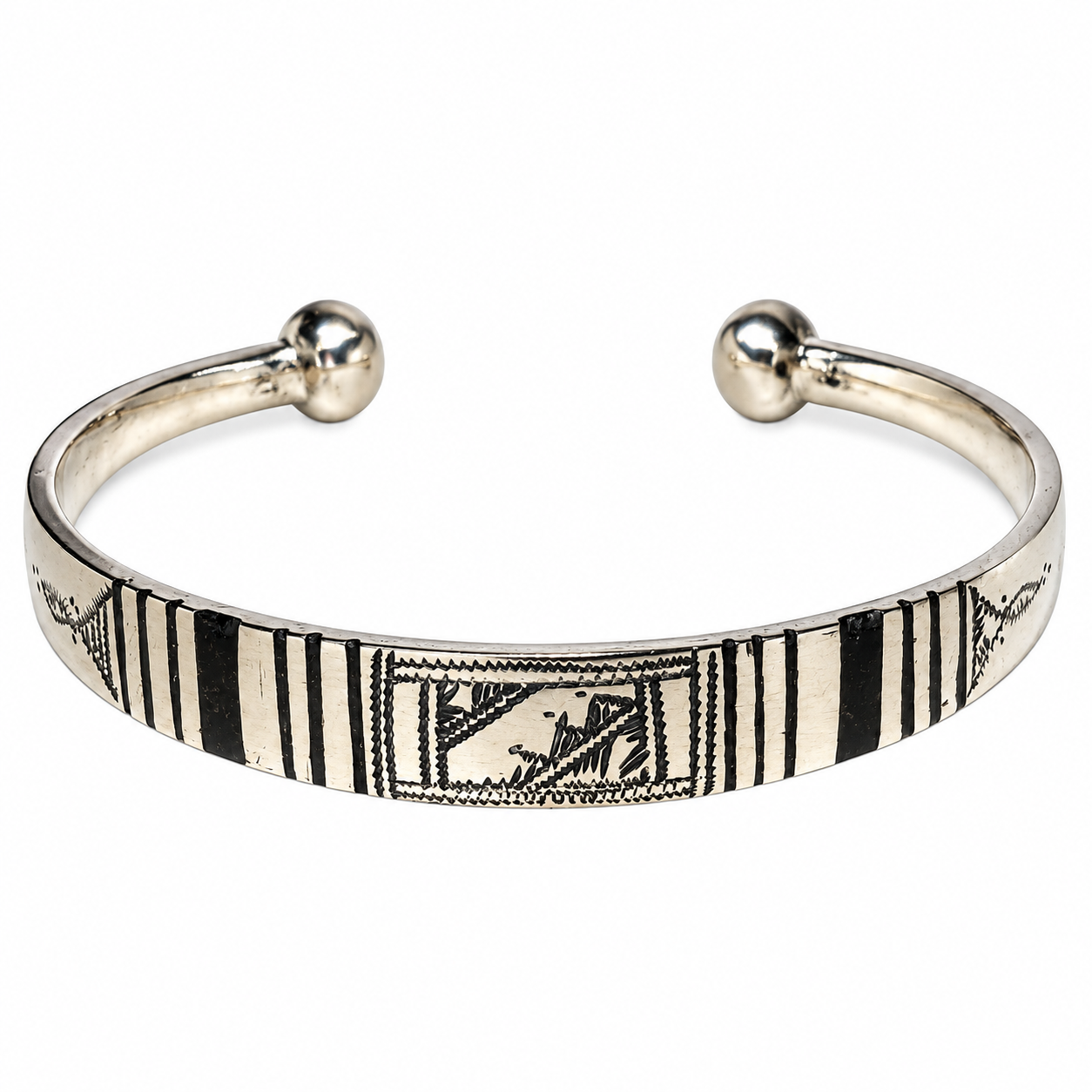
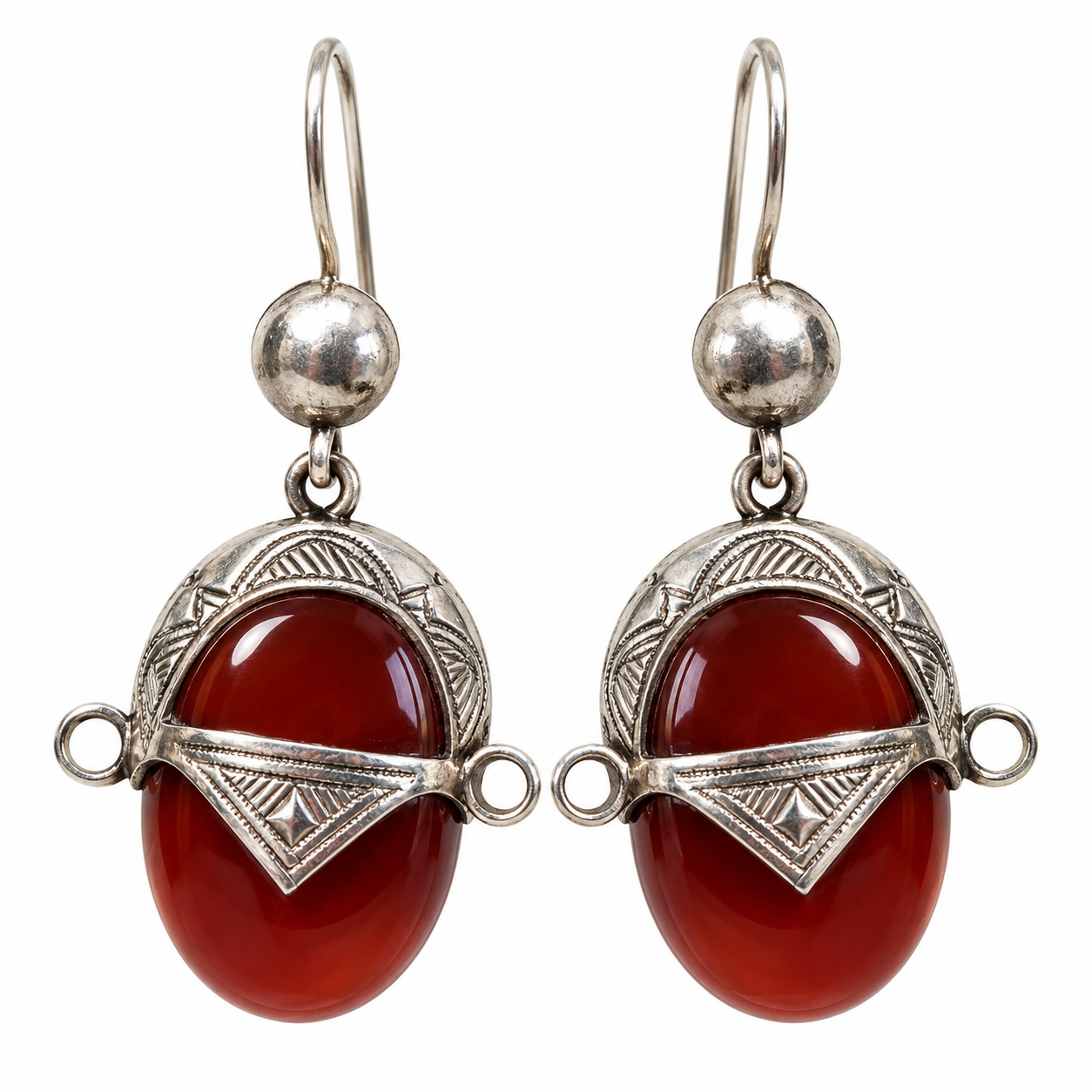
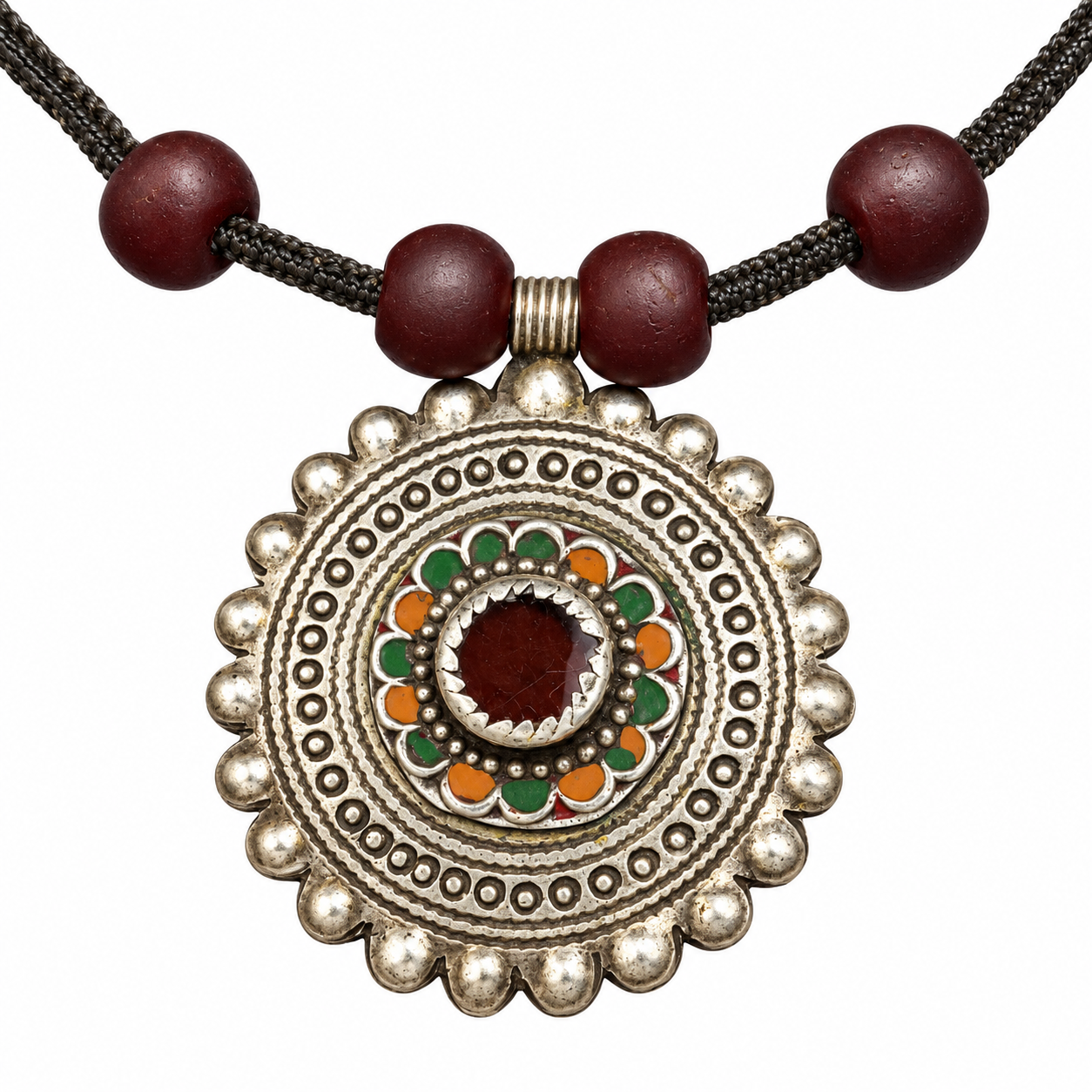
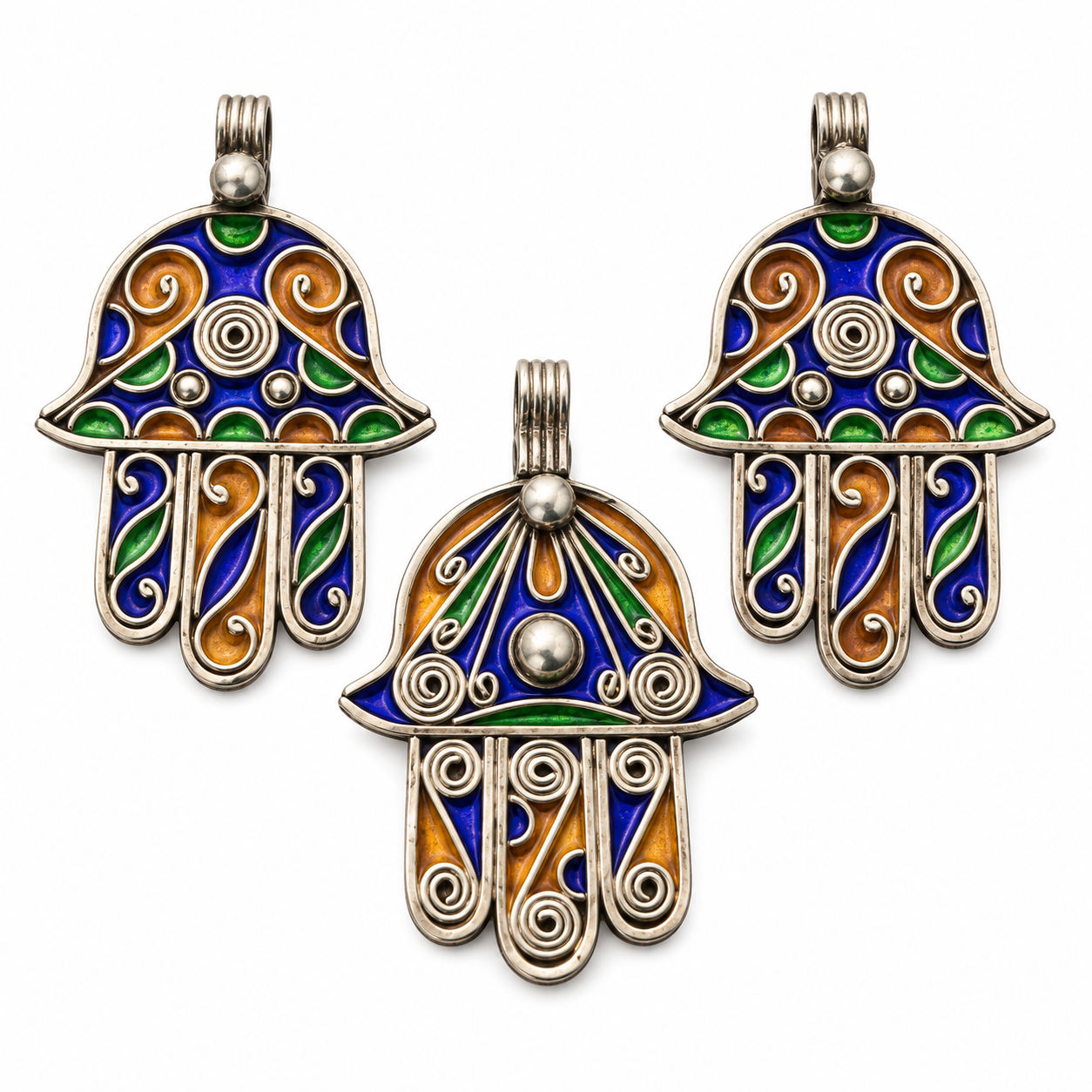
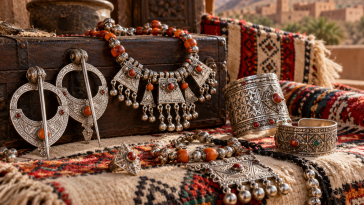
Amazigh jewelry is known for detailed craftsmanship, especially silver pieces decorated with geometric forms, stones, enamel, and engraved designs. Jewelry has been used for personal adornment, cultural expression, and in some contexts as an important family possession.
Different regions developed their own styles of necklaces, fibulas, bracelets, rings, and other ornaments. The same shape may appear in different areas while carrying different local associations.
Comparing Selected Motifs and Interpretations
| Motif or Element | Object | Region Example | Interpretation Limits |
|---|---|---|---|
| Tifinagh letters | Jewelry, signs, artwork | Various Amazigh-speaking regions | Letters have linguistic meanings, but decorative uses may add personal interpretation. |
| Diamond shapes | Rugs and textiles | Multiple weaving traditions | Meanings vary; shape alone does not prove one symbolic message. |
| Geometric lines | Jewelry and carpets | Regional artisan traditions | May reflect design choices, technique, or local symbolism. |
| Fibula forms | Jewelry | North African Amazigh communities | Historical and personal meanings depend on context. |
Why Symbol Meanings Are Sometimes Uncertain
Traditional crafts are often passed through practice rather than written explanations. A motif may survive for generations while its original interpretation changes or becomes unknown.
Modern commercial descriptions sometimes attach broad meanings such as protection, fertility, love, or marriage to symbols. While such interpretations may appear in some contexts, they should not automatically be presented as universal facts for all Amazigh communities.
Regional Diversity in Amazigh Artistic Traditions
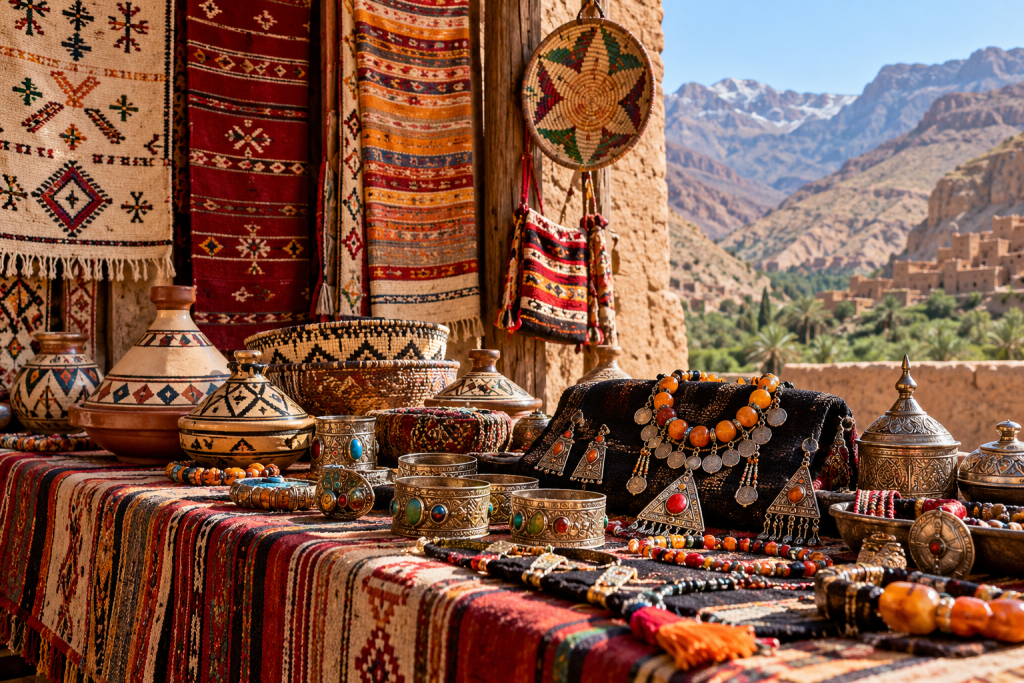
Amazigh artistic expression includes many regional styles. Moroccan Atlas weaving traditions, Kabyle jewelry, Tuareg designs, and other local crafts each developed unique visual languages.
- Atlas rug traditions: often known for wool weaving, bold geometry, and regional craftsmanship.
- Kabyle jewelry traditions: recognized for detailed silver work and distinctive decorative styles.
- Tuareg artistic traditions: include metalwork and symbolic designs shaped by desert environments.
These differences demonstrate why a single guide cannot explain every Amazigh motif in the same way.
How to Describe Amazigh Symbols Respectfully
When writing about Amazigh rugs or jewelry, accurate descriptions begin with observation and verified information.
- Describe visible patterns, materials, and craftsmanship.
- Identify regional information only when it is confirmed.
- Distinguish artisan explanations from general interpretations.
- Avoid claiming that every symbol has one fixed meaning.
Symbols in Contemporary Amazigh Design
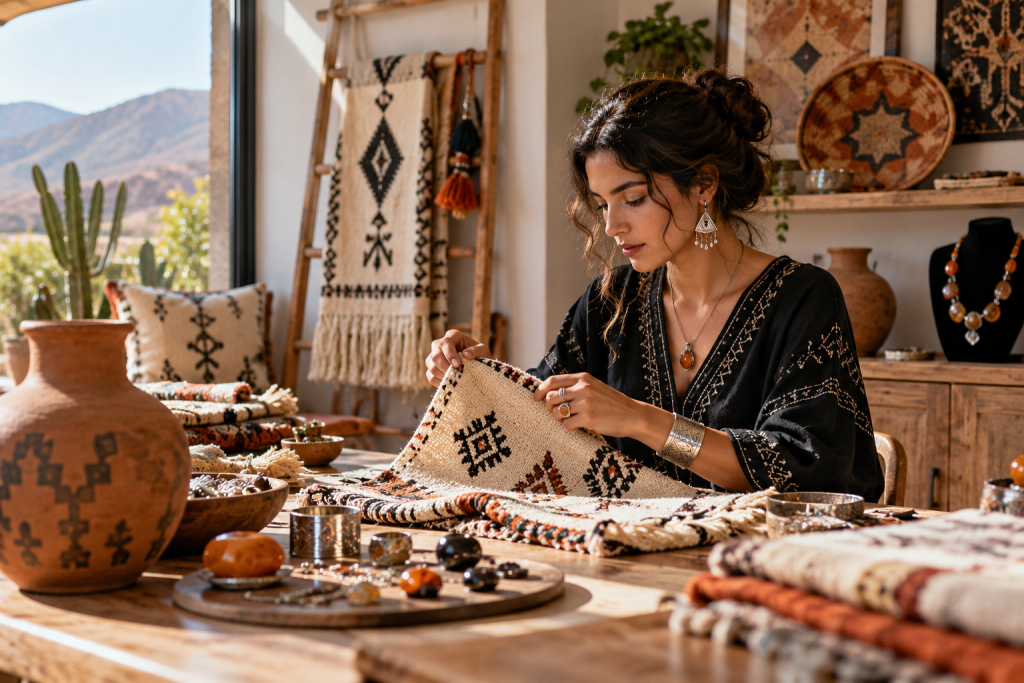
Today, Amazigh symbols appear in fashion, home decoration, graphic design, and cultural projects. Contemporary artists often combine traditional forms with modern styles.
These new uses do not replace historical traditions. Instead, they show how cultural symbols can continue evolving while maintaining connections to Amazigh identity and creativity.
Choosing Authentic Amazigh-Inspired Products
When buying rugs or jewelry featuring Amazigh-inspired motifs, customers can look beyond symbolic claims and consider craftsmanship, origin, materials, and the maker’s information.
- Ask about the region and artisan background.
- Look for details about materials and production methods.
- Appreciate designs as artistic works as well as cultural objects.
The Living Meaning of Amazigh Symbols
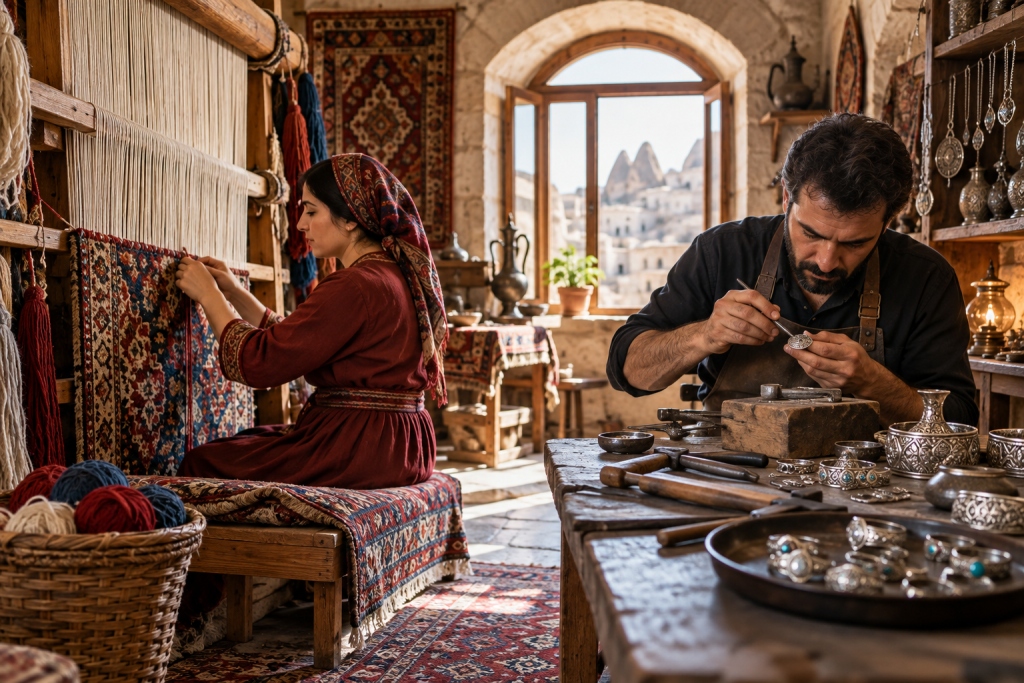
Amazigh symbols are not a single fixed alphabet of meanings. They represent a living artistic heritage shaped by many communities, languages, and generations.
Understanding these motifs requires curiosity, respect, and attention to context. Rugs, jewelry, and Tifinagh designs continue to preserve stories of craftsmanship and cultural expression.
The Relationship Between Symbol, Material, and Craft Technique
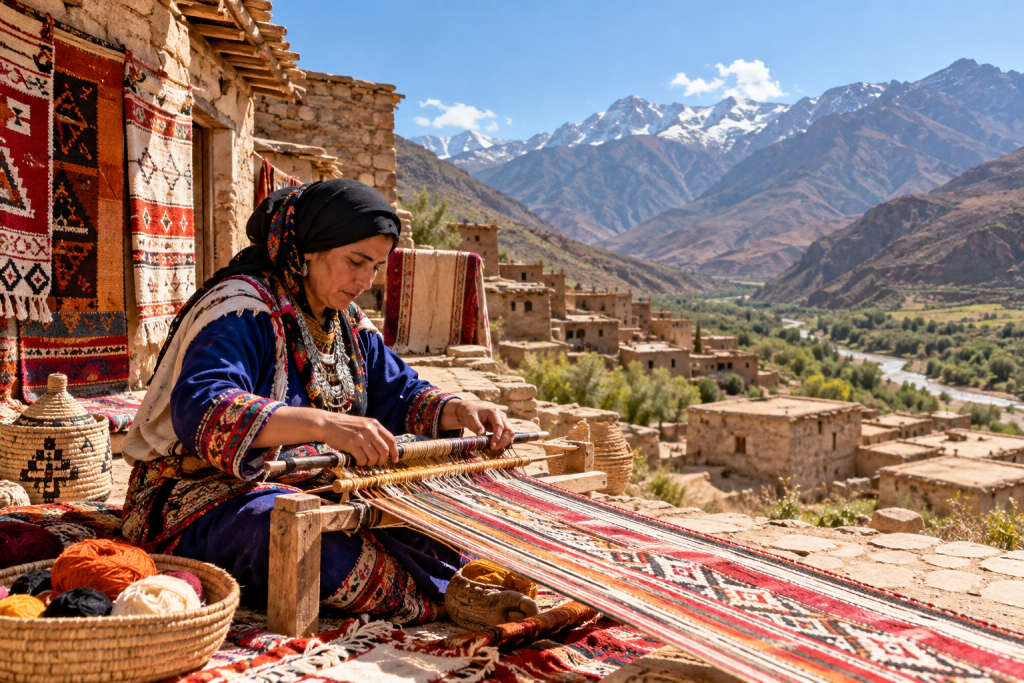
Understanding Amazigh motifs requires looking not only at shapes but also at the objects where they appear. A symbol woven into wool, engraved into silver, painted on pottery, or written using Tifinagh exists within a specific artistic process. The material, technique, and purpose of an object influence how people understand its design.
For example, a woven pattern is created through choices made by a weaver, including color selection, arrangement, repetition, and available materials. A jewelry design is shaped by the skills of the craftsperson and the traditions of metalworking. These practical elements are part of the meaning of the object itself.
Rugs as Records of Regional Creativity
Amazigh rugs are often appreciated for their visual beauty, but they can also provide insight into regional artistic practices. The patterns, colors, and weaving methods reflect local environments, available resources, and individual creativity.
Reading a Rug Without Overinterpreting It
When examining a rug, it is useful to begin with what can be directly observed. Details such as wool type, weaving method, colors, composition, and repeated shapes can be described with confidence. Symbolic interpretations should be presented carefully, especially when the original maker’s explanation is unavailable.
A respectful description might explain that a motif resembles a traditional geometric form or appears in a particular regional style, rather than claiming that the design has one certain meaning everywhere.
Amazigh Jewelry: Identity, Craftsmanship, and Memory
Jewelry has played an important role in Amazigh cultural expression. Pieces such as fibulas, necklaces, bracelets, and rings can combine practical functions with artistic and social meanings.
Historically, jewelry could communicate aspects of identity, craftsmanship, family connections, and regional style. The significance of a piece may come from its material value, the occasion when it was worn, the skill required to create it, or the memories connected with it.
The Importance of Provenance
The origin of a jewelry piece matters when discussing symbolism. A contemporary necklace inspired by Amazigh designs may use traditional-looking motifs while having a modern interpretation. A historical or locally made object may have different cultural context.
Knowing the maker, region, materials, and production background allows a more accurate understanding of the object’s story.
Common Misunderstandings About Berber Symbols Meaning
Interest in Amazigh art has grown internationally, but this has sometimes led to simplified explanations of complex traditions. Online descriptions may present a single meaning for a shape without explaining the uncertainty or regional variation behind that interpretation.
- Not every diamond is a universal symbol: geometric forms can have many uses and interpretations.
- Not every triangle has the same meaning: context and maker explanations are important.
- Not every decorative mark is ancient writing: Tifinagh letters and ornamental designs are different categories.
- Not every modern interpretation reflects historical use: contemporary designs may create new meanings.
How to Research an Amazigh Motif
Anyone interested in Amazigh symbols can approach research by combining visual observation with cultural context. A careful method helps separate documented knowledge from assumptions.
- Identify the object type, such as rug, necklace, fibula, pottery, or written artwork.
- Record the visible features, including shape, colors, materials, and technique.
- Find information about the region and artisan tradition when available.
- Compare explanations from researchers, makers, and cultural sources.
- Recognize uncertainty when evidence does not support a fixed interpretation.
The Future of Amazigh Symbol Research and Preservation
As Amazigh crafts continue to receive international attention, documenting the knowledge of artisans and communities becomes increasingly important. Recording maker explanations, regional histories, and craft techniques helps preserve details that may otherwise be simplified or lost.
Museums, researchers, cultural organizations, and artisans all contribute to preserving these traditions. Their work allows future generations to understand Amazigh visual heritage with greater accuracy and respect.
Appreciating Symbols as Part of a Living Culture
Amazigh motifs are not only designs from the past. They continue to appear in contemporary art, fashion, architecture, and personal expression. Their meanings can develop as communities use traditional forms in new contexts.
The most meaningful way to appreciate Amazigh symbols is to see them as part of living cultural traditions. Each rug, piece of jewelry, and written sign has a relationship with the people who create, preserve, and interpret it.
Conclusion: Appreciating Amazigh Visual Heritage
Amazigh symbols offer a window into a rich world of art, language, and tradition. By recognizing both documented meanings and areas of uncertainty, we can appreciate these designs without reducing them to simple explanations.
 No products in the cart.
Comments (18)