

Amazigh rug care requires attention to the materials, construction, age, and condition of each textile. Wool rugs associated with Amazigh weaving traditions are handmade objects that can vary greatly, so cleaning methods should always consider the specific rug rather than relying on one universal approach.
Understanding Amazigh Wool Rugs Before Cleaning
Amazigh wool rugs are often valued for their natural fibers, handmade construction, textures, and regional designs. The phrase “Berber carpet” can refer broadly to different types of flooring, so this guide focuses specifically on wool rugs connected with Amazigh weaving traditions.
Before beginning any cleaning process, it is important to understand the rug’s fiber content, construction method, dye stability, age, and previous treatment. A newer wool rug and an older handmade textile may require different levels of care.
Why Wool Rugs Need Gentle Care
Wool is a durable natural fiber, but it can still be affected by excessive moisture, unsuitable cleaning products, harsh brushing, and improper drying. Handmade rugs may also contain natural dyes or delicate structures that require careful handling.
Good maintenance focuses on preventing damage rather than using aggressive cleaning methods after problems occur.
- Regular care: reduces dust buildup and helps preserve fibers.
- Quick spill response: limits staining and absorption.
- Proper storage: protects the rug when it is not in use.
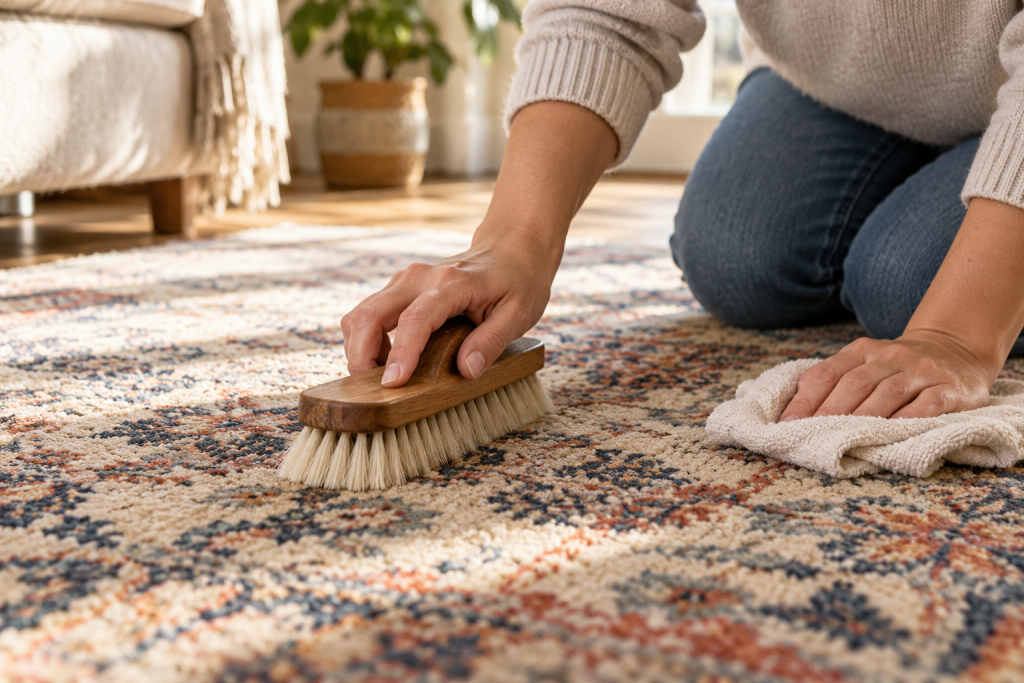
Routine Cleaning for an Amazigh Wool Rug
Regular maintenance is one of the most effective ways to protect a wool rug. Gentle cleaning habits can help preserve texture and appearance.
Vacuuming
Vacuuming can remove surface dust and debris. The approach should be gentle, especially for rugs with long pile, loose fibers, fringe, or delicate construction.
Follow the vacuum manufacturer’s recommendations and avoid settings that may pull or damage fibers.
Removing Loose Dust
Some handmade rugs benefit from careful outdoor airing or gentle dust removal methods. However, the technique should match the rug’s condition and construction.
How to Clean a Berber Wool Rug After a Spill
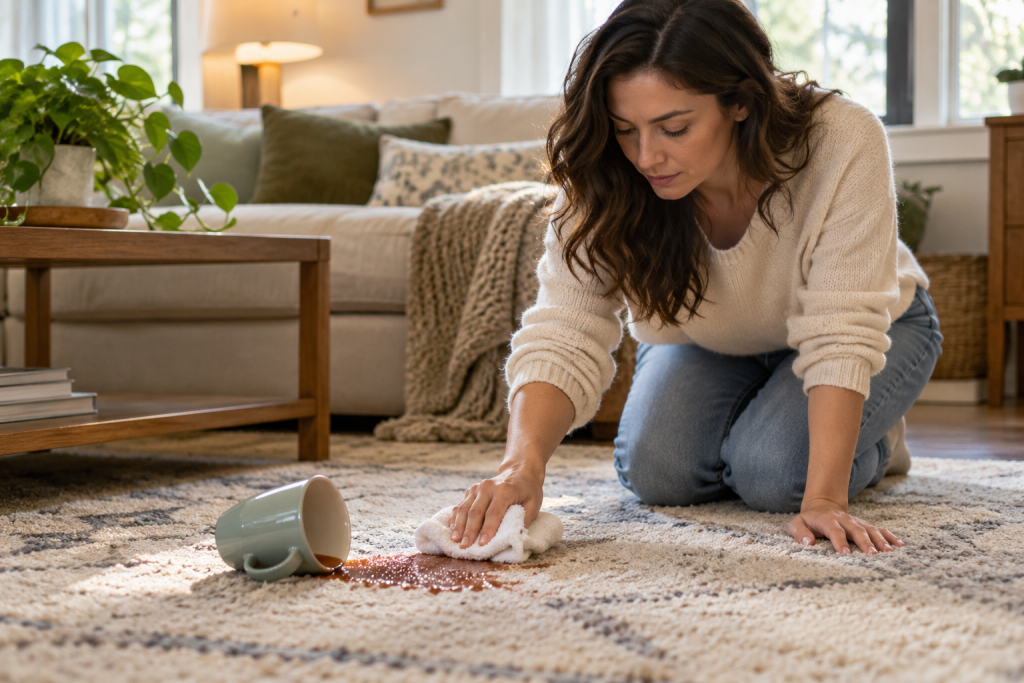
When a spill happens, the first response is often more important than later cleaning. Acting quickly can reduce the chance that liquid reaches deeper into the fibers.
- Blot the area gently with a clean absorbent cloth.
- Avoid aggressive rubbing that may spread the spill or disturb fibers.
- Use only cleaning methods appropriate for wool and the specific rug.
- Allow the area to dry properly.
Different liquids and stains require different approaches. Unknown stains, old stains, or rugs with unstable dyes may require professional advice.
Problem and Next Step Guide
| Problem | Possible Next Step |
|---|---|
| Dust buildup | Use gentle routine cleaning appropriate for wool. |
| Fresh spill | Blot carefully and avoid spreading the liquid. |
| Strong odor | Identify the cause and consider professional assessment if needed. |
| Color bleeding concerns | Avoid experiments and seek advice before washing. |
| Damaged fringe or edges | Consider repair rather than aggressive cleaning. |
Should You Steam Clean an Amazigh Wool Rug?
Steam cleaning is not automatically suitable for every wool rug. The effect of moisture and heat depends on the rug’s construction, dyes, age, and condition.
Some rugs may tolerate specific professional cleaning methods, while others may require different treatment. Manufacturer instructions or advice from an experienced rug professional should take priority.
Cleaning Products to Avoid
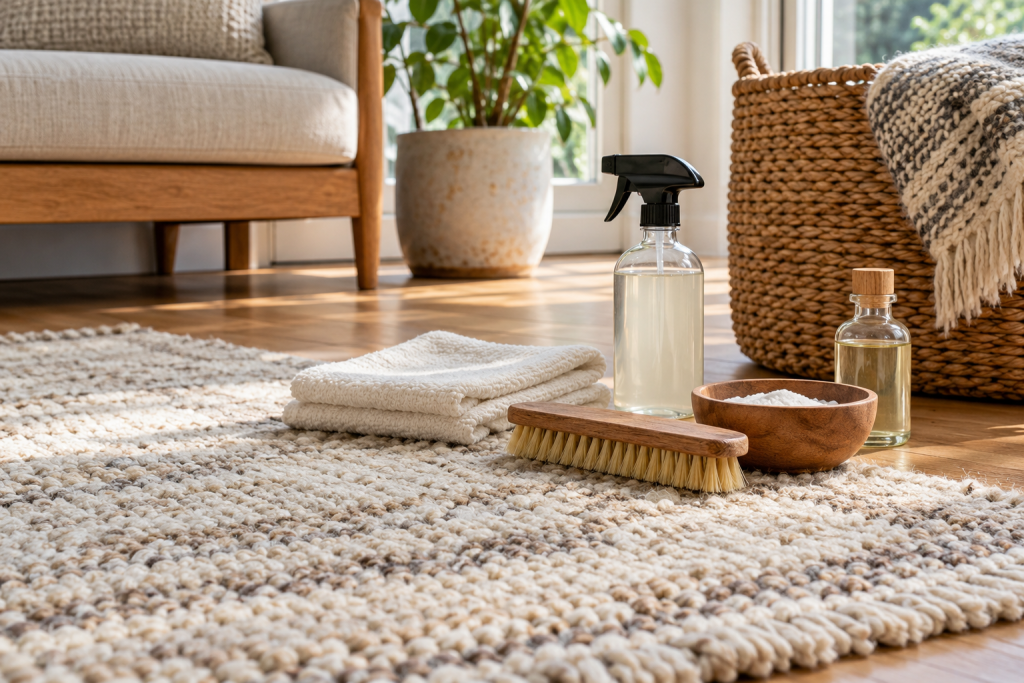
Wool rugs can react poorly to unsuitable cleaning products. Strong chemicals or incorrect techniques may affect color, texture, or fiber strength.
- Avoid bleach unless specifically recommended for the exact material and situation.
- Avoid harsh detergents not designed for wool.
- Avoid aggressive scrubbing.
- Avoid soaking the entire rug without professional guidance.
Rotating Your Rug for Even Wear
Furniture placement, sunlight, and foot traffic can cause uneven wear over time. Rotating an Amazigh wool rug periodically can help distribute these effects more evenly.
The ideal rotation schedule depends on the room, usage level, and condition of the rug. High-traffic areas may require more frequent attention.
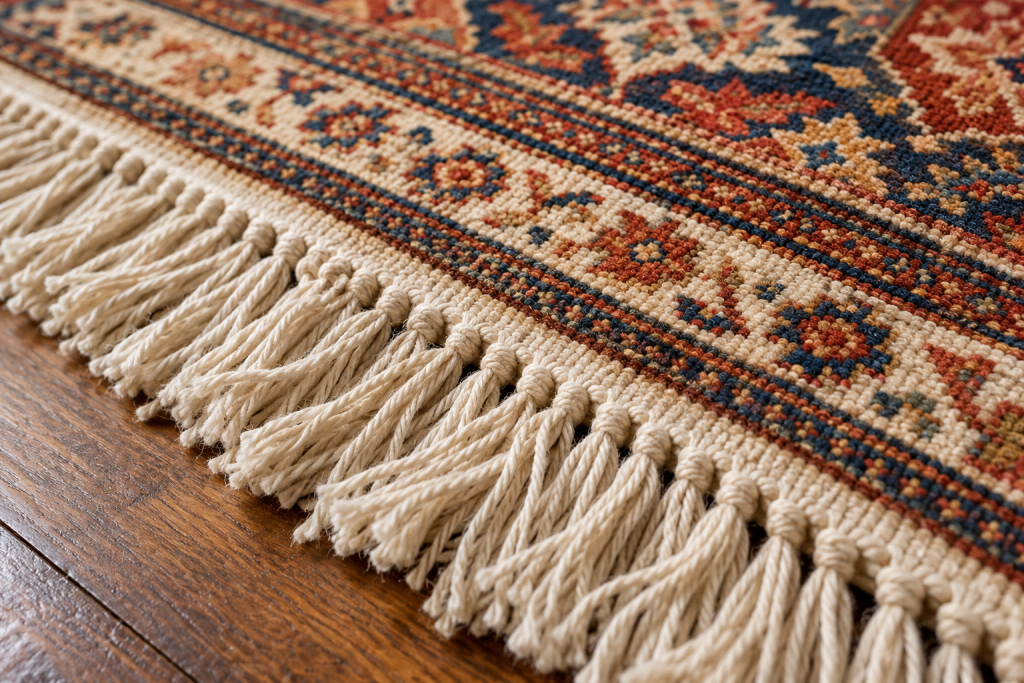
Protecting Fringe and Edges
Fringe and edges are important structural parts of many rugs. Pulling, cutting, or aggressively cleaning fringe can cause damage.
Regular inspection can help identify loose threads or edge problems before they become larger issues. Professional repair may be preferable for valuable handmade textiles.
Storing an Amazigh Wool Rug Safely
If an Amazigh wool rug will not be used for an extended period, proper storage helps protect it from dust, moisture, and pests.
- Clean the rug appropriately before storage.
- Roll rather than sharply fold when possible.
- Store in a dry, protected environment.
- Avoid conditions with excessive humidity.
Professional Cleaning Considerations
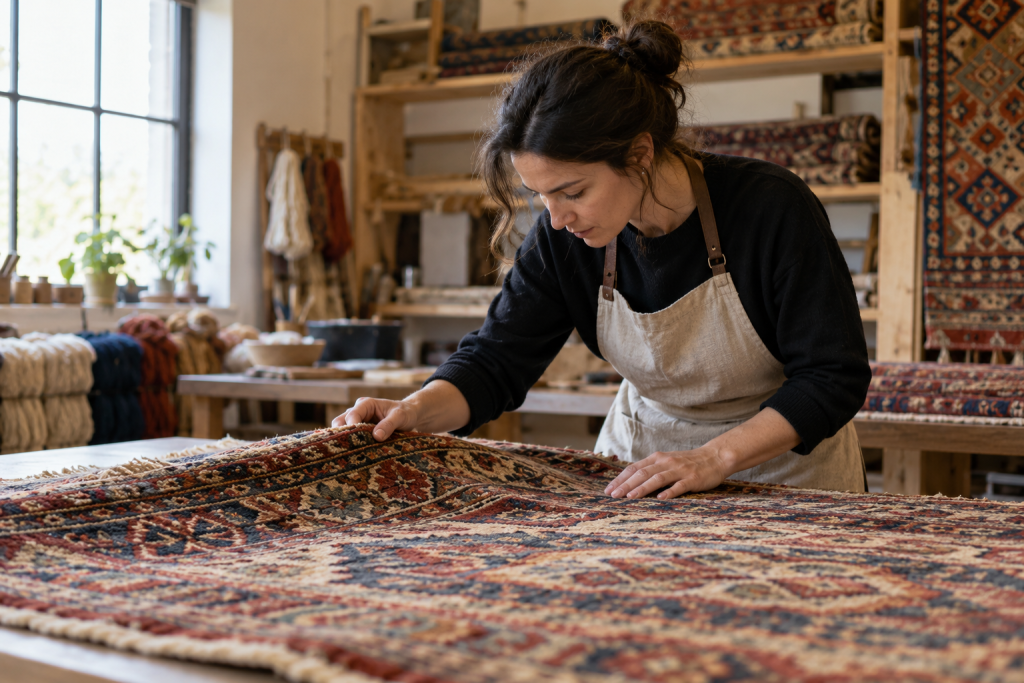
Professional cleaning may be appropriate for heavily soiled rugs, valuable pieces, antique textiles, or situations where the correct method is uncertain.
When choosing professional help, look for experience with handmade wool rugs rather than only general carpet cleaning. A specialist should consider fiber type, dyes, construction, and condition before treatment.
Preserving the Beauty of Amazigh Wool Rugs
An Amazigh wool rug is both a functional home object and a piece of textile heritage. Care practices should protect not only its appearance but also the craftsmanship represented by its materials and construction.
Gentle maintenance, careful handling, and informed cleaning decisions can help preserve a rug for many years.
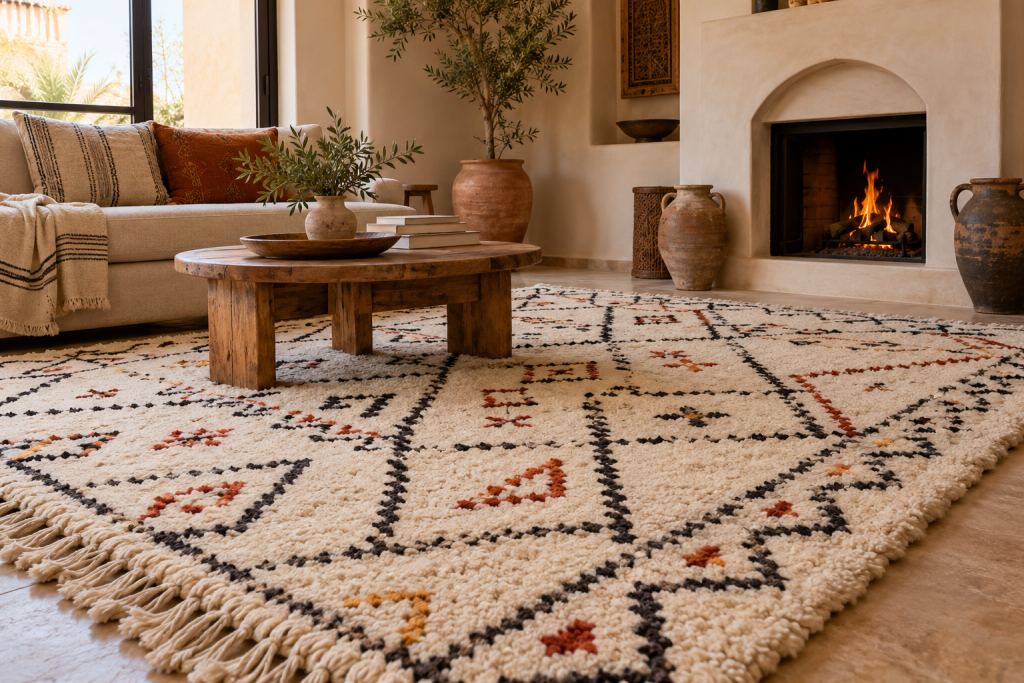
Understanding Rug Construction Before Maintenance
Before choosing a cleaning method, it helps to understand how an Amazigh wool rug was made. Handmade rugs can differ in pile height, weaving density, knotting style, and finishing details. These characteristics influence how the textile responds to brushing, moisture, and cleaning products.
A rug with a thick pile may hold more dust than a flatter woven textile, while a delicate older rug may require extra caution around loose fibers or weakened areas. Identifying these characteristics allows owners to choose maintenance methods that protect the rug instead of unintentionally causing damage.
Check the Rug Before Cleaning
A simple inspection can reveal important information before any cleaning begins. Look closely at the surface, edges, backing, and areas with heavy use.
- Check for loose threads or damaged sections.
- Observe whether colors appear stable.
- Identify areas with heavy dirt or staining.
- Consider whether the rug is old, fragile, or valuable.
Sunlight, Furniture, and Everyday Protection
Daily placement choices can influence the long-term condition of an Amazigh wool rug. Continuous exposure to strong sunlight may affect some dyes, while heavy furniture pressure can change the appearance of the pile.
Simple adjustments can help reduce uneven aging. Moving furniture slightly, rotating the rug, and considering window exposure are practical ways to support balanced wear.
Using a Rug Pad
A suitable rug pad can provide additional support beneath a handmade wool rug. It may help reduce movement, add cushioning, and create a barrier between the rug and the floor.
The correct type of pad depends on the flooring surface and the rug itself. A poorly chosen pad may not provide the intended benefits, so compatibility should be considered.
Seasonal Care for Wool Rugs
Different seasons can create different challenges for natural fiber textiles. Changes in humidity, indoor heating, and household activity may influence how a rug should be maintained.
During periods of increased dust or foot traffic, more frequent gentle cleaning may be useful. During humid conditions, attention to ventilation and moisture control can help protect wool fibers.
Handling Older or Valuable Amazigh Rugs
Older handmade rugs may require a more careful approach because age can affect fibers, dyes, and structural strength. A cleaning method that is suitable for a newer rug may not be appropriate for an older textile.
For valuable or historically significant pieces, assessment by a textile specialist can help determine the safest maintenance approach. Preservation often focuses on preventing further deterioration rather than making an older rug look completely new.
Common Mistakes When Caring for Wool Rugs
Many rug problems occur because of well-intentioned cleaning methods that are too aggressive for natural fibers. Understanding common mistakes can help prevent avoidable damage.
- Over-wetting: excessive moisture can create problems with drying and fiber stability.
- Hard brushing: aggressive brushing may disturb the texture of handmade rugs.
- Ignoring small damage: loose edges or threads may become larger problems if neglected.
- Using unknown products: unsuitable cleaners may affect colors or fibers.
Creating a Long-Term Care Routine
The best care approach is consistent rather than occasional intensive cleaning. A simple routine that includes inspection, gentle cleaning, and careful use can help maintain the beauty of an Amazigh wool rug.
Owners can keep notes about cleaning dates, repairs, and any changes they notice. This information can be useful when deciding whether professional cleaning or restoration is needed in the future.
Respecting the Craft Behind Every Rug
Caring for an Amazigh wool rug is also a way of respecting the craftsmanship behind it. Each handmade textile represents choices involving materials, technique, design, and time.
Thoughtful maintenance protects more than a household decoration. It helps preserve an example of textile knowledge connected with Amazigh communities and generations of artistic practice.
Conclusion: Long-Term Care for Your Amazigh Rug
Caring for an Amazigh wool rug begins with understanding its unique characteristics. By using cautious cleaning methods, responding carefully to spills, and seeking professional guidance when necessary, owners can protect these handmade textiles while respecting their craftsmanship.

 No products in the cart.
Comments (10)