











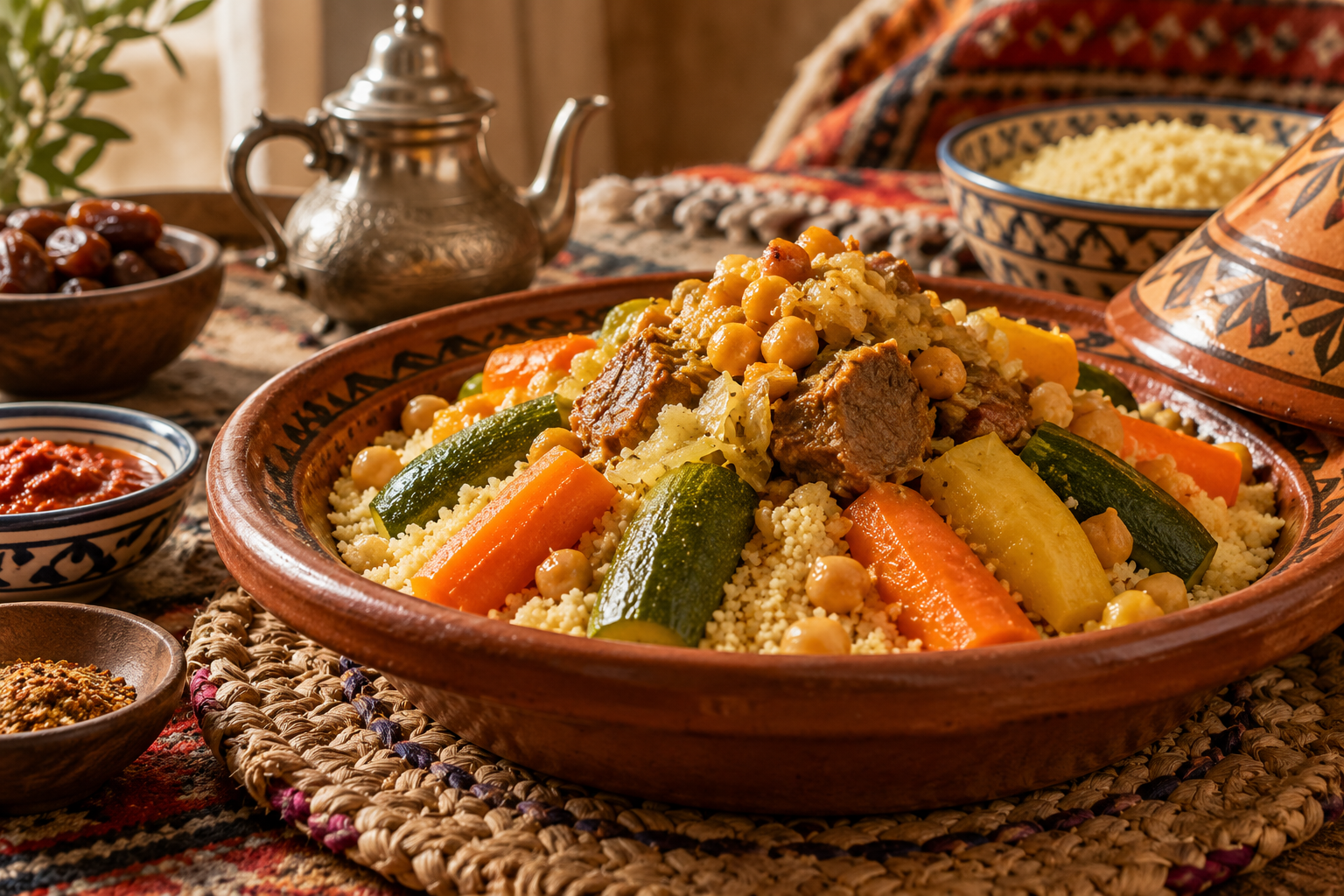
Couscous and Amazigh heritage are deeply connected through agricultural knowledge, family traditions, hospitality, and regional food practices. Across North Africa, couscous has been prepared by many communities for generations, including Amazigh communities whose culinary traditions reflect local ingredients, techniques, and social customs.
Understanding Couscous in Amazigh Food Heritage
Couscous is one of the most recognized dishes associated with North African cuisine. It is important to understand that couscous traditions are shared across different communities and countries rather than belonging exclusively to one group.
Amazigh communities have developed many regional approaches to couscous preparation. These variations reflect geography, available grains, seasonal ingredients, and family knowledge passed through generations.
Couscous History and North African Context
The history of couscous is connected with the agricultural traditions of North Africa, especially the cultivation and preparation of grains such as wheat and barley. Archaeological and historical research has examined the long development of grain-based foods in the region.
Modern discussions of couscous often emphasize its importance as a shared cultural tradition. UNESCO’s multinational inscription of couscous as intangible cultural heritage recognizes the knowledge, practices, and social traditions connected with couscous among several North African countries. It does not establish one exclusive origin for the dish.
The Knowledge Behind Traditional Couscous Preparation
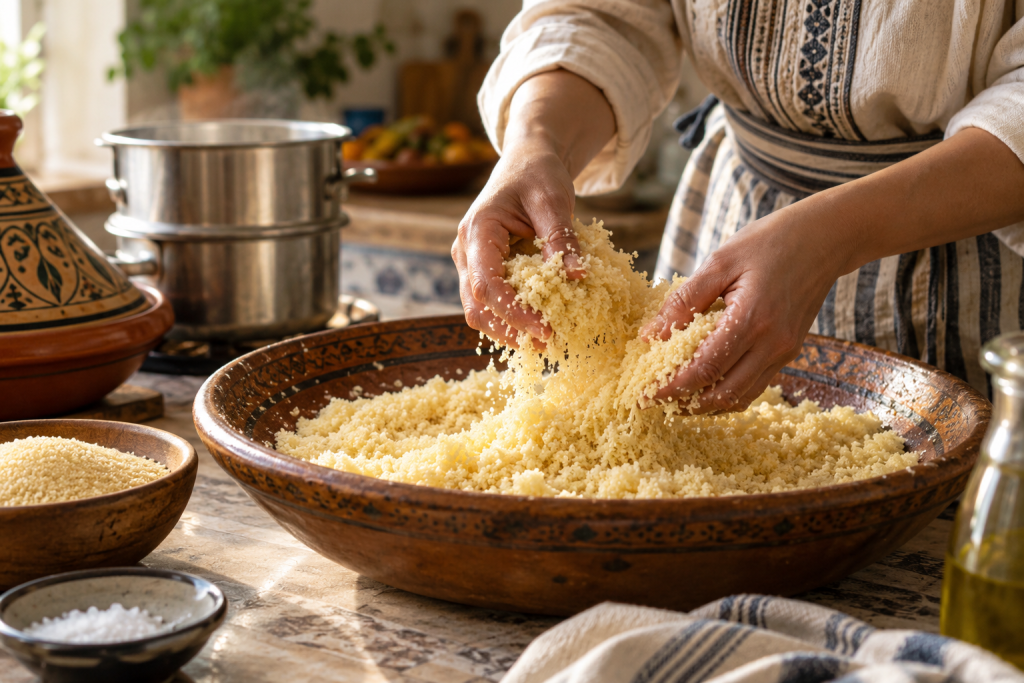
Traditional couscous preparation involves skills that go beyond cooking. Making couscous can include preparing grain, shaping the small granules, steaming, and combining the finished dish with regional ingredients.
In many households, this knowledge has been transmitted through observation and practice. Family members learn techniques through participation, helping preserve culinary knowledge across generations.
Traditional Steaming and Modern Preparation
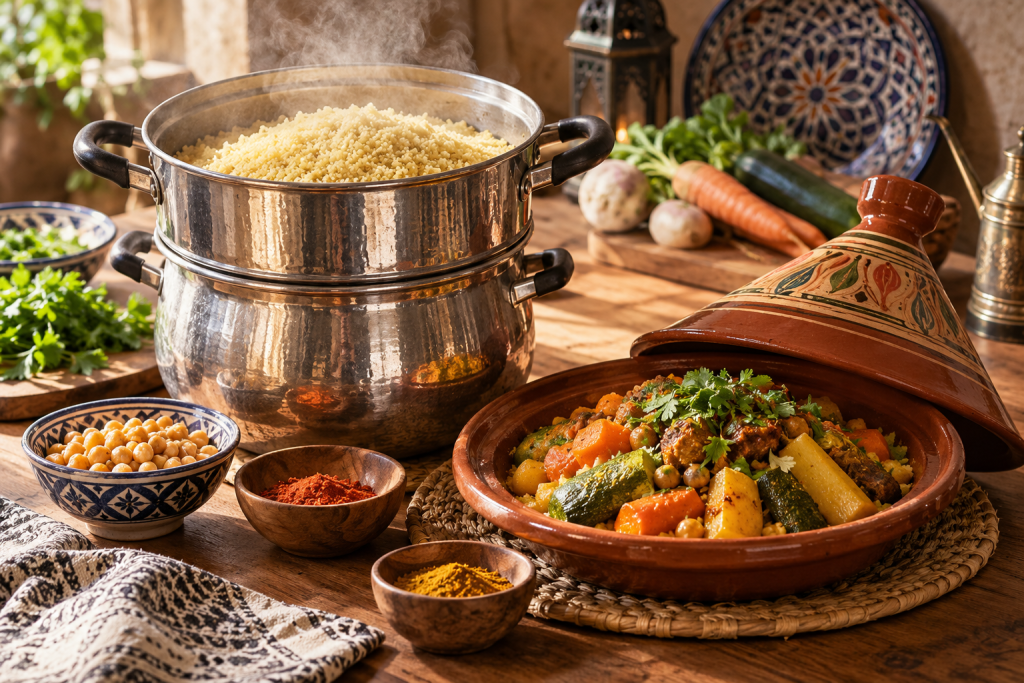
Traditional couscous is often associated with repeated steaming. A couscous steamer, commonly called a couscoussier in French-language descriptions, allows steam from a lower pot to pass through the grains placed above.
This process differs from instant couscous products, which are designed for faster preparation. Instant versions can be convenient, but they generally do not follow the same preparation method as handmade couscous.
Regional Variations of Amazigh Couscous
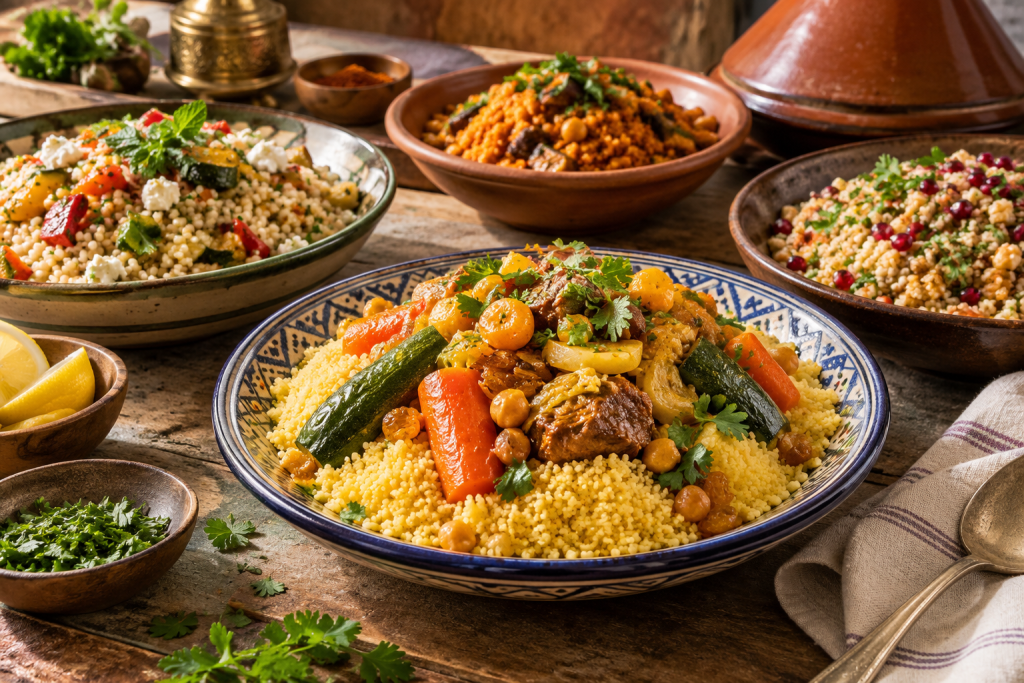
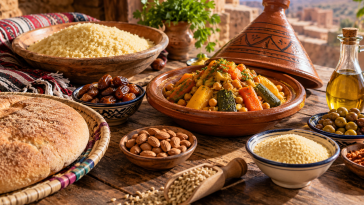
There is no single Amazigh couscous recipe. Different regions developed their own combinations of grains, vegetables, proteins, and seasonings according to local conditions.
| Variation | Grain or Base | Common Accompaniments | Regional Context |
|---|---|---|---|
| Wheat couscous | Semolina from wheat | Vegetables, legumes, meat, or seasonal additions | Common across many North African communities. |
| Barley couscous | Barley grain | Local vegetables and traditional accompaniments | Associated with some rural and mountain traditions. |
| Seasonal couscous | Local grain varieties | Ingredients depending on harvest and availability | Reflects agricultural cycles. |
Utensils and Tools Connected With Couscous
Couscous traditions include specific tools that support preparation. Handmade techniques often require practical knowledge of how to handle grains and steam them correctly.
- Couscous steamer: used for traditional steaming methods.
- Large serving dishes: often used when sharing meals with family or guests.
- Hand preparation techniques: important in many traditional approaches.
The tools used for couscous are not only practical objects; they can also represent household knowledge and culinary heritage.
Couscous, Family, and Hospitality
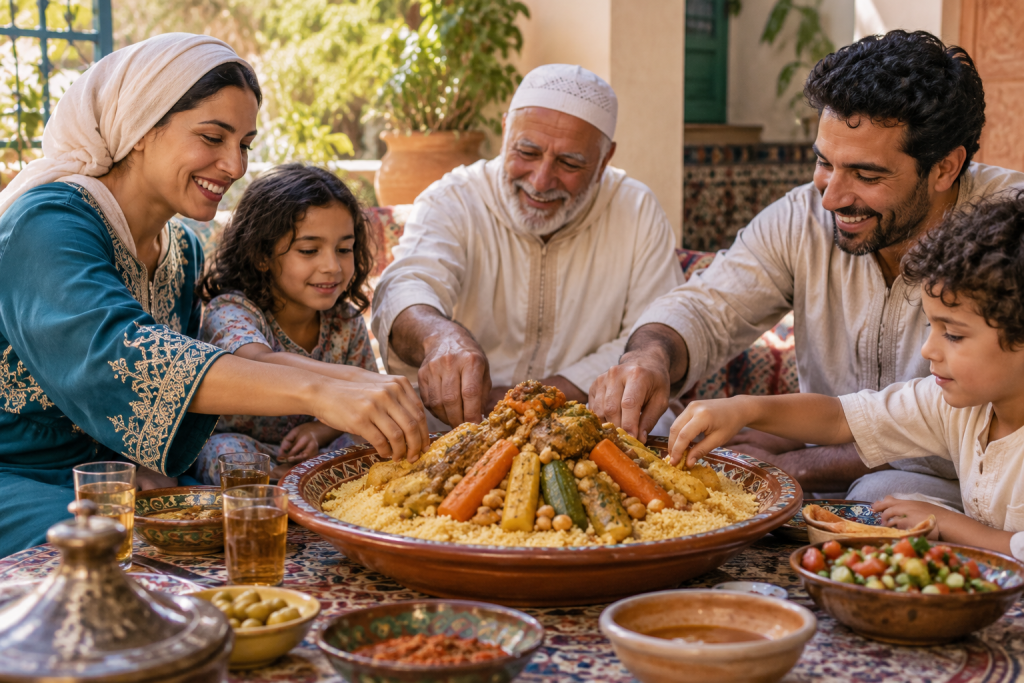
Couscous is often connected with moments of gathering. Families may prepare it for regular meals, celebrations, religious occasions, and community events.
The importance of couscous extends beyond the ingredients. Sharing a large dish creates a social experience where people connect through food, conversation, and hospitality.
The Transmission of Culinary Knowledge
Many traditional food practices survive because knowledge is shared within families and communities. Older generations may teach younger people how to prepare grains, choose ingredients, and adapt dishes to different occasions.
This transmission allows couscous traditions to remain active while also allowing new generations to create their own interpretations.
Ingredients and Regional Accompaniments
The ingredients served with couscous vary greatly. Climate, agriculture, and household preferences all influence what appears in the final dish.
- Vegetables available in the region.
- Legumes such as chickpeas or other local varieties.
- Meat or other protein sources depending on tradition and occasion.
- Seasonal ingredients connected with harvest cycles.
Because couscous is prepared in many places, a description should identify the regional context instead of presenting one version as universal.
Traditional Couscous Versus Contemporary Adaptations
Today, couscous appears in homes, restaurants, and international food markets. Modern cooks may adapt ingredients or preparation styles for different preferences.
These adaptations can introduce couscous to new audiences, but they should be distinguished from documented regional traditions. A modern recipe inspired by Amazigh cuisine is not necessarily the same as a traditional household preparation.
How to Appreciate Amazigh Couscous Traditions
Learning about couscous requires attention to diversity and context. Appreciating Amazigh connections with couscous means recognizing regional knowledge while also understanding the broader North African heritage of the dish.
- Explore the region connected with a specific couscous tradition.
- Learn about preparation methods, not only ingredients.
- Recognize shared cultural influences.
- Value the people who preserve culinary knowledge.
The Continuing Story of Couscous Heritage
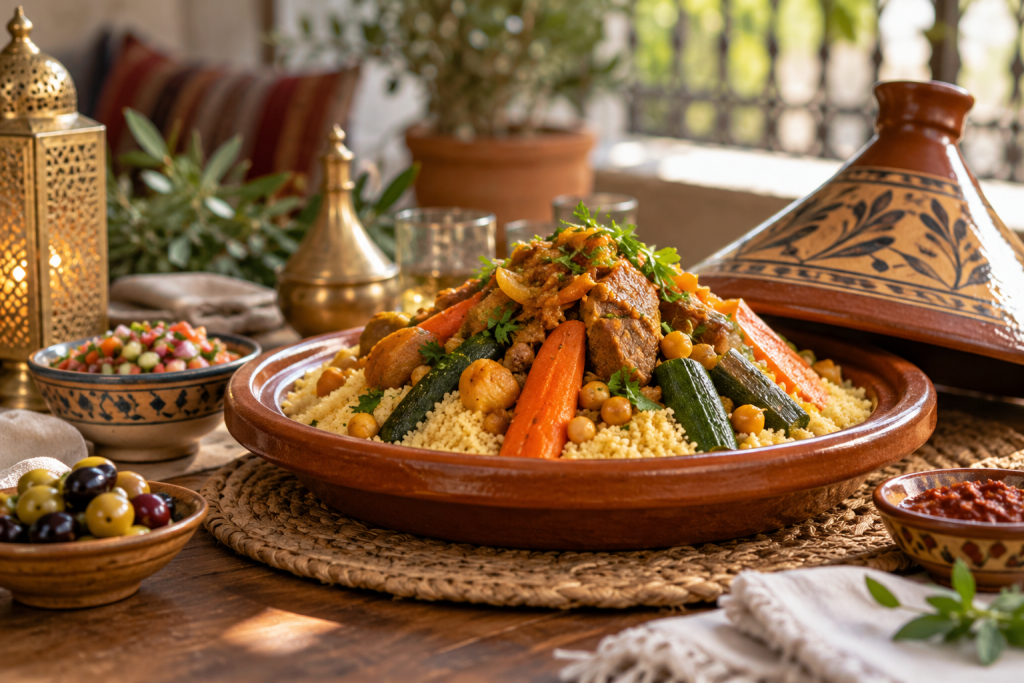
Couscous remains a powerful example of how food preserves memory, agriculture, and social relationships. Through grains, steaming techniques, shared meals, and family traditions, it continues connecting generations.
Amazigh couscous traditions show how cuisine can carry cultural knowledge while continuing to evolve in modern life.
The Role of Grain Preparation in Couscous Traditions
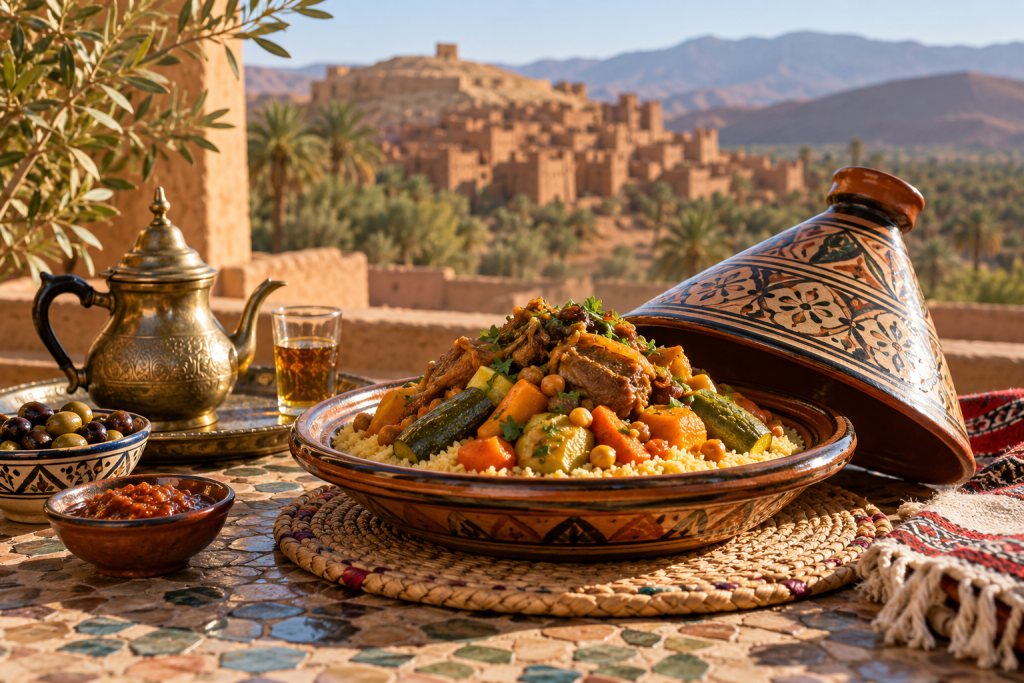
One of the important aspects of traditional couscous is the knowledge involved in working with grains. The process reflects patience, experience, and an understanding of texture. Preparing couscous is not only about producing small grains but also about creating a food that fits the occasion and the ingredients available.
Different communities may have preferences for certain grains depending on agriculture, climate, and local customs. Wheat is widely used, while barley and other grains can also appear in regional traditions. These choices demonstrate how cuisine adapts to the environments where people live.
Barley and Rural Food Knowledge
Barley has historically been important in many rural communities because it grows well in certain environments and has been used in various traditional foods. Barley couscous represents one example of how local agriculture influences culinary practices.
Understanding grain choices helps show that couscous is not a single fixed recipe. It is a flexible tradition shaped by resources, seasons, and community preferences.
Couscous During Celebrations and Special Occasions
Although couscous can be an everyday meal, it is also closely connected with occasions when families and communities come together. Large shared dishes can symbolize generosity and cooperation.
Special occasions may influence the ingredients used, the size of the meal, and the way the dish is served. These differences demonstrate how food practices communicate social meanings beyond taste.
- Family gatherings: couscous can bring relatives together around a shared meal.
- Seasonal events: some preparations reflect agricultural cycles and local traditions.
- Community occasions: larger meals can support relationships between neighbors and guests.
The Importance of Serving and Sharing Customs
The presentation of couscous is part of the cultural experience. Serving a large dish encourages people to eat together and participate in a collective moment.
Serving customs differ between households and regions. Some families maintain long-established practices, while others adapt traditions according to modern lifestyles.
Food as Cultural Memory
A dish of couscous can carry memories connected with family members, celebrations, and places. Recipes are often remembered through practice rather than written measurements, allowing each generation to contribute its own knowledge.
This oral and practical transmission is one reason culinary traditions continue even as communities experience social and economic changes.
Couscous in Contemporary Kitchens
Today, couscous is prepared in many different settings, from family homes to restaurants and international kitchens. Contemporary cooks may experiment with ingredients while maintaining connections to traditional ideas.
Modern versions can introduce new combinations, but it remains useful to distinguish between creative adaptations and documented regional practices. Both have value when described accurately.
Traditional Skills in a Modern World
Technology and changing lifestyles have influenced how people prepare food. Instant couscous products, for example, offer convenience and require less preparation time than traditional steaming methods.
Traditional preparation remains important because it preserves techniques, knowledge, and relationships between people and food. The two approaches serve different purposes and should not be confused.
Learning Couscous Through Regional Context
Exploring couscous traditions becomes more meaningful when connected with specific communities. A regional approach helps reveal differences in grains, accompaniments, preparation methods, and social settings.
Rather than searching for one definitive version of couscous, it is more accurate to appreciate the many traditions that developed throughout North Africa.
- Study the agricultural background of a region.
- Learn about local ingredients and preparation tools.
- Recognize the contributions of different communities.
- Understand how traditions change over time.
Couscous as a Bridge Between Past and Present
Couscous continues to connect historical knowledge with contemporary life. It represents farming practices, culinary skills, family relationships, and cultural exchange.
Through Amazigh couscous traditions and other North African interpretations, the dish demonstrates how food can preserve identity while remaining open to change. Its continued presence shows the strength of culinary heritage passed through generations.
Conclusion: Couscous as a Shared Cultural Treasure
Couscous represents a rich culinary heritage shaped by many communities across North Africa. Its Amazigh connections are part of a wider story of agricultural knowledge, hospitality, and cultural exchange.

 No products in the cart.
Comments (16)