




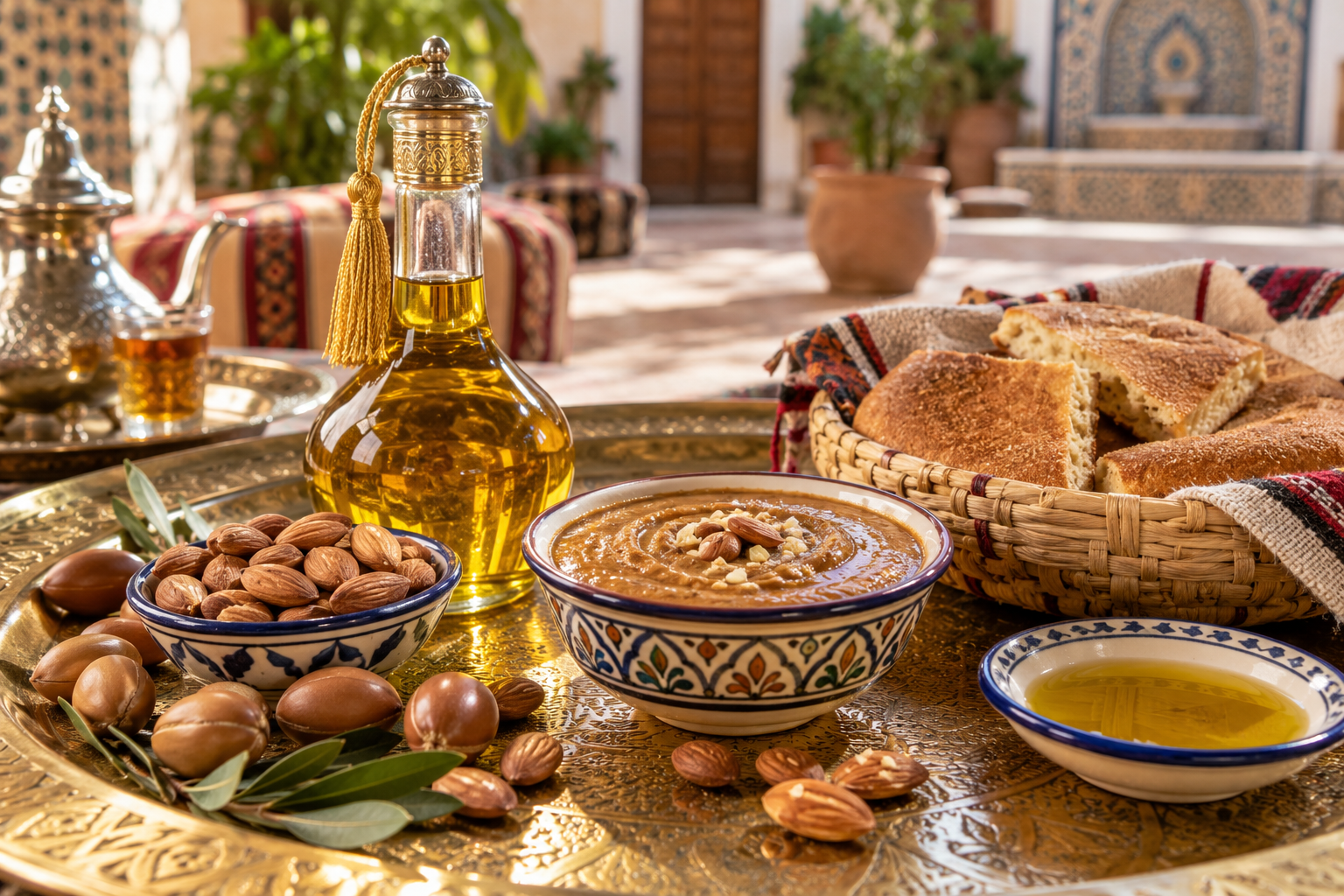
Argan oil and amlou are important examples of how Amazigh food traditions connect agriculture, craftsmanship, and everyday life. Rooted especially in southwestern Morocco, these products reflect knowledge developed around the argan tree, local resources, and culinary practices passed through generations.
Understanding Argan Oil and Amlou in Amazigh Heritage
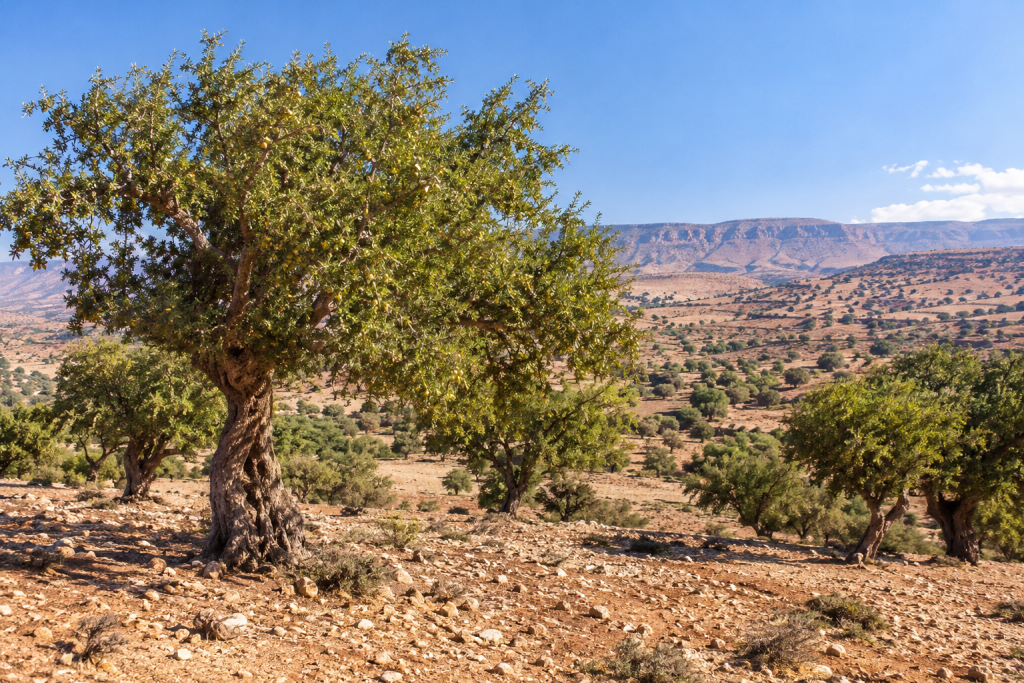
Argan oil is produced from the kernels of the argan tree, a species native to southwestern Morocco. For many communities in this region, the argan tree has long been connected with rural livelihoods, agriculture, and traditional knowledge.
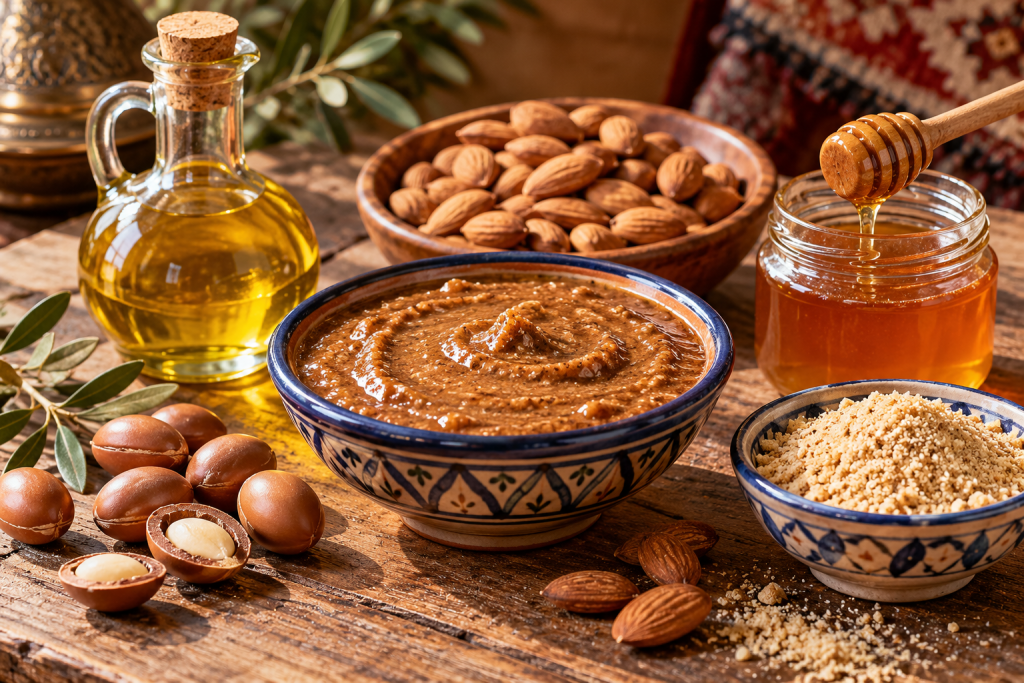
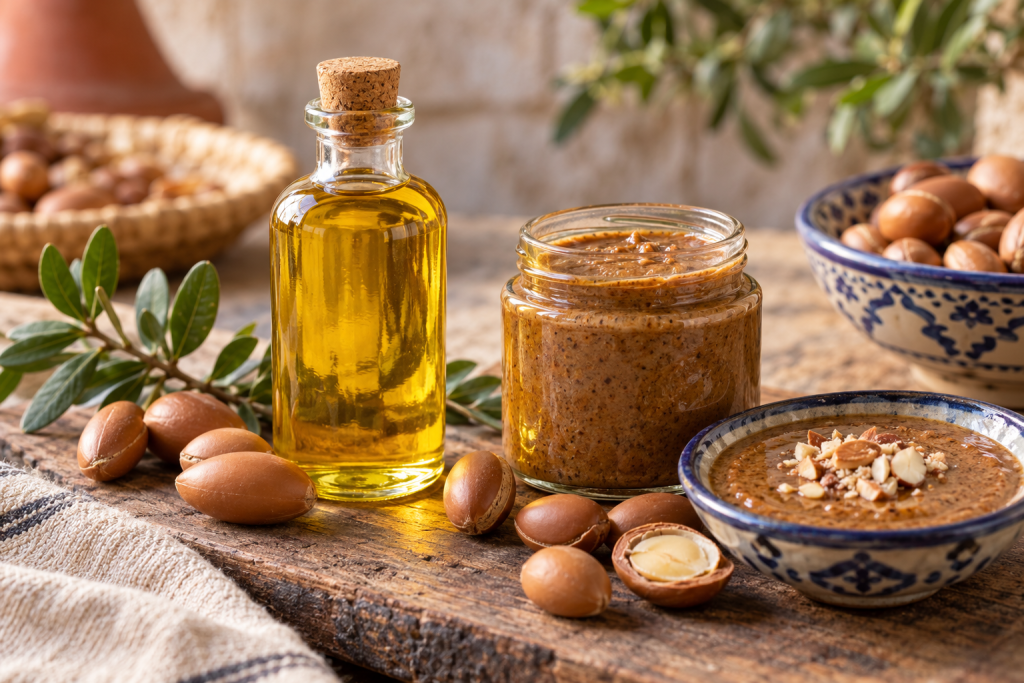
Amlou is a traditional spread commonly associated with southwestern Moroccan cuisine. It is generally prepared using argan oil, almonds, and a sweet ingredient such as honey, although recipes can vary between households and producers.
These products are often discussed in connection with Amazigh communities because argan-growing areas include many Amazigh-speaking populations where knowledge about harvesting, processing, and using argan products has been maintained.
The Argan Tree and Southwestern Moroccan Landscapes
The argan tree grows in a distinctive environment where agricultural practices have developed around adapting to local conditions. The tree has ecological, economic, and cultural importance in the regions where it grows.
Traditional knowledge related to argan includes understanding harvesting periods, processing methods, and ways of using different parts of the tree. UNESCO has recognized argan-related practices as part of intangible cultural heritage, highlighting knowledge and traditions connected with the argan tree.
How Culinary Argan Oil Is Made
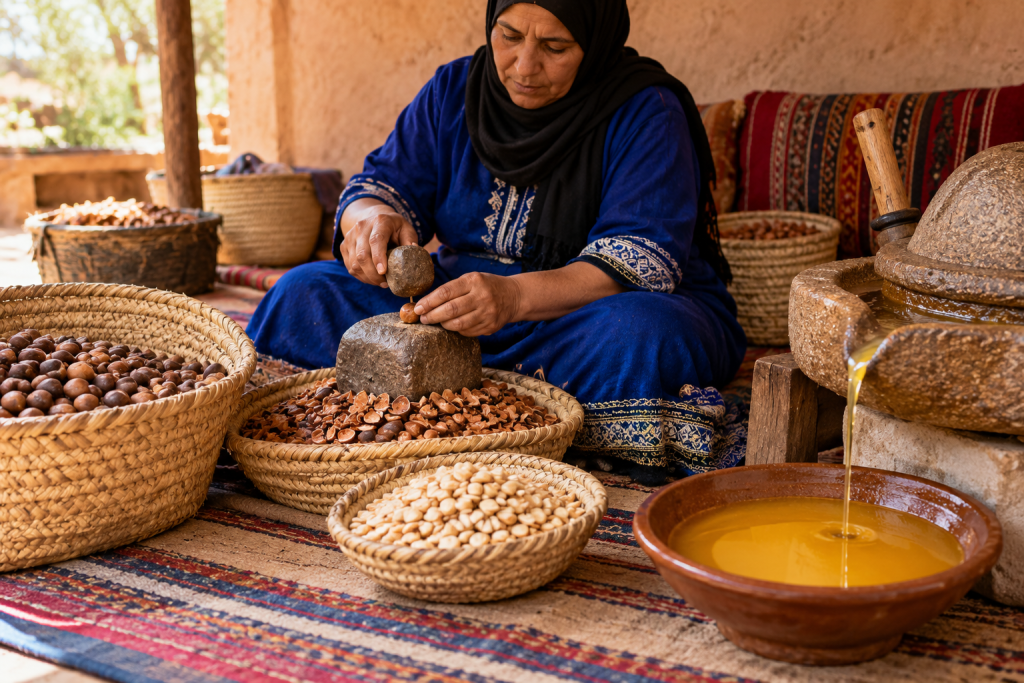
Culinary argan oil is produced through a process that requires careful preparation of argan kernels. Traditional methods involve removing the kernels, preparing them, and extracting the oil.
The production process differs from industrial methods and may vary between producers. Factors such as equipment, processing methods, and storage conditions can influence the final product.
Food-Grade Versus Cosmetic Argan Oil
It is important to distinguish culinary argan oil from cosmetic argan oil. Food products are intended for consumption and should have appropriate labeling and information about their use.
- Culinary argan oil: intended for cooking or food use.
- Cosmetic argan oil: intended for external applications such as personal care.
- Product labeling: should clearly identify intended use.
The appearance of an oil alone cannot confirm whether it is suitable for eating or determine its quality.
What Is Amlou? Ingredients and Variations
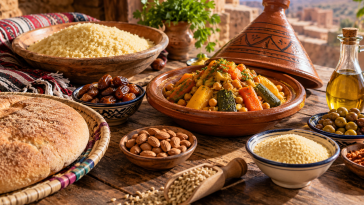
Amlou is a traditional Moroccan spread often served with bread. It is known for its rich texture and combination of flavors from nuts, argan oil, and sweet ingredients.
| Element | Description | Variation Consideration |
|---|---|---|
| Argan oil | A key ingredient in many traditional versions. | Flavor and characteristics can differ between oils. |
| Almonds | Commonly included in many recipes. | Amounts and preparation methods vary. |
| Honey or sweet ingredient | Adds sweetness to the spread. | Household recipes may use different approaches. |
Because recipes are often transmitted through families and communities, there is no single universal amlou formula. Modern commercial versions may also adapt traditional ideas for different consumers.
Amazigh Knowledge Behind Argan Production
Argan production represents more than the final product. It includes knowledge about local agriculture, harvesting, processing, and food preparation.
Traditional knowledge has often been shared through families and communities. Different producers may maintain different methods depending on local practices and available resources.
Women and Argan Processing
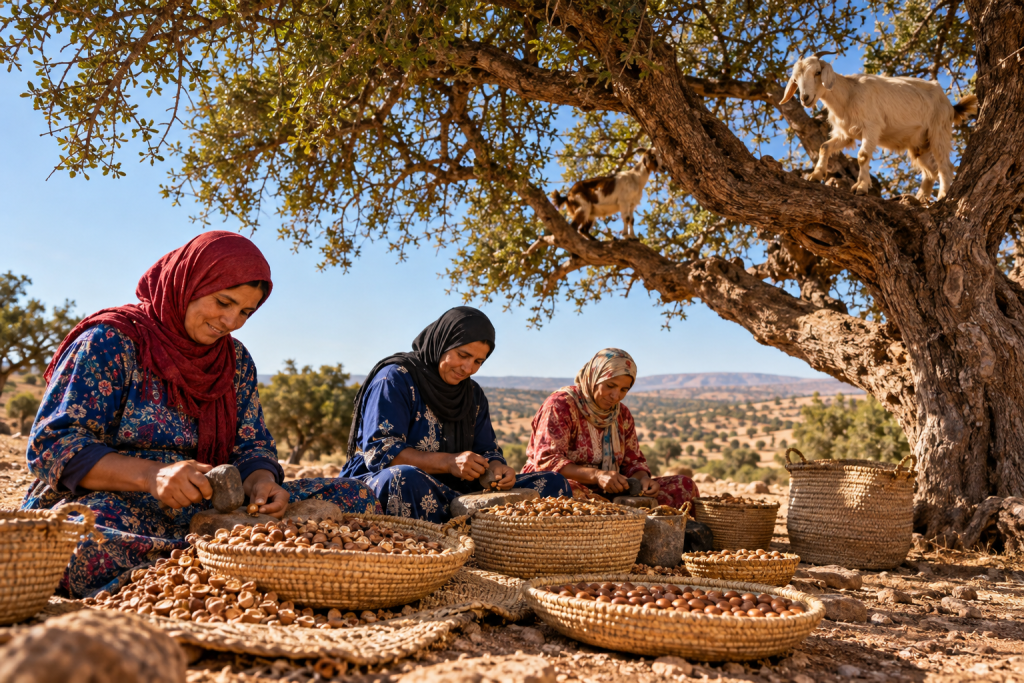
Women have historically participated in many aspects of argan processing in southwestern Morocco. Community initiatives and cooperatives have brought attention to women’s involvement in some argan-related activities.
However, the social and economic impact of any specific product depends on the organization, ownership structure, working conditions, and supply chain. A product description should not automatically assume that every purchase directly benefits individual producers.
Argan Oil in Food and Daily Traditions
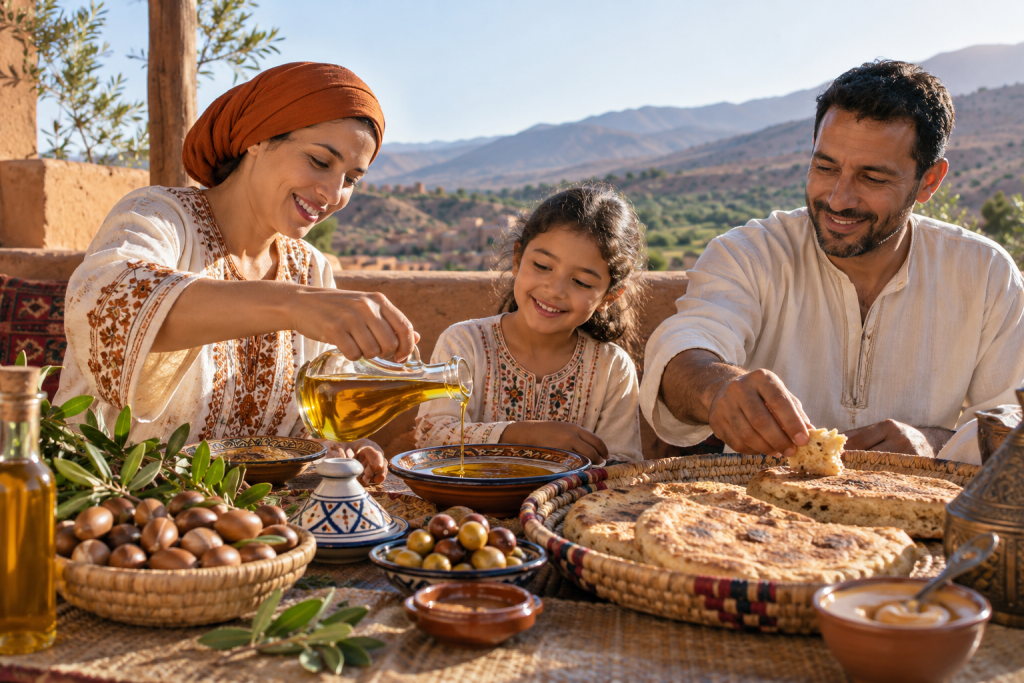
Culinary argan oil is used in different ways, including as an ingredient in traditional foods and as part of hospitality practices. Its flavor and cultural associations make it a valued product in many households.
- Served with bread as part of meals or hospitality.
- Used in traditional spreads such as amlou.
- Included in regional food traditions.
Food traditions vary by household, so descriptions should recognize both common practices and local differences.
Buying Argan Oil and Amlou Responsibly
When purchasing argan products, consumers can look beyond marketing descriptions and consider accurate product information.
- Check ingredients: confirm what is included in the product.
- Confirm intended use: verify whether oil is culinary or cosmetic.
- Look for traceability: consider information about producer, origin, and processing.
- Review storage instructions: follow guidance provided by the producer.
- Consider allergies: amlou commonly contains nuts such as almonds.
Storage and Quality Considerations
Proper storage helps maintain the characteristics of argan oil and amlou. Consumers should follow the instructions provided on the product label because packaging, ingredients, and processing methods can vary.
Claims about purity or quality should be based on reliable information rather than appearance alone. Color, texture, and taste can provide impressions but do not prove every production detail.
Argan Oil, Amlou, and Modern Culinary Interest
Today, argan products are appreciated both locally and internationally. Chefs, food enthusiasts, and consumers interested in traditional ingredients have introduced argan oil and amlou to new audiences.
Modern popularity has created opportunities for cultural appreciation, but it also makes accurate information important. Understanding regional origins and production knowledge helps preserve the connection between products and the communities that created them.
The Living Heritage of Argan Traditions
Argan oil and amlou demonstrate how food traditions can preserve relationships between people, landscapes, and craftsmanship. They represent agricultural knowledge as well as culinary creativity.
Through responsible appreciation and accurate storytelling, these traditions can continue to be valued while respecting the communities connected with them.
The Relationship Between Argan Agriculture and Local Knowledge
The argan landscape represents a relationship between people and their environment. For generations, communities in southwestern Morocco have developed knowledge about living with the argan tree, including practices related to harvesting, processing, and using its products.
This knowledge is not limited to producing oil. It includes understanding seasonal conditions, selecting suitable materials, and maintaining connections between agricultural activities and household traditions.
Traditional Knowledge and Environmental Adaptation
Argan-growing regions have unique environmental conditions, and local practices have developed in response to these surroundings. The continued presence of argan traditions demonstrates how food production can be connected with ecological knowledge.
Modern production methods may introduce new tools and processes, but many producers continue to value knowledge developed through local experience.
Flavor, Texture, and Culinary Uses of Argan Oil
Culinary argan oil is appreciated for its distinctive taste and role in regional cuisine. Unlike neutral cooking oils, it is often valued as a finishing ingredient that contributes flavor to prepared foods.
The characteristics of an oil can vary depending on factors such as the argan kernels, production method, and storage conditions. Descriptions of flavor should focus on the product itself rather than assuming that every argan oil has identical qualities.
- Serving with bread: a common way of enjoying traditional oils and spreads.
- Adding flavor: used in some dishes where its taste is appreciated.
- Hospitality: connected with welcoming guests in some food traditions.
Amlou Beyond a Recipe: A Social Food Tradition
Although amlou can be described through its ingredients, its cultural importance also comes from how it is shared. Like many traditional foods, it exists within relationships between families, guests, and communities.
Household versions may differ according to available ingredients, personal preferences, and regional habits. These variations are part of the living nature of food traditions.
Allergies and Ingredient Awareness
Because amlou commonly includes almonds or other nut ingredients, consumers should always check labels carefully and consider possible allergies before eating the product.
Commercial versions may contain different ingredients or proportions, so the ingredient list remains the most reliable source of information.
Responsible Appreciation of Argan Products
The growing international interest in argan oil and amlou creates opportunities for cultural exchange, but it also requires careful attention to accuracy. Products connected with heritage should be described with respect for their origins and producers.
Responsible appreciation includes recognizing craftsmanship while avoiding assumptions that cannot be verified.
- Look for clear information about ingredients and intended use.
- Learn about the region connected with the product.
- Consider whether the producer provides traceability information.
- Respect traditional knowledge while recognizing modern adaptations.
Argan Traditions in Contemporary Life
Argan oil and amlou continue to appear in both traditional households and modern markets. Their presence today reflects the ability of cultural foods to adapt while maintaining connections with history.
Contemporary producers may use improved packaging, online sales, and modern distribution methods, but the cultural value of these products remains connected to the knowledge behind their creation.
Connecting Food, Craft, and Heritage
Argan traditions demonstrate that food is often connected with wider forms of craftsmanship. The production of argan oil involves practical skills, agricultural understanding, and cultural memories that extend beyond the final product.
For this reason, argan oil and amlou can be understood not only as ingredients but also as examples of living heritage shaped by people and place.
Conclusion: Flavors Connected to Place and Heritage
Argan oil and amlou are more than ingredients. They reflect Amazigh food traditions, southwestern Moroccan landscapes, and generations of knowledge surrounding the argan tree. Their continued importance shows how culinary heritage can remain meaningful in modern life.
 No products in the cart.
Comments (17)