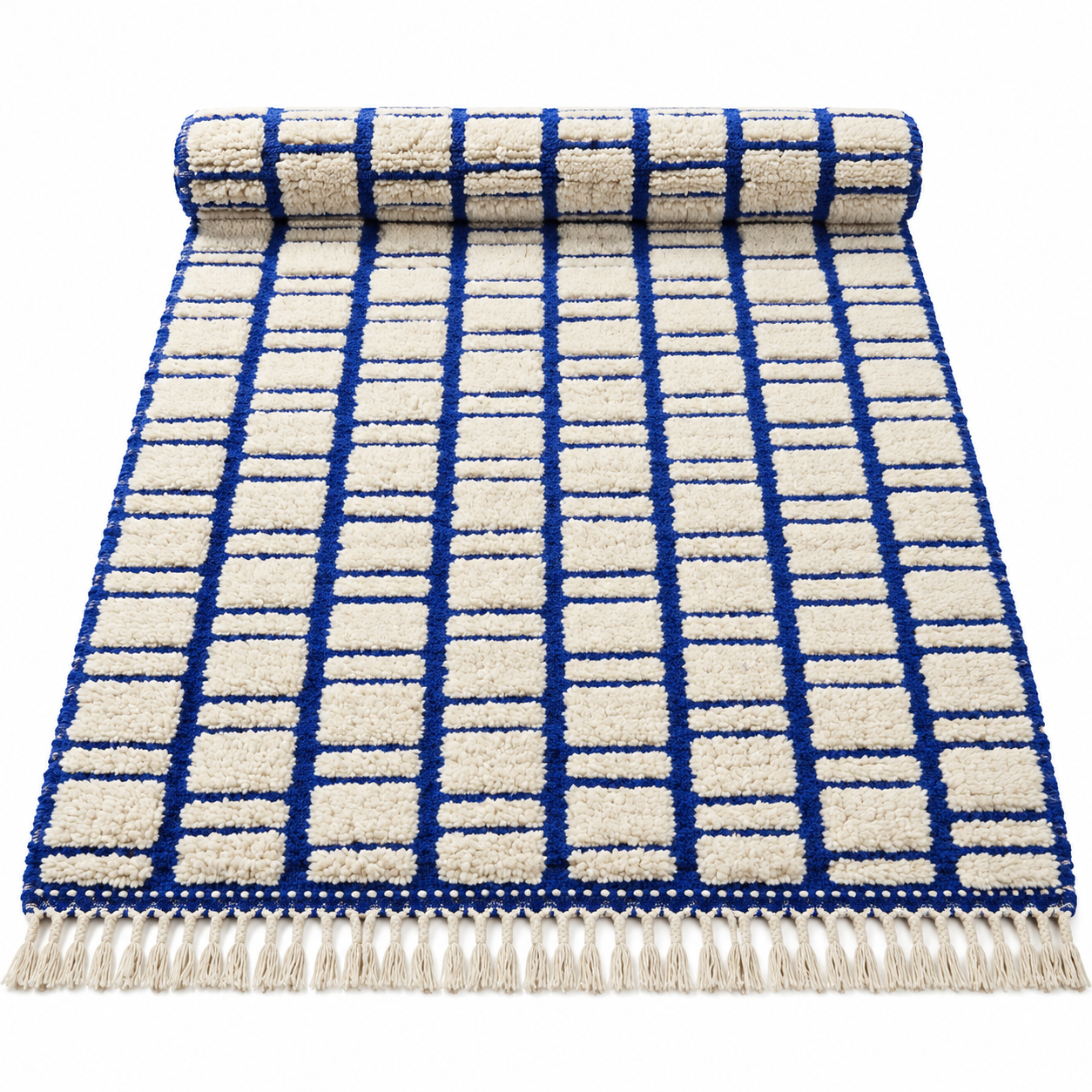
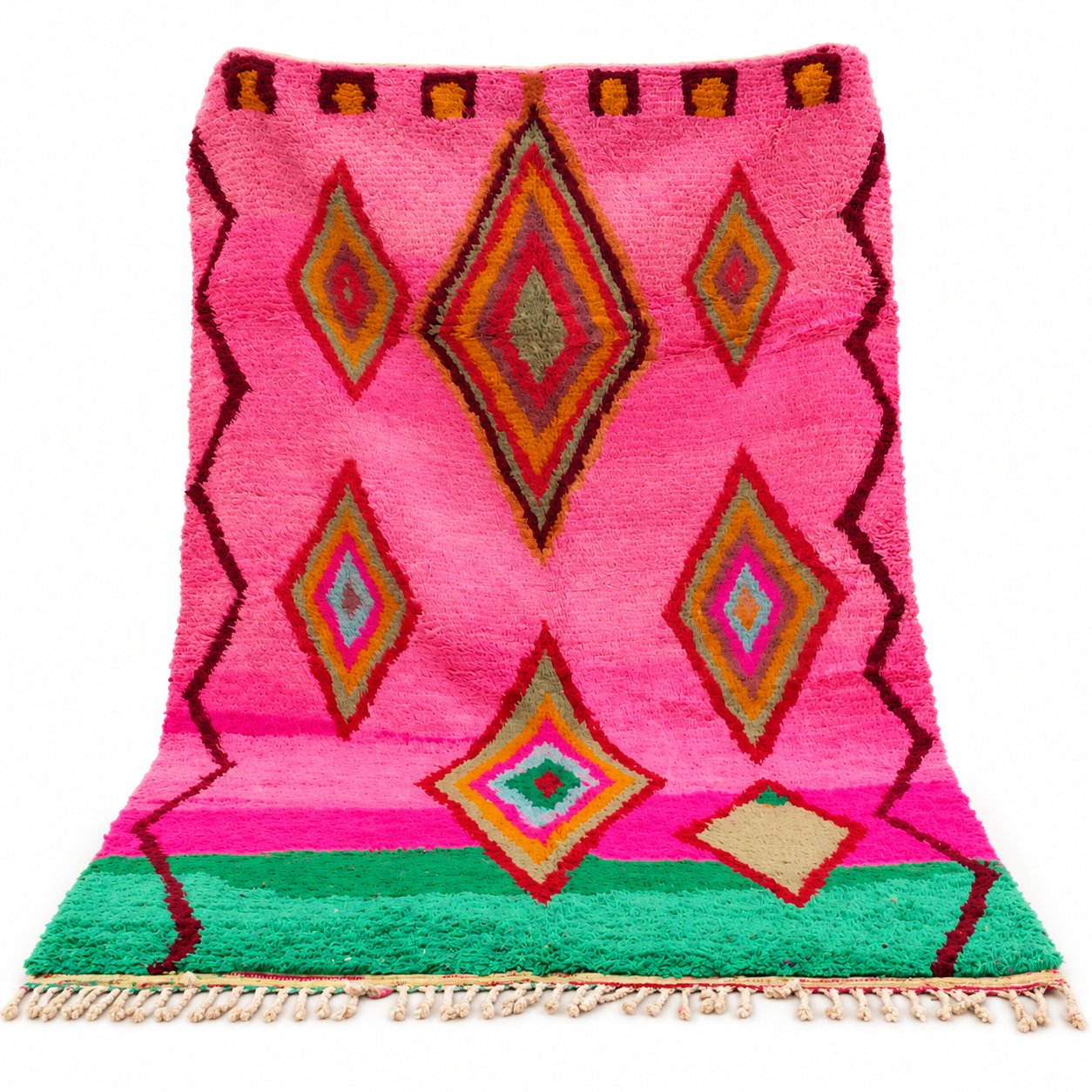
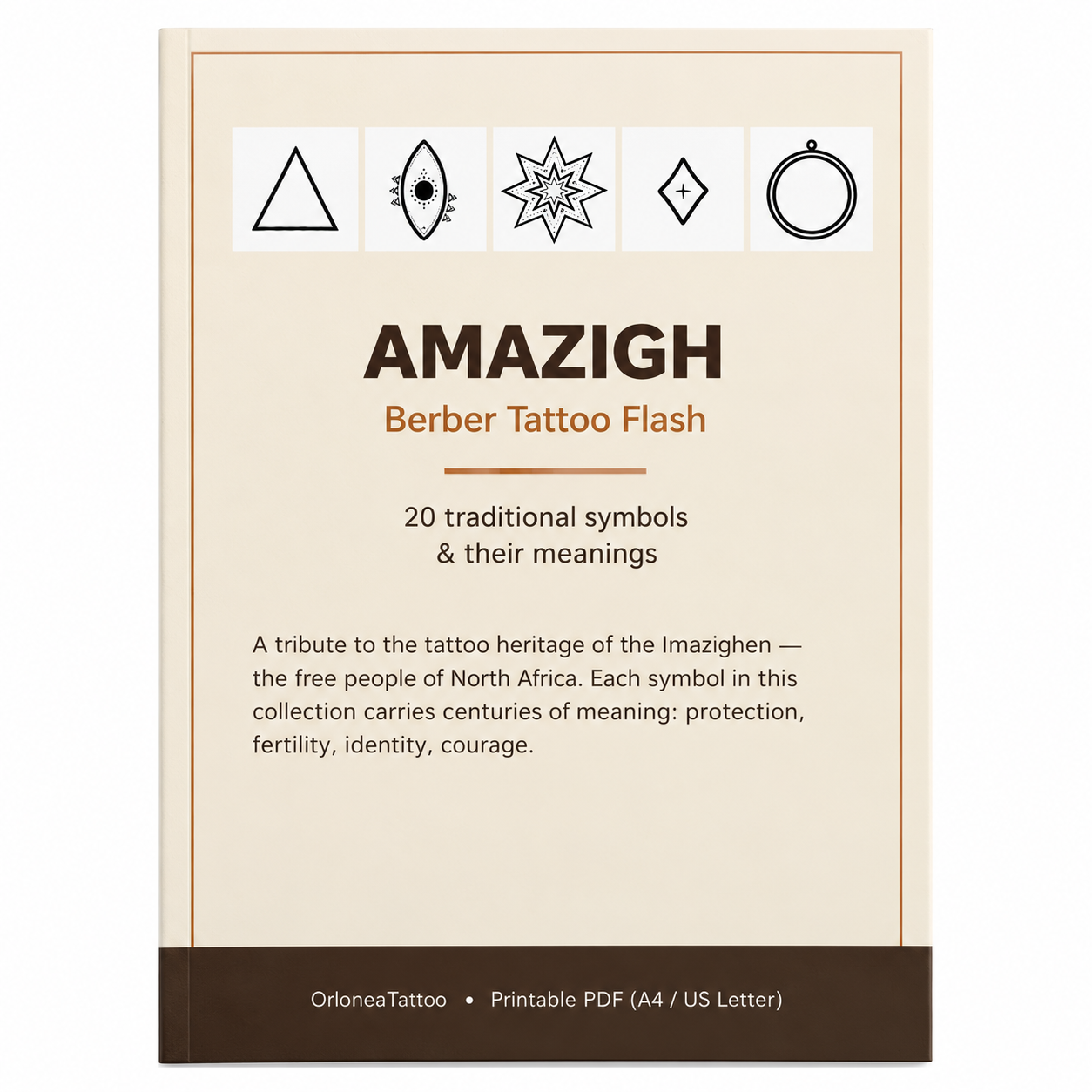
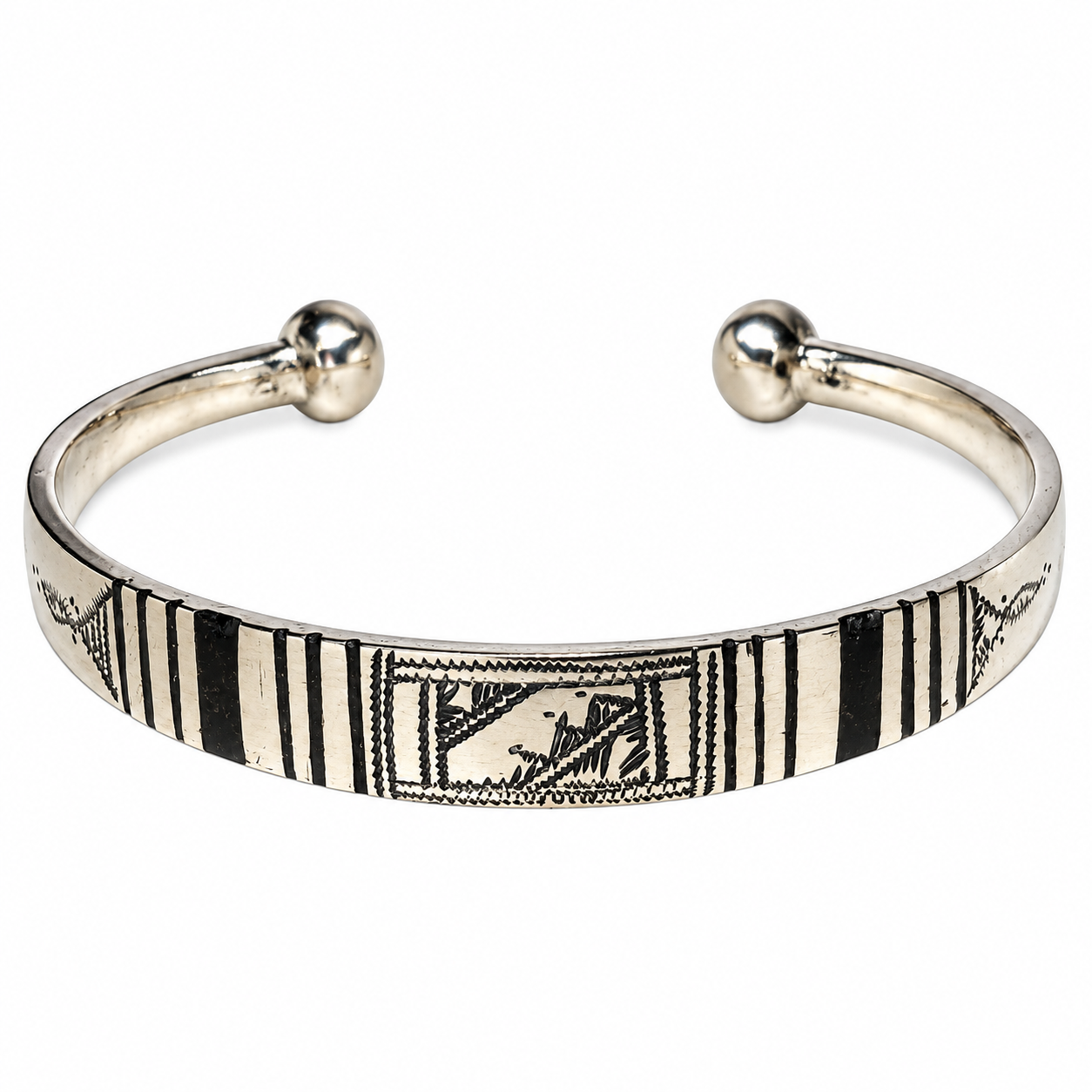

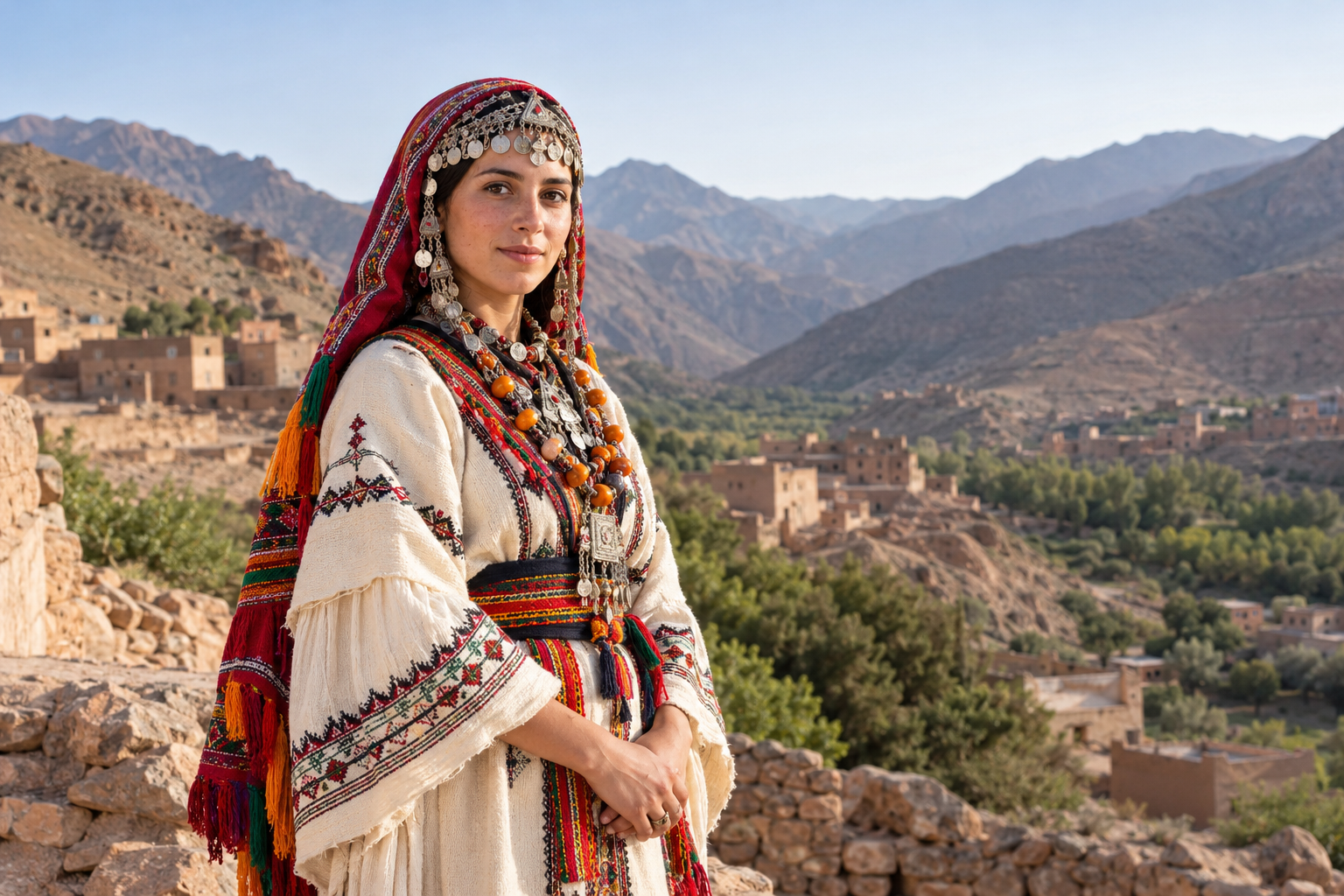
Amazigh clothing reflects the diversity of communities across North Africa through textiles, craftsmanship, regional styles, and changing forms of cultural expression. Traditional garments have developed in relation to climate, local materials, social occasions, and artistic practices.
Understanding Amazigh Clothing and Regional Diversity
Amazigh clothing is not a single style shared by all communities. Amazigh-speaking populations across North Africa developed different approaches to dress according to geography, history, available materials, and local customs.
The phrase “Berber traditional dress” is often used internationally, but it can describe many different regional traditions. Clothing from the Atlas Mountains, Kabylie, the Rif, Souss, or Saharan regions should be understood within its own cultural and geographic context.
Traditional clothing also changes over time. While some garments continue to be worn during celebrations or cultural events, many Amazigh people today combine heritage elements with contemporary fashion.
Textiles, Materials, and Craft Knowledge
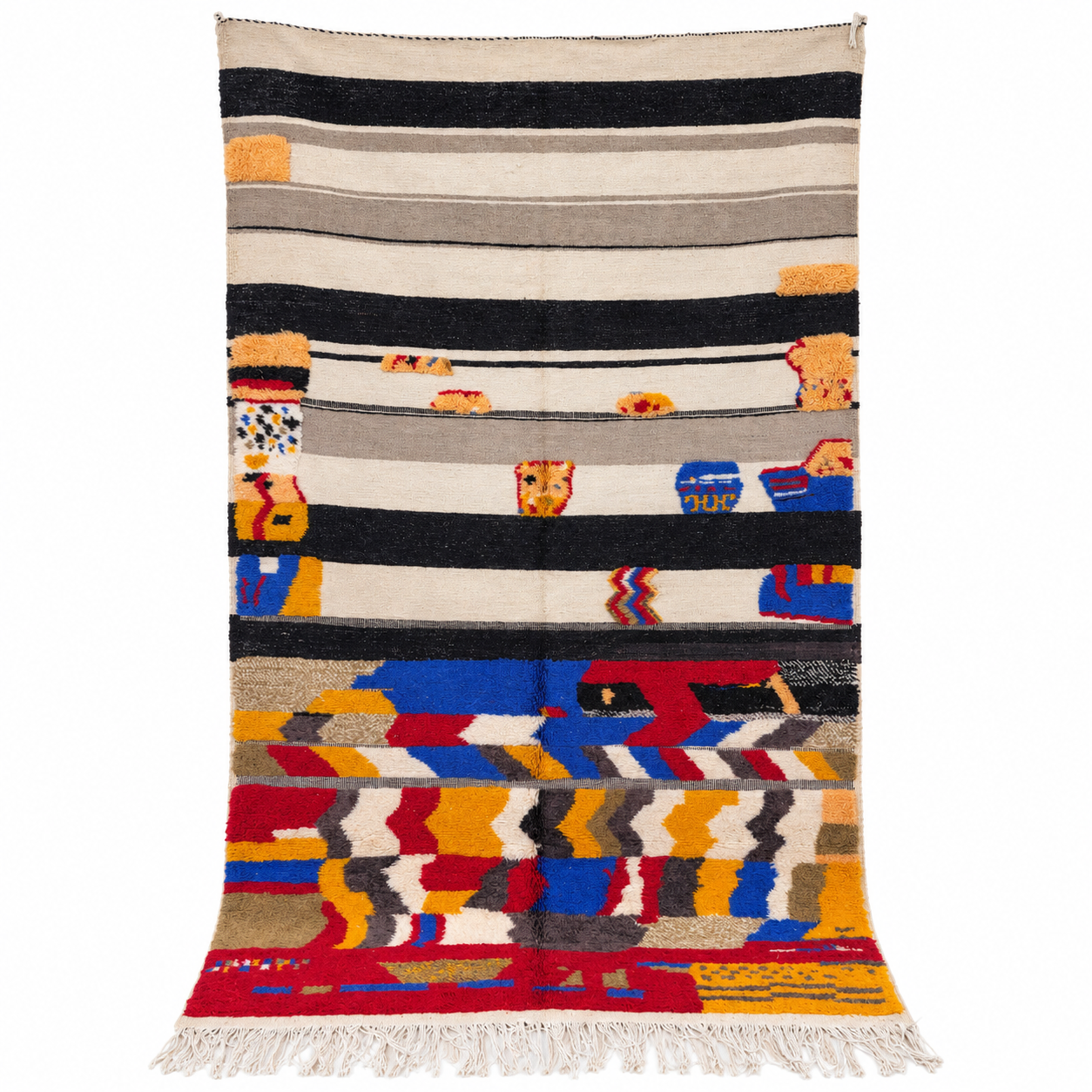
Amazigh textiles represent important forms of craftsmanship. Weaving, embroidery, dyeing, and garment construction require knowledge that has often been passed between generations.
Materials have historically depended on local resources and environmental conditions. Wool, cotton, leather, and other fibers have been used in different regions depending on availability and purpose.
- Wool: important in many weaving traditions, especially for warm textiles and rugs.
- Cotton and other fabrics: used in different garments depending on regional practices.
- Leather: used for certain accessories and footwear traditions.
Regional Examples of Amazigh Dress Traditions
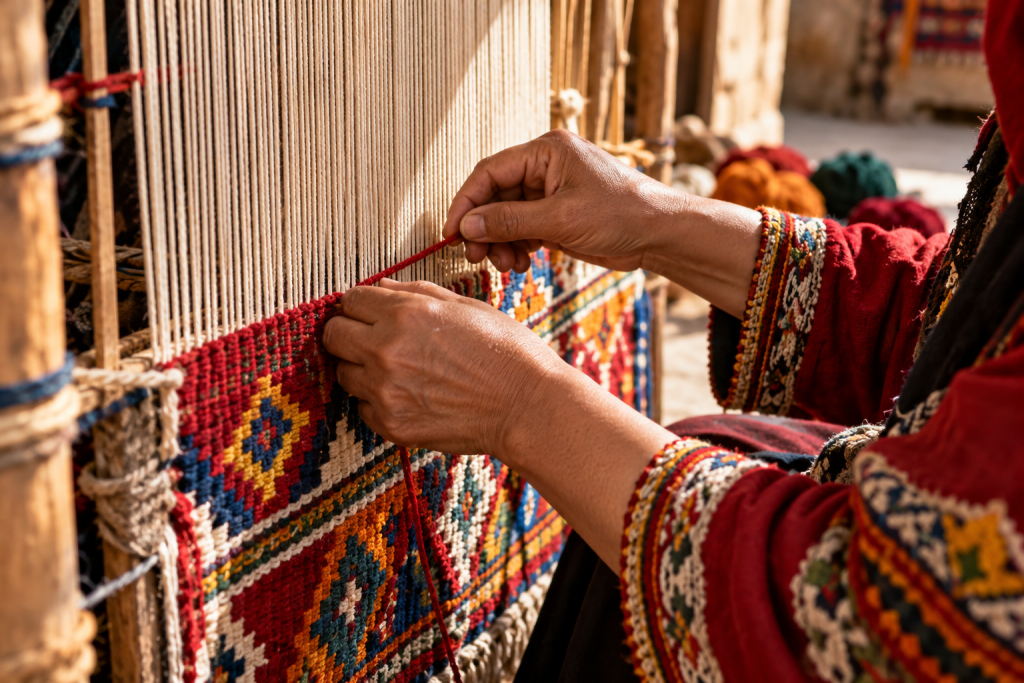
Regional variation is essential when studying Amazigh clothing. The following examples represent selected traditions rather than a complete description of all Amazigh dress.
Atlas Mountain Clothing
In parts of the Atlas Mountains, traditional clothing has included woven textiles, layered garments, and decorative elements adapted to mountain environments. Wool textiles have been particularly important because of their availability and usefulness in colder climates.
Garments may include woven wraps, cloaks, and other pieces whose styles vary between communities. Designs, colors, and techniques reflect local artistic traditions.
Kabyle Clothing Traditions
Kabyle communities in Algeria have developed distinctive textile and clothing traditions. Women’s ceremonial garments have often been associated with detailed decoration, embroidery, jewelry, and carefully arranged textiles.
Kabyle dress should be understood as a regional tradition with its own history rather than as an identical representation of all Amazigh clothing.
Saharan and Tuareg Clothing
Tuareg clothing traditions developed in Saharan and Sahelian environments. Some garments are adapted to desert conditions through layering, protection from sun, and practical designs.
The popular image of Tuareg clothing often focuses on indigo-colored garments, but Tuareg dress includes broader forms and varies between communities and occasions.
Garment Construction, Layering, and Function
Traditional clothing is not only decorative. Garments often respond to practical needs such as climate, movement, protection, and social context.
| Element | Function | Regional Variation |
|---|---|---|
| Woven textiles | Provide clothing, wraps, and decorative surfaces. | Patterns and techniques differ between communities. |
| Layered garments | Adapt to climate and social occasions. | Forms vary between mountain, rural, and desert regions. |
| Fastenings and accessories | Secure garments and add decoration. | Often connected with local jewelry traditions. |
The Connection Between Clothing and Jewelry
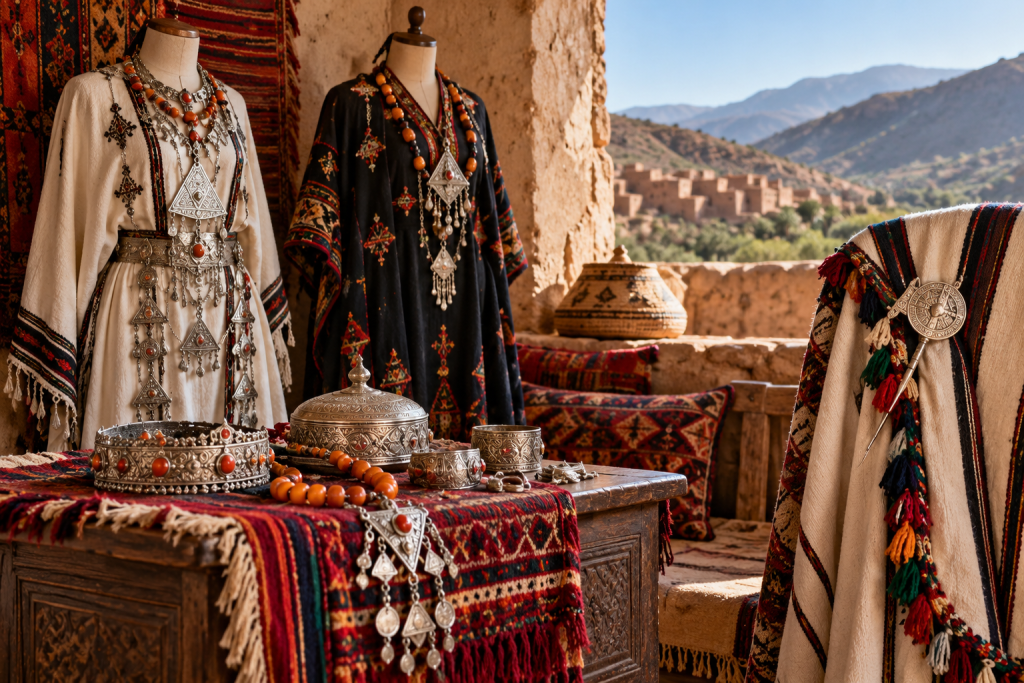
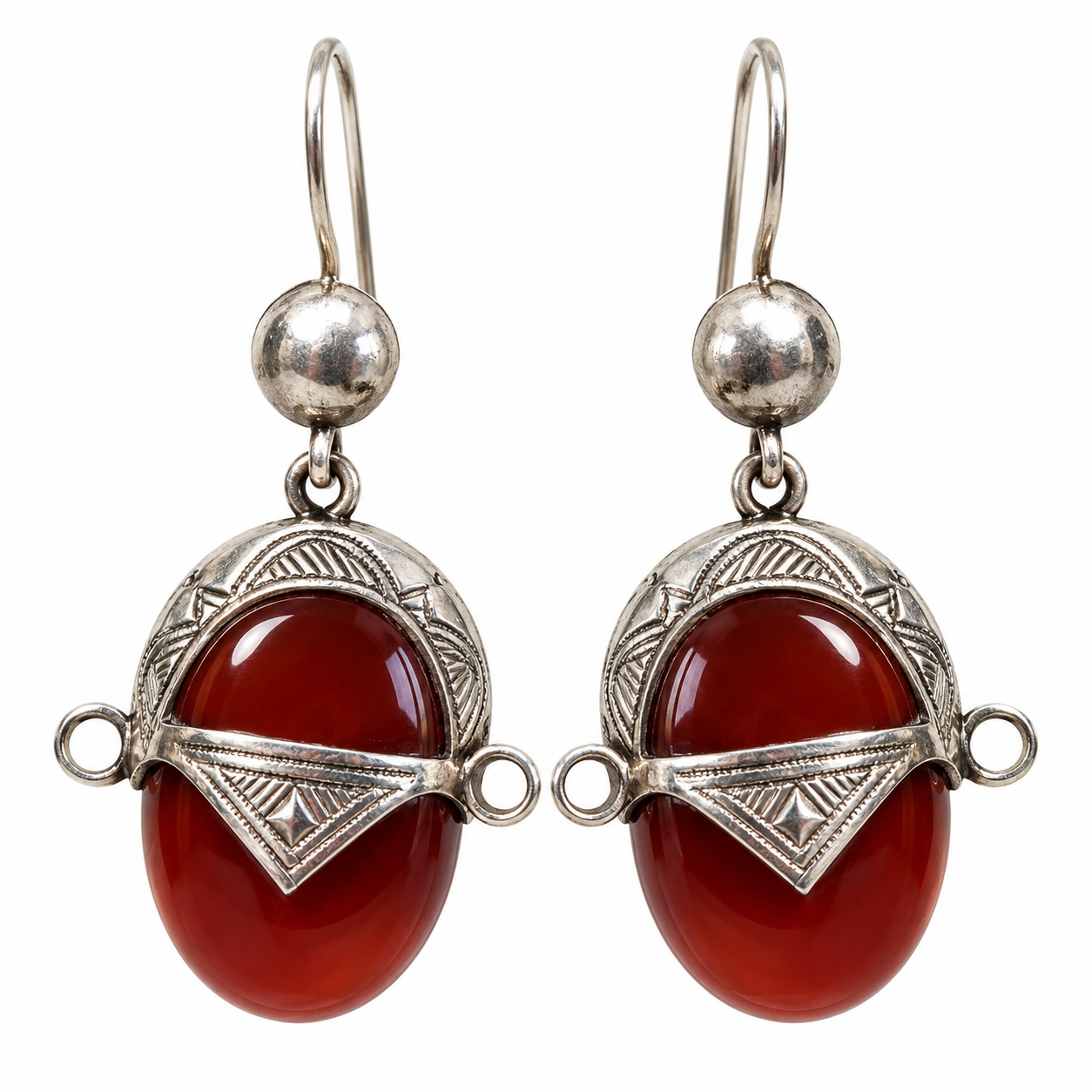
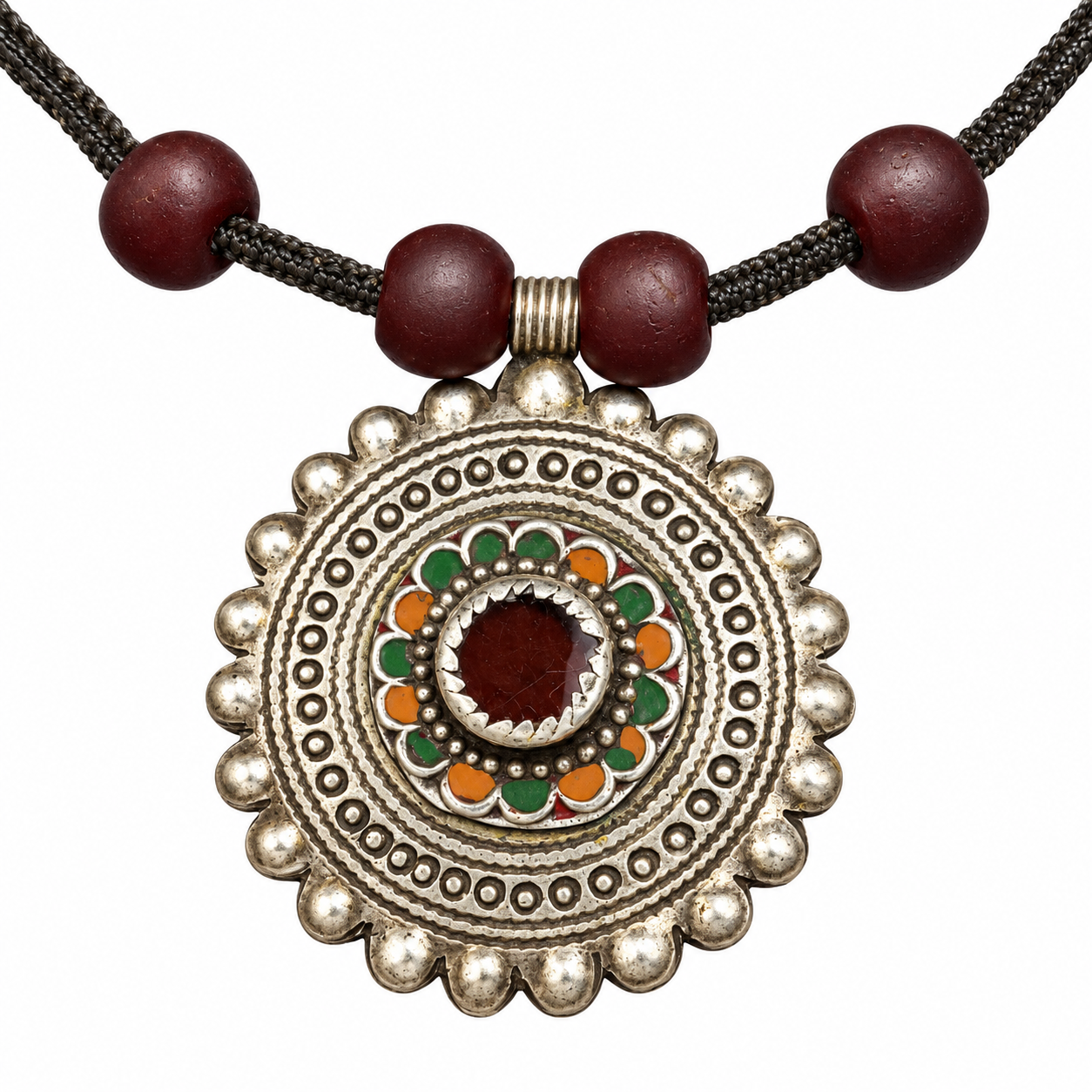
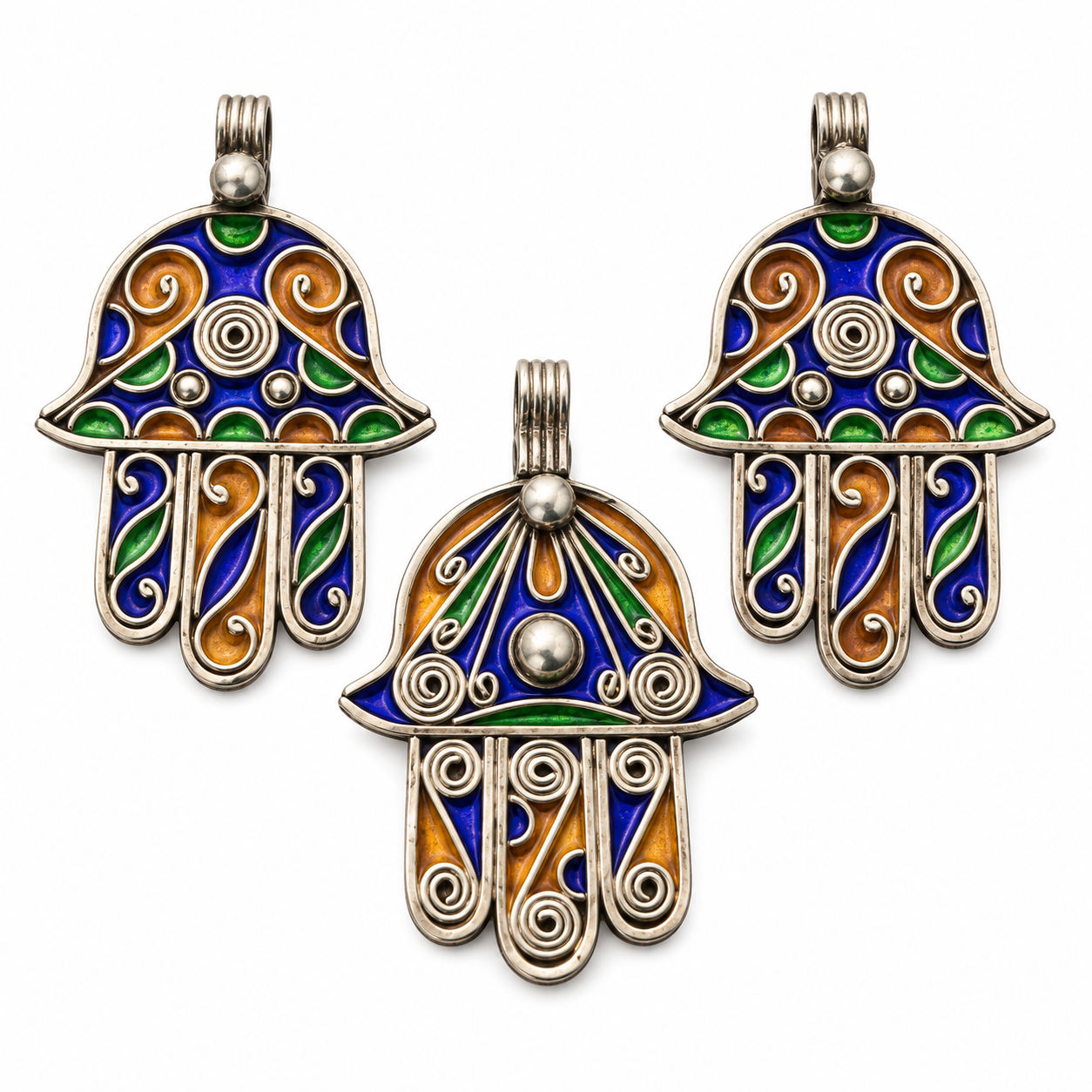
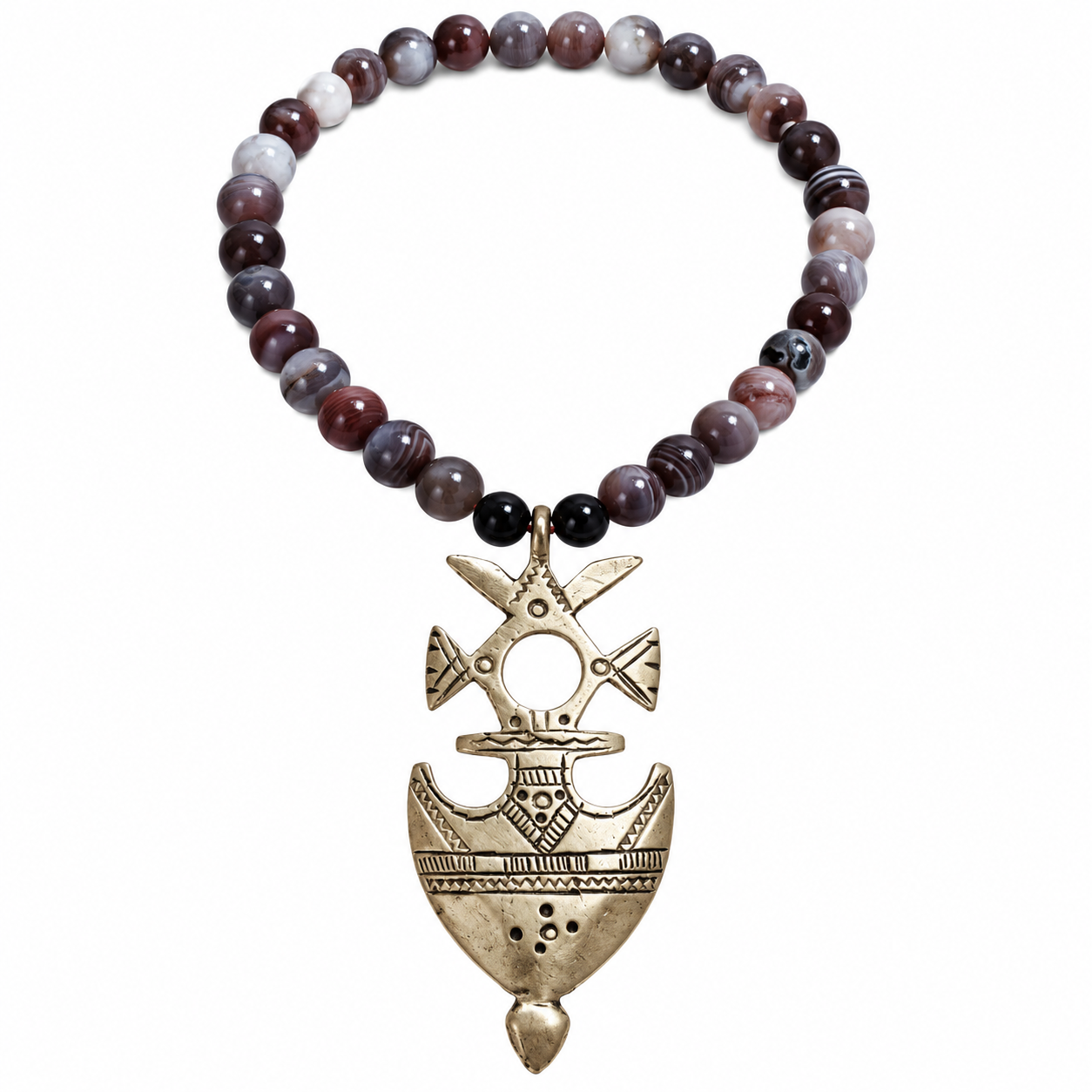
Amazigh clothing traditions are closely connected with jewelry. Silver ornaments, fibulae, necklaces, and other accessories can complement garments while expressing regional styles.
Jewelry may have practical functions, such as fastening clothing, while also representing craftsmanship and personal expression. Meanings and uses differ between regions and historical periods.
Ceremonial Dress and Everyday Clothing
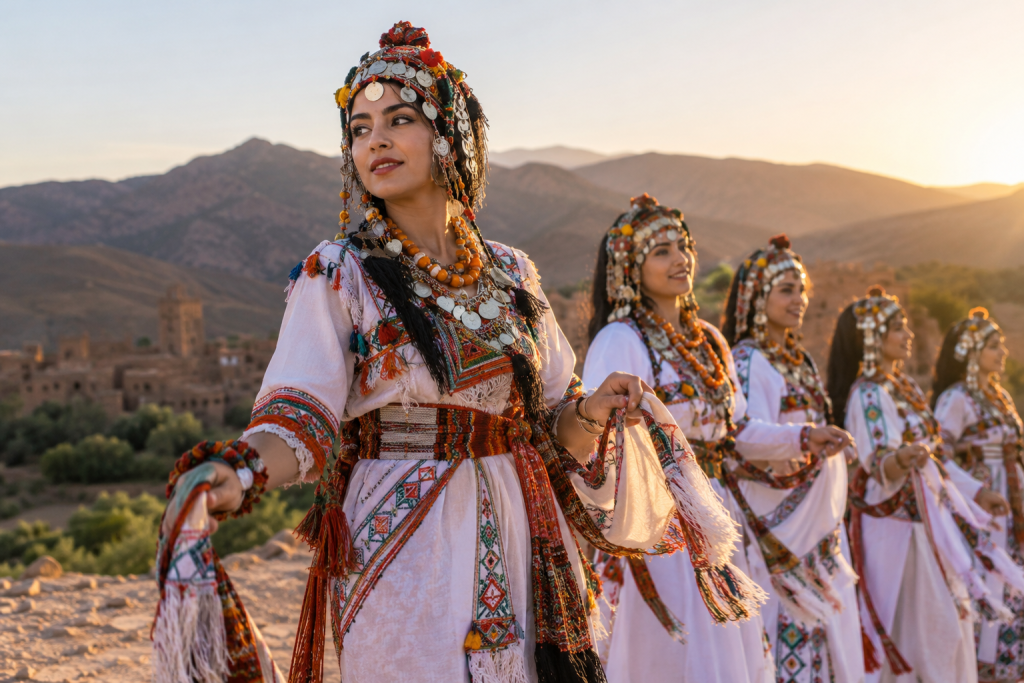
Traditional clothing is often associated with celebrations, weddings, cultural events, and ceremonies. However, it is inaccurate to assume that all Amazigh people wear traditional garments every day.
Contemporary clothing choices depend on many factors, including location, occupation, age, personal preference, and social context.
- Everyday clothing: often combines modern styles with personal cultural connections.
- Ceremonial clothing: may preserve detailed regional textile traditions.
- Cultural performances: may use clothing to represent heritage and identity.
Reading an Amazigh Textile or Garment
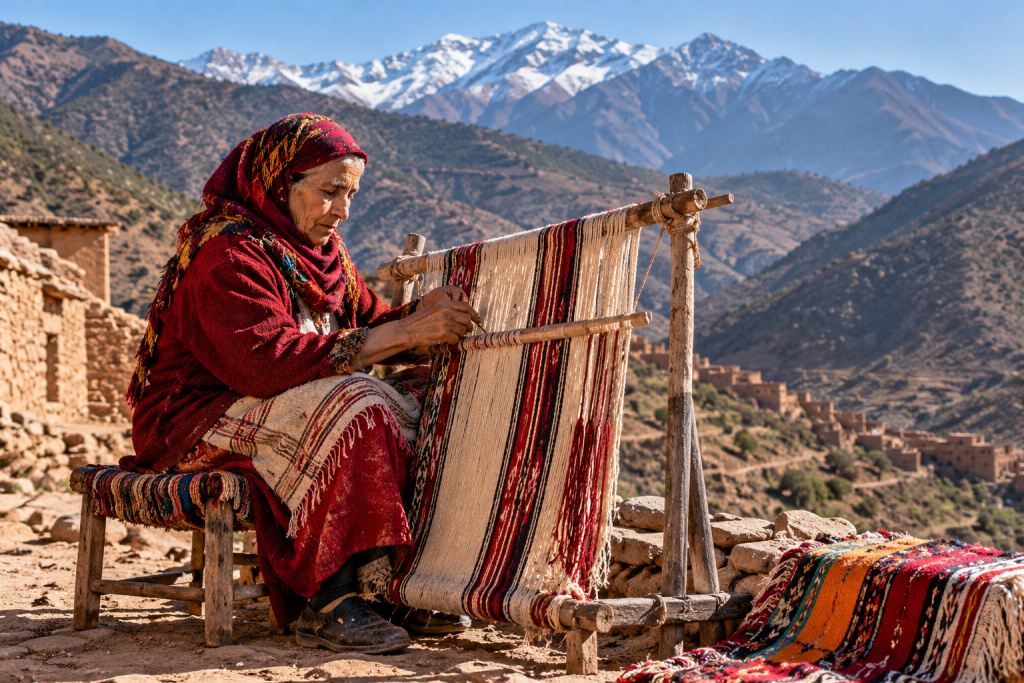
When examining Amazigh clothing, it is useful to consider several questions rather than relying only on appearance.
- Region: Where is the garment documented as originating?
- Materials: What fibers, dyes, or techniques are identified?
- Construction: How was the garment woven, sewn, or decorated?
- Purpose: Was it designed for daily use, ceremony, or artistic display?
- Historical context: Is it a historical example or a contemporary interpretation?
Modern Amazigh Fashion and Cultural Expression
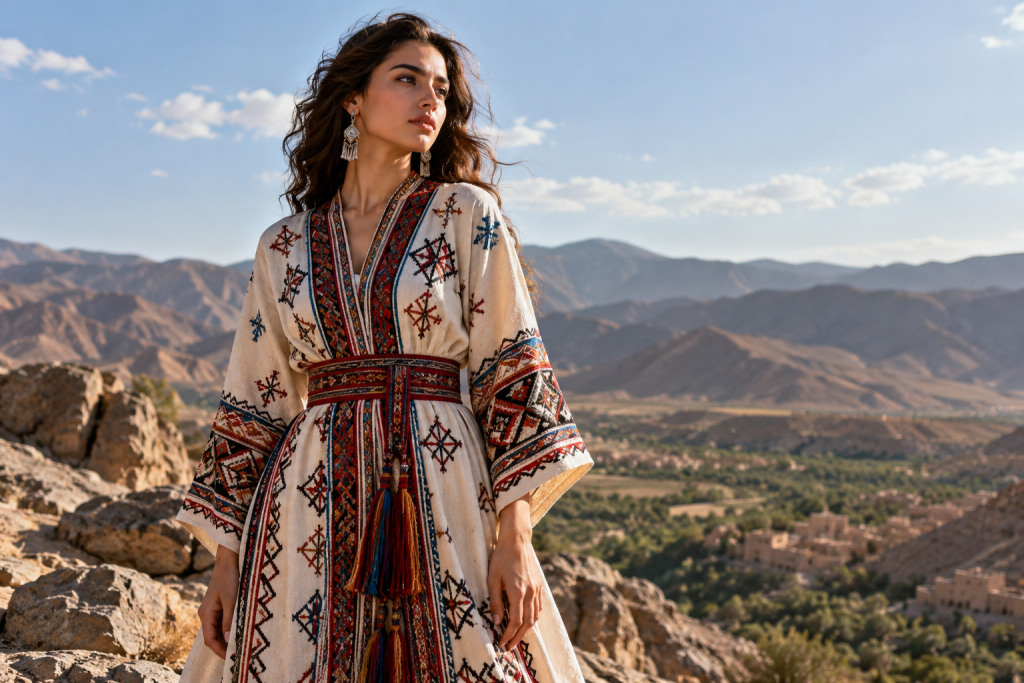
Today, Amazigh designers and makers continue to reinterpret traditional elements through contemporary fashion. Modern clothing may incorporate textile patterns, colors, embroidery, or jewelry-inspired details while creating new styles.
These adaptations demonstrate that cultural heritage is not fixed. Traditions continue because communities actively create new meanings and forms.
Buying Amazigh-Inspired Clothing Responsibly
When purchasing clothing described as Amazigh or Berber-inspired, accurate information is important. A product name alone does not always establish a garment’s origin or traditional status.
- Check information about the maker or region.
- Ask about materials and production methods.
- Distinguish handmade heritage pieces from modern inspired designs.
- Value craftsmanship beyond symbolic descriptions.
Photography, Documentation, and Respectful Representation
Historical clothing images should include accurate dates and geographic information. A photograph from one region or period should not be presented as representing all Amazigh communities.
Careful documentation helps preserve the diversity of dress traditions and prevents simplified representations of living cultures.
The Living Heritage of Amazigh Textiles
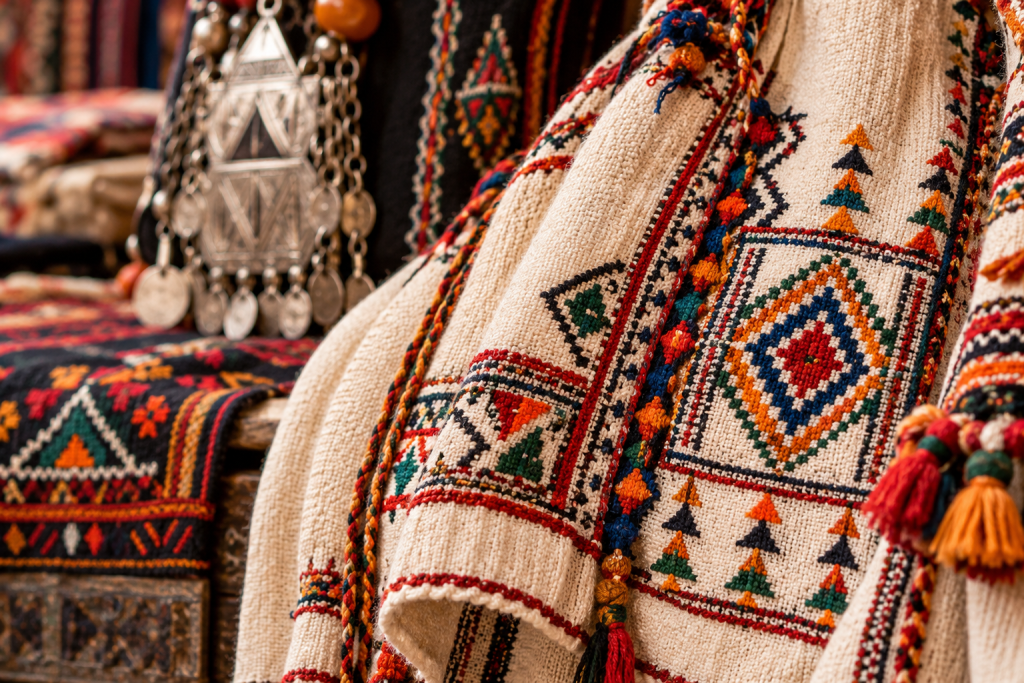
Amazigh clothing continues to connect craftsmanship, identity, and creativity. Through weaving, embroidery, jewelry, and modern design, textiles remain an important expression of cultural knowledge.
The study of Amazigh dress reveals not only what people wore, but also how communities adapted materials, preserved skills, and expressed belonging.
The Role of Weaving Communities in Textile Preservation
Textile traditions survive through the skills of people who continue practicing them. Weavers, embroiderers, and garment makers contribute to preserving techniques while also responding to changing needs and markets.
In many communities, textile knowledge includes understanding patterns, selecting materials, preparing fibers, and creating finished pieces. This knowledge is not only technical; it can also reflect relationships between generations, families, and local artistic identities.
Patterns, Colors, and Regional Style
Amazigh textiles often attract attention because of their strong visual character. Geometric arrangements, contrasting colors, and repeated motifs appear in many textile traditions, but their meanings should always be considered carefully.
A similar pattern may have different interpretations depending on location, period, and maker. Rather than assuming one fixed meaning, researchers and buyers should consider the documented history of each textile and the knowledge of the artisans who created it.
Clothing as a Reflection of Environment
Traditional garments demonstrate how communities adapted clothing to their surroundings. Mountain regions, agricultural areas, and desert environments created different practical requirements for fabrics, layers, and construction methods.
Warm wool garments could provide protection in colder highland environments, while lighter fabrics and layered approaches could support movement and climate adaptation in warmer regions.
- Climate adaptation: fabrics and layers respond to local weather conditions.
- Available resources: materials often reflect regional agriculture and trade connections.
- Social function: garments can communicate occasion, community, and personal identity.
Preserving Handmade Techniques in a Changing World
Modern production methods have changed how many textiles are created and sold. Handmade Amazigh garments and fabrics now exist alongside factory-produced clothing inspired by traditional designs.
This creates opportunities and challenges. Contemporary markets can help artisans reach new audiences, but accurate descriptions are important to ensure that handmade traditions are not reduced to simple decorative themes.
Supporting Authentic Craftsmanship
Learning about the maker, production process, and regional background helps consumers understand the value of textile work. A handmade garment represents time, skill, and cultural knowledge that may not be visible from appearance alone.
- Look for information about the artisan or workshop.
- Ask whether materials are handmade or commercially produced.
- Understand whether a design is historical, inspired, or newly created.
Amazigh Clothing in Cultural Celebrations Today
Cultural events, weddings, festivals, and heritage gatherings provide important spaces where traditional clothing continues to appear. These occasions allow communities to maintain connections with textile knowledge while expressing identity in the present.
At the same time, wearing traditional clothing today is a personal choice. Some people use heritage garments as a connection to family history, while others explore Amazigh-inspired fashion through modern designs.
The Future of Amazigh Textile Heritage
The future of Amazigh clothing depends on continued knowledge sharing, respectful documentation, and support for artisans. Textiles remain meaningful because they combine practical skills with creativity and cultural memory.
As designers and craftspeople develop new approaches, Amazigh fashion continues to show that heritage can be both preserved and transformed. Traditional techniques remain valuable not because they belong only to the past, but because they continue to inspire living communities.
Conclusion: Clothing as Cultural Memory and Creativity
Amazigh clothing represents a diverse collection of regional traditions shaped by environment, craftsmanship, and changing identities. Understanding these garments requires attention to context, makers, and the communities that continue creating them.
 No products in the cart.
Comments (29)