

The traditional hairstyles of Aït Atta women reveal a fascinating aspect of Amazigh heritage where beauty, identity, and social meaning were closely connected. In southern Morocco, hair was not simply arranged for appearance; it was carefully shaped into a visual expression of belonging, regional identity, and cultural memory.
Hair as a Language of Amazigh Identity
Among many Amazigh communities, personal appearance carried information about a person’s background and place within society. Hairstyles, clothing, jewelry, and facial decoration worked together as a cultural language that could communicate origin, age, and social connections.
For Aït Atta women of the southern Moroccan regions, hairstyles were created with attention to structure and symbolism. The arrangement of braids, the use of additional materials, and the placement of ornaments formed a complete aesthetic system.
These traditions demonstrate that beauty practices can also preserve history. A hairstyle could contain knowledge transmitted between generations and reflect relationships between women, families, and communities.
The Aït Atta and Their Southern Moroccan Heritage
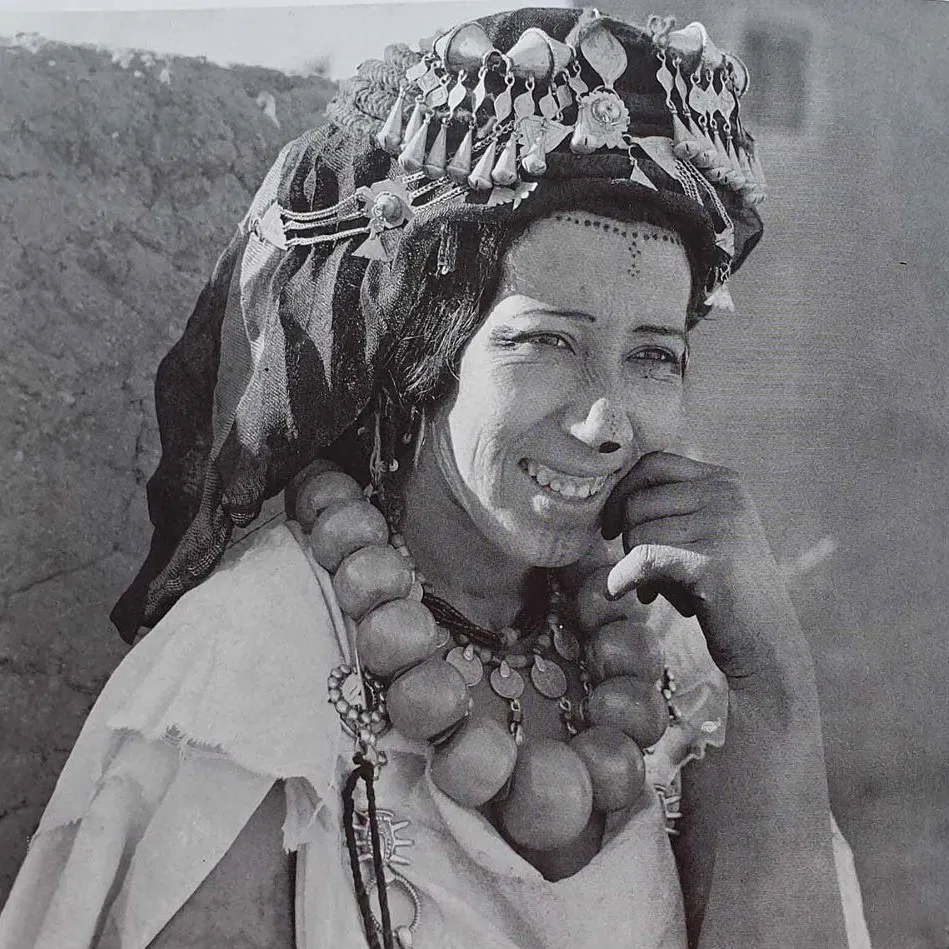
The Aït Atta are one of Morocco’s important Amazigh tribal confederations, historically associated with regions extending across the Jbel Saghro, Dadès, Todgha, Drâa, and surrounding pre-Saharan landscapes.
Their wide territory includes different environments, from mountain areas to oasis regions. This geographic diversity contributed to variations in clothing, jewelry, and hairstyles between different Aït Atta groups.
Although communities shared cultural foundations, local traditions developed their own distinctive styles. Women’s hairstyles provide a clear example of how regional identity could be expressed through appearance.
Braids, Wool, and the Art of Creating Volume
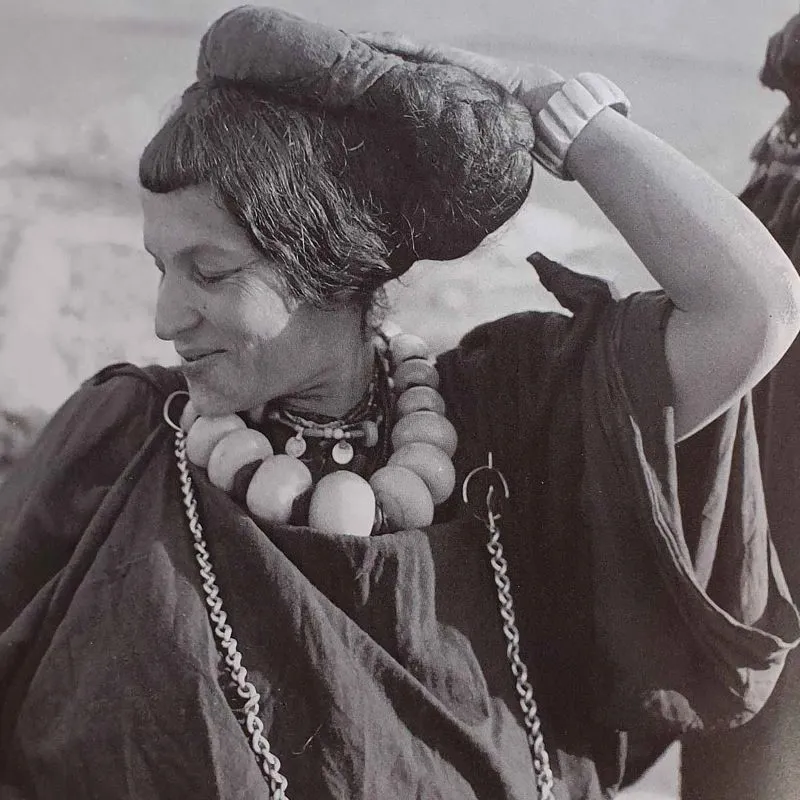
One remarkable feature of traditional Aït Atta hairstyles was the use of techniques that transformed hair into carefully constructed forms. Braids were often arranged with precision, creating shapes that complemented the face and other elements of dress.
In some groups, wool was incorporated into the hair to increase volume and create a more impressive silhouette. This practice required skill and patience because the hairstyle was built rather than simply arranged.
The addition of wool also demonstrates the creative use of available materials. Natural resources from everyday life could become part of artistic expression and personal adornment.
Jewelry and Hair as One Artistic Composition
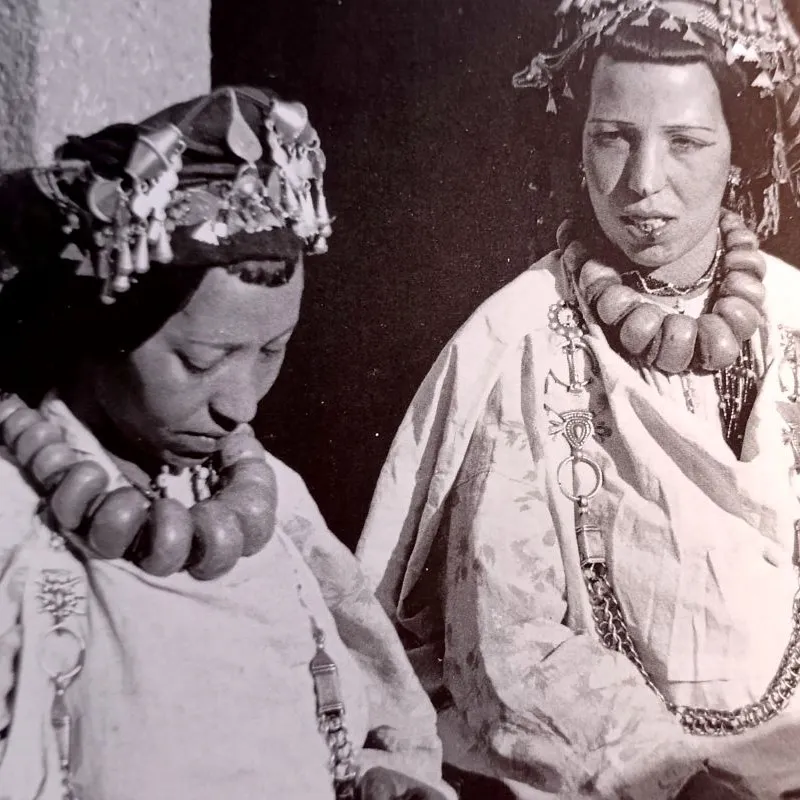
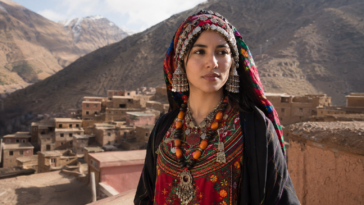
Amazigh hairstyles were rarely separated from jewelry. Silver ornaments, necklaces, pendants, and other accessories completed the overall appearance and created harmony between hair, clothing, and body decoration.
Among some Aït Atta groups, large silver ornaments attached near the hair or head emphasized prestige and regional style. Jewelry could represent craftsmanship, family heritage, and social identity in addition to its decorative role.
The relationship between hair and jewelry shows that Amazigh adornment was designed as a complete artistic composition rather than a collection of individual objects.
Facial Tattoos and Traditional Body Decoration
Historical portraits of Amazigh women also show the presence of facial tattoos and decorative marks in some communities. These signs formed part of broader traditions of personal and cultural expression.
The meanings of tattoos varied between regions and historical periods. They could be connected with identity, beauty, protection, or social belonging. Understanding them requires attention to local contexts rather than assuming a single universal meaning.
Alongside hairstyles and jewelry, tattoos contributed to a complete visual identity where different elements worked together.
Three Examples of Aït Atta Hairstyle Traditions
The Aït Bou Iknifen style
Among the Aït Bou Iknifen of the Lower Dadès and Lower Todgha areas, historical portraits show carefully structured hairstyles featuring precise fringes and decorative elements. Silver ornaments and facial decoration created a balanced relationship between hair and jewelry.
The Aït Yazza style
The Aït Yazza of the eastern Aït Atta developed hairstyles known for their impressive volume. Wool added to braids created fuller shapes, turning hair into a highly visible artistic element.
The Drâa Valley style
In the Drâa Valley, hairstyles often interacted strongly with silver jewelry and textile decoration. The influence of oasis environments and historical trade connections contributed to distinctive forms of adornment.
The Importance of Preserving Visual Heritage
Traditional hairstyles are part of intangible cultural heritage because they preserve knowledge that exists through practice rather than written records. Techniques were learned through observation, participation, and communication between generations.
Historical photographs provide valuable evidence of these traditions, allowing researchers and communities to study forms of adornment that have changed over time.
Preserving this heritage does not mean freezing culture in the past. Instead, it allows contemporary generations to understand the creativity and knowledge behind traditional expressions of identity.
Hairstyles as Living Memories
The hairstyles of Aït Atta women reveal how the human body can become a space for storytelling. Through braids, ornaments, fabrics, and decorative signs, women expressed connections to their communities and landscapes.
These traditions remind us that cultural heritage is not only found in architecture, manuscripts, or museums. It also exists in skills, artistic practices, and personal expressions carried by people themselves.
The Social Life Behind Traditional Hairstyles
The creation of elaborate hairstyles was often a collective activity rather than an individual task. Women shared techniques, helped one another prepare for important occasions, and maintained knowledge through everyday interactions.
Preparing hair could become a social moment where stories, advice, and traditions were exchanged. Mothers, grandmothers, and other relatives played an important role in teaching younger generations the methods and meanings associated with different forms of adornment.
This shared process highlights an important aspect of Amazigh heritage: cultural knowledge was often preserved through practice and relationships rather than formal instruction.
Hairstyles for Special Occasions and Social Events
Traditional hairstyles could change according to circumstances. Everyday arrangements were often different from styles prepared for weddings, celebrations, or gatherings where appearance had particular importance.
Special occasions allowed women to display more elaborate combinations of braids, jewelry, textiles, and decorative elements. These moments created opportunities for families and communities to express pride in their craftsmanship and heritage.
Adornment was therefore connected not only with personal beauty but also with social participation. A carefully prepared appearance could represent respect for an important event and recognition of shared cultural values.
The Relationship Between Environment and Adornment
The landscapes of southern Morocco influenced many aspects of Aït Atta artistic traditions. Materials available through local environments and regional trade networks became part of clothing, jewelry, and personal decoration.
Wool, silver, fabrics, and natural materials were transformed through skilled craftsmanship. This relationship between environment and creativity shows how communities developed artistic expressions adapted to their surroundings.
Traditional hairstyles were therefore connected with a wider cultural system that included agriculture, livestock, craftsmanship, and regional exchange.
From Historical Portraits to Cultural Research
Photographs documenting Aït Atta women provide important visual records of styles that have changed over time. They allow researchers to examine details of hairstyles, ornaments, clothing, and other forms of cultural expression.
However, images alone cannot explain every meaning behind an appearance. Understanding these traditions requires combining visual evidence with local knowledge, historical records, and awareness of regional differences.
This careful approach helps avoid reducing complex traditions to simple decorations. Each element of adornment existed within a wider social and cultural context.
Modern Connections with Amazigh Identity
Today, Amazigh-inspired designs continue to influence fashion, jewelry, and artistic creation in Morocco and beyond. Traditional motifs and techniques are often reinterpreted in contemporary forms.
The renewed interest in Amazigh heritage has encouraged greater appreciation of the skills behind traditional crafts. Hairstyles may no longer be practiced in the same ways everywhere, but their artistic principles continue to inspire new generations.
The legacy of Aït Atta women’s hairstyles shows that cultural heritage can evolve while maintaining links with the memories and creativity of the communities that created it.
The Value of Intangible Heritage
Traditional hairstyles demonstrate that heritage is not only preserved in objects that can be placed in museums. Skills, gestures, and knowledge carried by people are equally important parts of cultural history.
The study of Amazigh hairstyles reveals the connection between appearance and identity. It shows how communities used creativity to communicate belonging, celebrate important moments, and maintain links with previous generations.
Conclusion
The traditional hairstyles of Aït Atta women represent a rich chapter of Amazigh cultural heritage. Through carefully created forms, silver ornaments, and regional styles, hair became a powerful expression of identity and memory. These traditions continue to inspire appreciation for the creativity and depth of southern Morocco’s Amazigh communities.

 No products in the cart.
Comments (10)