

Morocco’s Golden Spread of Tradition
Amlou is one of Morocco’s most beloved traditional foods — rich, creamy, nutty, naturally sweet, and deeply connected to Amazigh heritage.
Often described as Morocco’s answer to almond butter, Amlou is a traditional spread made from three simple but precious ingredients: roasted almonds, culinary argan oil, and pure honey. Together, they create a smooth and flavorful paste that is served with warm bread, msemen, baghrir, pancakes, toast, pastries, fruit, or even eaten by the spoon.
But Amlou is much more than a delicious spread.
It is a taste of Moroccan family life.
It is a symbol of hospitality.
It is part of Amazigh food tradition.
It is connected to the argan tree, one of Morocco’s natural treasures.
It is a beautiful example of how simple ingredients can become something luxurious.
In many Moroccan homes, especially in the Souss region, Anti-Atlas area, Tafraout, Agadir, Essaouira, and villages where argan trees grow, Amlou is served with tea, bread, and warm conversation. It appears at breakfast tables, family gatherings, Ramadan meals, special occasions, and as a thoughtful food gift.
At Amazigh Shop, Amlou represents everything we love about Moroccan products: natural ingredients, ancestral know-how, rich flavor, and a strong connection to land and tradition.
This guide will explain everything you need to know about Amlou: what it is, where it comes from, how it tastes, how it is made, how to eat it, how to store it, and why this traditional Moroccan spread has become loved by food lovers around the world.
What Is Amlou?

Amlou is a traditional Moroccan spread made mainly from:
- Roasted almonds
- Culinary argan oil
- Pure honey
The ingredients are blended together until they become a smooth, creamy, pourable or spreadable paste. The result is rich and nutty, with a natural sweetness from honey and a deep roasted flavor from almonds.
Amlou is often enjoyed like a luxury breakfast spread, but it can also be used in desserts, snacks, smoothies, pastries, and modern recipes.
The texture can vary depending on how it is made. Some Amlou is very smooth and silky. Some is thicker and more rustic. Some has a slightly grainy almond texture, which many people love because it feels handmade and natural.
In Morocco, Amlou is traditionally served in small bowls with fresh bread. People dip pieces of bread into it and enjoy it with Moroccan mint tea. It is simple, warm, and full of flavor.
Amlou is not just food. It is a Moroccan ritual.
The Amazigh Origins of Amlou
Amlou is strongly connected to Amazigh culture, especially in southwestern Morocco where the argan tree grows naturally. This includes regions such as Souss, Tafraout, Tiznit, Agadir, Essaouira, Taroudant, and areas of the Anti-Atlas Mountains.
For generations, Amazigh families have used local ingredients to create nourishing foods from the land. Almonds, argan oil, and honey are all deeply connected to Moroccan rural life.
The argan tree is especially important. It grows in dry, difficult landscapes where few trees can survive. Its fruit produces kernels that are transformed into argan oil, one of Morocco’s most famous natural products. In many areas, women’s cooperatives and artisan producers play an important role in preparing argan oil using traditional knowledge passed down through families.
Amlou brings together three ingredients that tell the story of Morocco:
- Almonds from Moroccan orchards
- Argan oil from the argan tree
- Honey from local beekeeping traditions
This makes Amlou a true taste of the land.
In Amazigh homes, food is often connected to hospitality. When guests arrive, they may be welcomed with tea, bread, honey, olive oil, or Amlou. Serving Amlou is a way of saying: you are welcome, sit with us, eat with us, share this moment.
Why Amlou Is So Special
Amlou feels special because it is made from simple ingredients, but the final taste is rich and luxurious.
It is not complicated. It is not filled with artificial flavors. It does not need many additives. Its beauty comes from the quality of the ingredients and the balance between them.
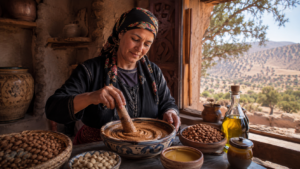
A good Amlou has:
- A deep roasted almond flavor
- A smooth and creamy texture
- A natural sweetness from honey
- A delicate nutty taste from argan oil
- A warm Moroccan aroma
- A rich golden-brown color
- A satisfying, nourishing feel
Amlou is also special because it feels both traditional and modern. It belongs to old Moroccan food culture, but it also fits perfectly into today’s healthy breakfast and natural food lifestyle.
You can eat it with Moroccan bread, but also with:
- Toast
- Pancakes
- Yogurt
- Oatmeal
- Smoothies
- Fruit
- Desserts
- Cakes
- Energy bowls
This makes Amlou a beautiful bridge between tradition and modern everyday eating.
The Three Main Ingredients of Amlou
The quality of Amlou depends on the quality of its ingredients. Traditional Amlou is simple, so every ingredient matters.
1. Roasted Almonds
Almonds give Amlou its body, flavor, and texture. They are usually roasted before being blended, which brings out their warm nutty aroma.
Roasting is important because it deepens the flavor. Raw almonds are mild, but roasted almonds are richer, warmer, and more fragrant. This roasted taste is one of the reasons Amlou feels so comforting.
Almonds also help create the thick, creamy texture. When finely ground, they become a smooth paste that mixes beautifully with argan oil and honey.
In traditional Moroccan Amlou, almonds are often the main ingredient. The better the almonds, the better the taste.
2. Culinary Argan Oil
Argan oil is the soul of Amlou.
There are two main types of argan oil:
- Culinary argan oil
- Cosmetic argan oil
For Amlou, only culinary argan oil is used. Culinary argan oil is made from roasted argan kernels, giving it a nutty and slightly toasted flavor. Cosmetic argan oil is made differently and is intended for skin and hair, not food.
Culinary argan oil gives Amlou its smooth texture and special Moroccan taste. It has a deep, earthy, nutty flavor that is very different from olive oil or other oils.
This is one of the reasons Amlou is so unique. You can make almond and honey spread anywhere, but without real culinary argan oil, it will not have the same Moroccan soul.
Argan oil is strongly connected to Moroccan heritage, especially Amazigh regions where the argan tree grows. Using it in Amlou makes the spread deeply local and traditional.
3. Pure Honey
Honey gives Amlou natural sweetness and a soft floral flavor.
The amount of honey can vary. Some people like Amlou sweeter, while others prefer it more nutty and less sweet. Moroccan honey adds depth and smoothness, helping balance the roasted almonds and rich argan oil.
Honey also gives Amlou a beautiful golden warmth. It makes the spread feel luxurious and comforting.
Traditional Amlou does not need refined sugar. The sweetness comes naturally from honey.
What Does Amlou Taste Like?

Amlou has a rich, nutty, smooth, and naturally sweet taste.
The roasted almonds bring warmth.
The argan oil brings deep nuttiness.
The honey brings sweetness and softness.
Together, the flavor is earthy, creamy, and slightly luxurious.
Some people compare Amlou to almond butter, peanut butter, tahini, or chocolate spread, but Amlou has its own identity. It is usually more aromatic than regular almond butter because of the culinary argan oil. It is also more traditional and elegant than many commercial spreads.
A good Amlou tastes:
- Nutty
- Roasted
- Sweet
- Smooth
- Rich
- Warm
- Natural
- Slightly earthy
- Deeply Moroccan
It is perfect for people who enjoy natural spreads, nut butters, Mediterranean flavors, Moroccan food, and artisan products.
What Is the Texture of Amlou?
The texture of Amlou can be smooth, thick, creamy, or slightly grainy depending on how finely the almonds are ground and how much argan oil is used.
Some Amlou is pourable, almost like a thick sauce. This type is perfect for dipping bread or drizzling over pancakes, yogurt, or desserts.
Other Amlou is thicker and more spreadable, like almond butter. This type is perfect for toast, sandwiches, msemen, baghrir, and pastries.
Because Amlou is natural, oil separation can happen. This is normal. Argan oil may rise to the top over time. Simply stir it well before serving.
This natural separation is actually a good sign that the product has not been over-processed.
How Is Traditional Amlou Made?
Traditional Amlou is made by roasting almonds, grinding them into a paste, then mixing them with culinary argan oil and honey.
The basic process is:
- Almonds are selected and cleaned.
- They are roasted gently to bring out flavor.
- The roasted almonds are ground until they become a paste.
- Culinary argan oil is slowly added.
- Pure honey is mixed in.
- The ingredients are blended until smooth and creamy.
- The Amlou is stored in a clean jar.
In older traditional methods, grinding could be done with stone tools or simple manual methods. Today, many producers use modern grinders while keeping the same simple recipe.
The goal is always the same: to create a creamy, flavorful, natural spread with the perfect balance of almonds, argan oil, and honey.
Amlou and Moroccan Hospitality
In Morocco, food is deeply connected to hospitality. When someone visits your home, you do not simply offer a seat. You offer tea, bread, sweets, honey, oil, or something special from the kitchen.
Amlou is one of those foods that feels welcoming.
A bowl of Amlou on the table says:
- You are welcome here
- Share this food with us
- Enjoy something made with care
- Taste something from our land
- Sit, relax, and be part of the moment
Amlou is often served with Moroccan mint tea, fresh bread, msemen, or baghrir. It can be part of breakfast, afternoon tea, Ramadan iftar, Eid gatherings, family visits, or special occasions.
The beauty of Amlou is that it feels generous. Even a small bowl can bring people together.
How Moroccans Eat Amlou
The most traditional way to eat Amlou is simple: dip warm bread into it.
Moroccan bread has a firm texture that works perfectly with Amlou. You tear off a small piece, dip it into the spread, and enjoy it with tea.
Other traditional ways include serving Amlou with:
- Msemen
- Baghrir
- Harcha
- Batbout
- Fresh bread
- Moroccan pancakes
- Breakfast pastries
- Dates
- Honey
- Mint tea
Amlou is usually served in a small bowl or dish at the center of the table. It is shared, not hidden away.
That shared style is part of the experience.
Modern Ways to Enjoy Amlou
Amlou is traditional, but it is also very easy to use in modern recipes.
You can enjoy Amlou with:
- Toast
- Croissants
- Pancakes
- Waffles
- Oatmeal
- Yogurt bowls
- Smoothies
- Ice cream
- Cakes
- Cookies
- Fruit slices
- Banana bread
- Crepes
- Granola
- Protein bowls
It can be spread, drizzled, dipped, stirred, or used as a topping.
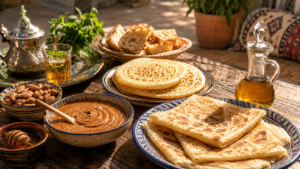
Here are some easy modern ideas:
Amlou on Toast
Spread Amlou over warm toast and add banana slices, cinnamon, or crushed almonds.
Amlou With Yogurt
Add a spoon of Amlou to plain Greek yogurt with dates, figs, or granola.
Amlou Smoothie
Blend milk or plant milk with banana, dates, and a spoon of Amlou for a creamy Moroccan-inspired smoothie.
Amlou Pancakes
Drizzle Amlou over pancakes or waffles instead of syrup.
Amlou Dessert Bowl
Add Amlou to a bowl with fruit, nuts, honey, and yogurt for a rich but natural dessert.
Amlou With Apples
Dip apple slices into Amlou for a simple sweet snack.
Amlou With Ice Cream
Warm it slightly and drizzle over vanilla ice cream for a Moroccan-style dessert.
Amlou for Breakfast
Amlou is perfect for breakfast because it is rich, satisfying, and full of flavor.
A Moroccan-inspired breakfast with Amlou can include:
- Warm bread
- Msemen
- Baghrir
- Harcha
- Olive oil
- Honey
- Fresh cheese
- Dates
- Mint tea
- Boiled eggs
- Olives
- Fresh fruit
A small amount of Amlou can make breakfast feel special. It adds sweetness, richness, and energy.
For a simple modern breakfast, try:
- Toast + Amlou + banana
- Oatmeal + Amlou + almonds
- Yogurt + Amlou + dates
- Pancakes + Amlou + honey
- Smoothie bowl + Amlou drizzle
It is especially good for slow weekend mornings, family breakfasts, or brunch tables.
Amlou During Ramadan
Amlou is also a beautiful addition to Ramadan meals. During Ramadan, Moroccan tables are often full of nourishing foods served at iftar and suhoor.
Amlou can be enjoyed at suhoor because it is rich and satisfying. A spoon with bread, dates, and tea can feel comforting before fasting.
At iftar, Amlou can be served with Moroccan pancakes, bread, tea, or sweets. It adds a special traditional touch to the table.
Because it is made with almonds, honey, and argan oil, it feels naturally rich and festive without needing complicated preparation.
Amlou as a Gift
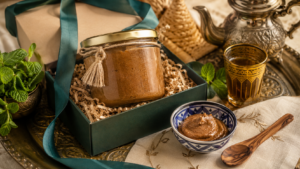
A jar of Amlou makes a beautiful gift because it is unique, traditional, and delicious.
It is perfect for:
- Food lovers
- Moroccan cuisine lovers
- Healthy breakfast fans
- People who enjoy natural spreads
- Housewarming gifts
- Ramadan gifts
- Eid gifts
- Wedding gift baskets
- Gourmet gift boxes
- Gifts for hosts
- Gifts for family and friends
Amlou feels special because many people outside Morocco have never tasted it before. It is a wonderful way to introduce someone to Moroccan and Amazigh food culture.
A gift box could include:
- A jar of Amlou
- Moroccan mint tea
- Dates
- Honey
- Olive wood spoon
- Small ceramic bowl
- Moroccan bread recipe card
- Argan oil
- Handmade kitchen accessory
This type of gift feels thoughtful and full of culture.
Different Types of Amlou
Traditional Amlou is usually made with almonds, argan oil, and honey. But today, there are many variations.
Almond Amlou
This is the classic version. It has a rich almond taste and is the most traditional style.
Pumpkin Seed Amlou
Pumpkin seed Amlou uses roasted pumpkin seeds instead of almonds or in combination with almonds. It has a deep, earthy flavor and a beautiful nutty taste.
This version is perfect for people who enjoy something slightly different from the classic almond recipe.
Peanut Amlou
Some modern versions use peanuts because they are more affordable and create a familiar nut butter flavor. However, almond Amlou with argan oil is usually considered more traditional and premium.
Mixed Nut Amlou
Some recipes combine almonds with other nuts such as walnuts, cashews, or hazelnuts. These versions can be delicious but are more modern.
Less Sweet Amlou
Some people prefer Amlou with less honey. This version tastes more roasted and nutty.
Extra Sweet Amlou
Some people like more honey, creating a sweeter dessert-style spread.
At Amazigh Shop, you can present different Amlou types as part of Moroccan food heritage while clearly explaining the ingredients of each product.
Amlou vs Almond Butter
Many people compare Amlou to almond butter, but they are not exactly the same.
Almond butter is usually made mostly from ground almonds. It may include salt, sugar, or oil depending on the brand.
Amlou is different because it traditionally includes culinary argan oil and honey. These ingredients give it a more complex Moroccan flavor.
Main differences:
- Amlou includes argan oil
- Amlou includes honey
- Amlou has a more fluid, silky texture
- Amlou has a stronger cultural identity
- Amlou is connected to Moroccan and Amazigh tradition
- Almond butter is usually simpler and less sweet
Amlou feels more like a traditional gourmet spread, while almond butter is more like a general nut butter.
Amlou vs Peanut Butter
Amlou and peanut butter are also very different.
Peanut butter is usually thick, dense, and strongly peanut-flavored. Amlou is smoother, more aromatic, and often more elegant in taste because of the argan oil and honey.
Amlou is also more unique because culinary argan oil is not common outside Morocco.
If peanut butter feels everyday, Amlou feels special.
Is Amlou Healthy?
Amlou is made with natural ingredients, but it is also rich and calorie-dense, so it is best enjoyed in reasonable portions.
Its ingredients can be part of a balanced diet:
- Almonds provide plant-based nutrients and natural fats
- Argan oil contains unsaturated fats
- Honey provides natural sweetness
- The spread is satisfying and flavorful
However, Amlou should not be treated like medicine or a cure. It is a traditional food, not a medical product.
A spoon or two can be a delicious part of breakfast or a snack. Like all rich spreads, balance is important.
If you have allergies, especially nut allergies, always check the ingredients carefully.
Is Amlou Vegan?
Traditional Amlou is usually not vegan because it contains honey.
However, a vegan-style Amlou could be made by replacing honey with a plant-based sweetener such as date syrup or maple syrup. This would not be the classic traditional recipe, but it can be a modern alternative.
If you sell traditional Amlou, clearly label it as containing honey.
Is Amlou Gluten-Free?
Amlou itself is usually gluten-free if it is made only with almonds, argan oil, and honey. However, it is often eaten with bread and pancakes that contain gluten.
For customers with gluten sensitivity, it is important to check production conditions and possible cross-contamination.
Amlou can be enjoyed with gluten-free toast, fruit, yogurt, or gluten-free pancakes.
Is Amlou Dairy-Free?
Traditional Amlou usually contains no dairy. It is made with almonds, argan oil, and honey.
Always check the product label to confirm ingredients.
Who Will Love Amlou?
Amlou is perfect for people who love:
- Natural food products
- Moroccan cuisine
- Nut butters
- Almond spreads
- Honey-based sweets
- Gourmet breakfast products
- Traditional recipes
- Mediterranean flavors
- Argan oil products
- Artisan food gifts
- Unique spreads
- Healthy-style snacks
- Cultural food experiences
It is especially good for customers looking for something different from ordinary supermarket spreads.
How to Store Amlou
Amlou should be stored in a clean, dry place away from direct sunlight and heat.
General storage tips:
- Keep the jar tightly closed
- Store in a cool, dry cupboard
- Stir before serving if oil separates
- Use a clean spoon each time
- Avoid adding water or crumbs into the jar
- Follow the storage instructions on the product label
Some Amlou can be stored at room temperature, while some producers may recommend refrigeration after opening. Always follow the specific product instructions.
If refrigerated, Amlou may become thicker. You can let it sit at room temperature for a short time before serving.

Why Oil Separation Happens
Because Amlou is natural and made with argan oil, separation can happen. The oil may rise to the top of the jar.
This is normal.
It does not mean the product is bad. It simply means the ingredients have separated naturally. Stir the Amlou well with a clean spoon until it becomes creamy again.
Many natural nut butters and traditional spreads behave the same way.
How to Serve Amlou Beautifully
Amlou is delicious, but presentation makes it even more special.
For a Moroccan-inspired table, serve Amlou with:
- A small ceramic bowl
- An olive wood spoon
- Fresh Moroccan bread
- Msemen or baghrir
- Dates
- Almonds
- Honey
- Mint tea
- A woven tray
- Small plates
- A tagine-style serving dish
This turns a simple jar into a full cultural experience.
If you are creating product photos for Amazigh Shop, show Amlou in warm natural light with bread, argan oil, almonds, honey, and Moroccan ceramics. This helps customers understand how to enjoy it.
Amlou and Moroccan Mint Tea
Amlou pairs beautifully with Moroccan mint tea.
The tea is fresh, aromatic, and slightly sweet, while Amlou is rich and nutty. Together, they create a perfect balance.
This is a classic Moroccan-style moment: warm bread, creamy Amlou, and a glass of tea.
It is simple, but it feels generous and comforting.
Amlou and Amazigh Shop
At Amazigh Shop, Amlou belongs naturally in the Food & Recipes category. It can also connect beautifully with other product categories such as:
- Kitchen & Dining
- Gifts & Sets
- Beauty & Health
- Home & Decor
Why? Because Amlou is not only a food product. It is part of a lifestyle.
You can pair Amlou with:
- Olive wood serving boards
- Honey pots
- Moroccan ceramic bowls
- Tagine pots
- Handmade spoons
- Moroccan tea glasses
- Gift boxes
- Argan oil products
- Traditional breakfast recipes
This creates a full Moroccan shopping experience. A customer may come for Amlou and also discover the beauty of Moroccan kitchen tools, ceramics, and home decor.
Product Description Ideas for Amlou
For your Amazigh Shop product pages, you can describe Amlou like this:
A traditional Moroccan Amazigh spread made with roasted almonds, culinary argan oil, and pure honey. Rich, creamy, naturally sweet, and perfect for bread, msemen, pancakes, toast, yogurt, smoothies, and desserts. A beautiful taste of Moroccan breakfast tradition.
Or:
Discover Amlou, Morocco’s golden spread from the heart of Amazigh food tradition. Made with carefully selected almonds, pure honey, and culinary argan oil, this rich and creamy spread brings authentic Moroccan flavor to your breakfast, snacks, and gourmet gift table.
Recipe Idea: Simple Moroccan Amlou Toast
Ingredients
- 1 slice warm bread or toast
- 1–2 teaspoons Amlou
- Banana slices or dates
- Crushed almonds
- Optional drizzle of honey
Method
Spread Amlou over warm bread. Add banana slices or chopped dates. Sprinkle with crushed almonds and drizzle lightly with honey if desired.
Serve with Moroccan mint tea.
This is simple, beautiful, and perfect for breakfast.
Recipe Idea: Amlou Yogurt Bowl
Ingredients
- Plain yogurt or Greek yogurt
- 1 spoon Amlou
- Dates or figs
- Almonds
- Granola
- Optional cinnamon
Method
Place yogurt in a bowl. Add Amlou on top. Add chopped dates, almonds, and granola. Sprinkle with cinnamon.
This creates a Moroccan-inspired breakfast bowl that feels rich but fresh.
Recipe Idea: Amlou Smoothie
Ingredients
- 1 banana
- 1 cup milk or plant milk
- 1 spoon Amlou
- 1–2 dates
- Optional cinnamon
- Ice cubes if desired
Method
Blend all ingredients until smooth. Serve cold.
This smoothie is creamy, naturally sweet, and perfect for Amlou lovers.
Buying Guide: How to Choose Good Amlou
When buying Amlou, look for:
- Simple ingredients
- Real culinary argan oil
- Good quality almonds
- Natural honey
- No unnecessary artificial flavors
- A rich nutty aroma
- Clear ingredient information
- Proper packaging
- Fresh production
- A texture that can be stirred naturally
A good Amlou should smell nutty, toasted, and pleasant. It should taste balanced: not too oily, not too dry, not too sweet, and not bitter.
Common Mistakes When Using Amlou
Using Too Much at Once
Amlou is rich, so a small amount goes a long way. Start with one spoon and add more if needed.
Not Stirring It
Natural oil separation is normal. Always stir before serving if the oil rises to the top.
Storing It Near Heat
Heat can affect texture and freshness. Keep it in a cool, dry place.
Using Cosmetic Argan Oil
Never use cosmetic argan oil for food. Amlou should only be made with culinary argan oil.
Forgetting It Can Be Used Beyond Bread
Amlou is amazing with bread, but also with yogurt, smoothies, pancakes, fruit, and desserts.
Frequently Asked Questions About Amlou
What is Amlou made of?
Traditional Amlou is made from roasted almonds, culinary argan oil, and honey.
Where does Amlou come from?
Amlou comes from Morocco and is especially connected to Amazigh regions where argan oil is traditionally produced.
How do you eat Amlou?
The most traditional way is with warm Moroccan bread and mint tea. You can also eat it with pancakes, toast, yogurt, oatmeal, fruit, smoothies, or desserts.
Does Amlou taste like almond butter?
It has some similarity because it contains almonds, but Amlou has a more unique Moroccan flavor because of culinary argan oil and honey.
Is Amlou sweet?
Yes, traditional Amlou is naturally sweet because it contains honey. The sweetness level depends on the recipe.
Is Amlou healthy?
Amlou is made with natural ingredients, but it is rich and calorie-dense. It can be enjoyed as part of a balanced diet in reasonable portions.
Can children eat Amlou?
Children can enjoy Amlou if they are not allergic to nuts and are old enough to safely eat honey. Honey is not recommended for babies under one year old.
Should Amlou be refrigerated?
Follow the product label. Many Amlou products can be kept in a cool, dry place, but some may recommend refrigeration after opening.
Why is there oil on top of my Amlou?
Natural oil separation is normal. Stir well before serving.
Is Amlou good as a gift?
Yes. Amlou is a beautiful Moroccan food gift, especially for people who love traditional foods, gourmet spreads, natural products, and Moroccan culture.
Conclusion: A Taste of Morocco in Every Spoon
Amlou is one of Morocco’s most beautiful traditional foods. It is simple, rich, natural, and full of heritage.
Made with roasted almonds, culinary argan oil, and pure honey, it brings together three precious ingredients from Moroccan land and Amazigh tradition. It is creamy, nutty, sweet, and deeply comforting.
But Amlou is more than a spread.
It is breakfast with family.
It is bread dipped into a shared bowl.
It is mint tea on the table.
It is argan trees, almond orchards, and honey from the land.
It is the taste of Moroccan hospitality.
It is a small jar filled with culture.
Whether you enjoy it with warm bread, msemen, baghrir, toast, yogurt, smoothies, or desserts, Amlou brings Moroccan warmth into everyday life.
At Amazigh Shop, we celebrate Amlou as part of Morocco’s rich Amazigh heritage — a traditional spread that carries flavor, memory, and natural beauty in every spoon.
If you want to experience a true taste of Morocco, Amlou is one of the best places to begin.




 No products in the cart.