
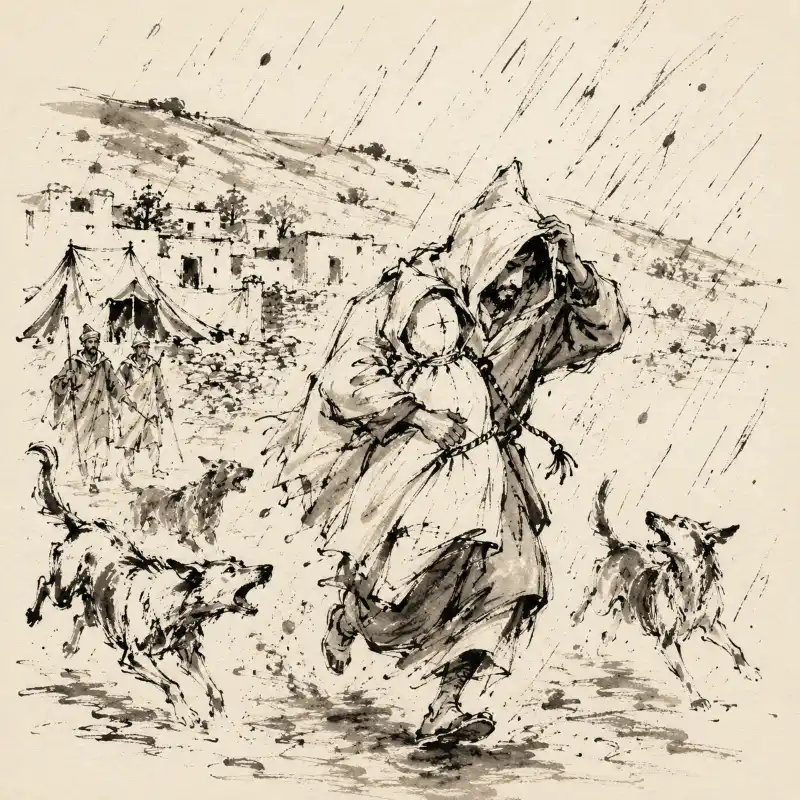
Among Morocco’s Amazigh traditions, some rituals are remembered through monuments and festivals, while others survive mainly through historical descriptions and oral memory. Ali the Hooded One is one of these lesser-known traditions: a rain ceremony from the Middle Atlas where a symbolic figure represented the arrival of rainfall and the hopes of rural communities dependent on water.
The Story Behind Ali the Hooded One
Ali the Hooded One appears in historical accounts of Amazigh communities of the Middle Atlas. Unlike many rain rituals that use a female figure representing a bride of rain, this tradition centered on a male character represented by a hooded form.
The figure was not understood simply as a supernatural being. Instead, the ritual presented a human-like character caught in the rain, creating a symbolic story where rainfall became something visible and familiar.
The image of a person running through heavy rain toward a village transformed an abstract natural event into a dramatic community performance. Through songs and movement, people represented the rain as a powerful force that had entered their world.
A Unique Rain Effigy Made from a Hood

The central object of the ritual was a simple representation made from the hood of a traditional burnous, filled with fabric and carried by a young participant.
This differed from other Amazigh rain ceremonies where a decorated wooden figure or dressed object played the role of the central symbol. The simplicity of Ali’s form was part of its character: it represented an ordinary person rather than a distant divine figure.
The name of the character varied between communities. Different Middle Atlas groups used their own versions of the name while maintaining the same basic idea of a hooded figure connected with rainfall.
Rain, Agriculture, and Community Survival
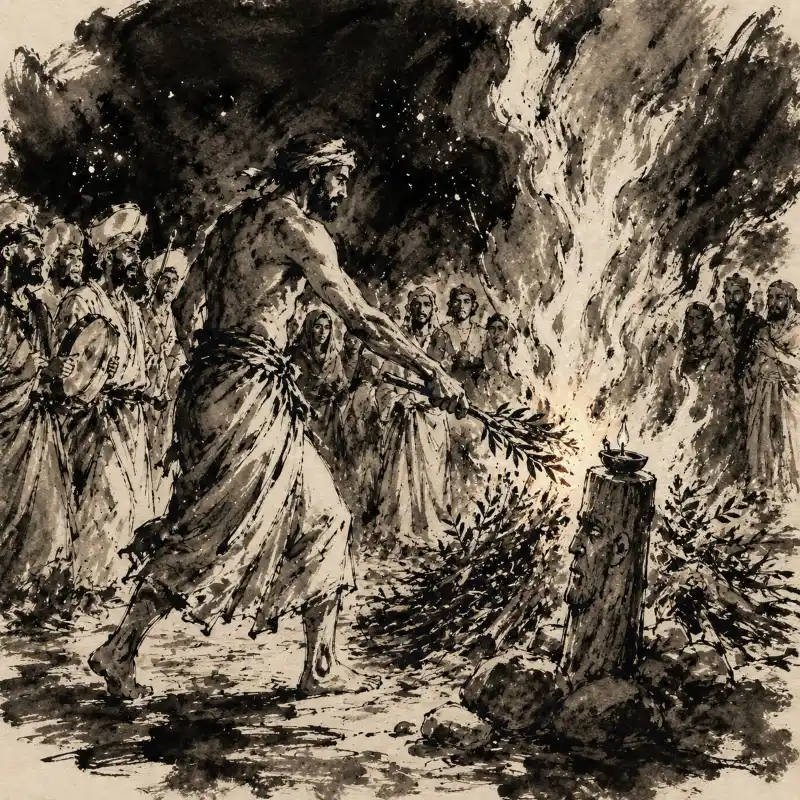
For traditional farming communities, rain was closely connected with survival. Crops, livestock, and water supplies depended on seasonal weather patterns, making rainfall an important concern in everyday life.
Rain rituals created a collective way to express hopes for agricultural success. They brought communities together during periods of uncertainty and allowed people to ask symbolically for favorable conditions.
These ceremonies were not only about requesting rain. They also strengthened relationships between households because participation, shared food, and collective actions reinforced social bonds.
The Procession and the Songs of Ali

The ritual involved carrying the hooded figure through the settlement. Participants visited homes, collected offerings, and used water as part of the symbolic performance.
Songs were an important element because they revealed the personality of Ali. Rather than appearing as a distant sacred figure, he was portrayed as someone experiencing the storm directly.
The humorous image of a person surprised by rain and chased toward the village gave the ritual a human quality. This mixture of comedy, symbolism, and hope helped make the ceremony memorable for participants.
Ali and Other Amazigh Rain Traditions
The tradition of Ali the Hooded One belongs to a wider group of Amazigh rain-related practices found in different regions of North Africa.
One well-known example is Taghonja, a rain ritual involving a decorated female figure often associated with the concept of the bride of rain. Comparing these traditions shows that Amazigh communities developed different symbolic approaches to the same environmental concern.
Some traditions focused on marriage symbolism and fertility, while Ali’s story emphasized the image of a person directly affected by the storm. Both express the importance of water and the dependence of rural societies on natural cycles.
The Meaning of Humor in Traditional Rituals
One remarkable aspect of Ali the Hooded One is the use of humor. The figure is not portrayed as powerful or frightening but as a vulnerable person caught in an unexpected situation.
This playful representation may have helped communities approach uncertainty with creativity and optimism. Humor allowed people to transform concern about drought into a shared cultural experience.
Many traditional celebrations around the world combine serious hopes with entertainment, showing that rituals can include joy, laughter, and social connection alongside spiritual meanings.
Preserving Forgotten Amazigh Heritage
Ali the Hooded One demonstrates that cultural heritage includes more than famous landmarks and widely celebrated festivals. Small regional customs also preserve valuable information about how communities understood nature and organized collective life.
Historical descriptions of such traditions must be approached carefully because meanings can change over time. A ritual recorded by observers from another period may not capture every interpretation held by the communities themselves.
Nevertheless, these records provide important windows into Amazigh cultural diversity and remind us that many traditions existed beyond the most visible forms of heritage.
The Middle Atlas Landscape Behind the Ritual
The environment of the Middle Atlas helps explain why rain held such importance in local traditions. Mountain communities depended on seasonal rainfall to support crops, grazing areas, and water sources used by households and animals.
Unlike regions with more predictable water supplies, mountain agriculture required careful adaptation to changing conditions. Villages developed close relationships with springs, rivers, and surrounding forests, making weather patterns a central part of community life.
In this context, a rain ceremony was not separate from everyday concerns. It reflected the practical reality that the success of farming and livestock depended on forces beyond human control.
Ritual Objects and the Power of Representation
Giving form to natural forces
The hooded figure of Ali demonstrates how traditional societies often represented natural events through familiar human images. Instead of attempting to describe rain as an invisible force, the ritual created a character that people could carry, follow, and sing about.
This type of symbolic representation made community hopes easier to express. A figure could become the focus of songs, movement, and collective attention, turning an environmental concern into a shared cultural moment.
The object itself was simple, but its meaning came from the actions surrounding it. The procession, words, and participation gave the effigy its cultural importance.
The Role of Music and Oral Poetry
Songs connected with Ali the Hooded One were an essential part of preserving the tradition. Oral poetry allowed communities to remember stories, emotions, and symbolic meanings without relying on written records.
Amazigh societies have a long tradition of transmitting knowledge through spoken forms, including songs, poetry, proverbs, and storytelling. These forms of expression preserved historical memories and social values.
The songs of Ali reveal a distinctive feature of the ritual: they did not only request rain but also created a narrative around it. The storm became a story involving movement, humor, and human experience.
Comparing Regional Amazigh Rain Customs
Amazigh rain traditions vary greatly from one region to another. Differences in landscape, language, and local history influenced the forms these ceremonies took.
Some communities used figures representing brides, while others developed different characters or symbolic objects. These variations show that Amazigh culture is not a single uniform tradition but a collection of regional expressions connected by shared concerns.
The diversity of rain rituals also demonstrates how communities adapted cultural practices to their own environments while maintaining similar themes of fertility, renewal, and hope.
From Historical Record to Cultural Memory
Today, traditions like Ali the Hooded One are valuable because they reveal aspects of Amazigh history that are not always visible in architecture or material objects. A ritual can preserve ideas about nature, community organization, and the relationship between people and their surroundings.
Historical documentation provides important evidence about these practices, but understanding them also requires recognizing that traditions are living processes. Meanings may shift as societies change, and communities may reinterpret older customs in new contexts.
The survival of a ritual in memory shows the strength of cultural knowledge. Even when practices are no longer performed widely, stories about them continue to contribute to understanding Morocco’s diverse heritage.
Why Ali the Hooded One Remains Significant
The importance of Ali the Hooded One comes from its unusual combination of simplicity and symbolism. A basic hood became the center of a ceremony expressing one of humanity’s oldest concerns: the need for water and the hope for a successful future.
This tradition also reminds us that heritage exists in many forms. Festivals, songs, gestures, and oral stories can be just as meaningful as physical monuments.
By studying lesser-known Amazigh customs, we gain a wider view of Morocco’s cultural landscape and the many ways communities have expressed their connection with nature across generations.
Conclusion
Ali the Hooded One remains a fascinating example of Amazigh rain symbolism from Morocco’s Middle Atlas. Through a simple hood, a procession, and songs, communities created a memorable expression of their relationship with water, agriculture, and collective hope. This forgotten ritual shows how cultural traditions can preserve the imagination and values of generations.




 No products in the cart.
Comments (13)